As military technology continues to evolve and the nature of warfare becomes increasingly network-centric, dominance on the battlefield is no longer measured solely by the number of fighter aircraft or the destructive power of conventional weapons. Instead, control over the electromagnetic spectrum has emerged as one of the defining factors of modern combat operations.
Against this backdrop, the EA-37B Compass Call has drawn growing attention across military and analytical circles, coinciding with its gradual entry into operational service with the United States Air Force and its increasing appearance in advanced military exercises. This rising interest reflects the expanding strategic importance of electronic warfare as a central pillar of contemporary military doctrine.
Designed to disrupt, degrade, and deny enemy electronic systems, the EA-37B represents the latest generation of airborne electronic attack platforms and is set to play a vital role in future air operations.
The Origins of the Compass Call Programme
The EA-37B traces its roots to the long-running Compass Call programme, developed by the U.S. Air Force during the Cold War to establish a dedicated airborne capability for disrupting hostile military communications and interfering with enemy command-and-control networks.

For decades, this mission was performed by the EC-130H Compass Call, which entered service in the 1980s and played an important role in numerous military operations by jamming adversary communications and reducing opponents’ ability to coordinate battlefield activities.
However, rapid advancements in digital communications and modern military networking technologies gradually exposed the limitations of the ageing EC-130H platform. Legacy systems were increasingly unable to meet the demands of modern electronic warfare environments.
To address this challenge, the U.S. Air Force launched the Compass Call Rehost programme in 2017, aiming to transfer the electronic warfare suite to a newer, more capable aircraft platform with greater speed, range, efficiency, and operational flexibility. The result of this effort was the development of the EA-37B as the next-generation airborne electronic attack aircraft.
Military Designation and Naming
The aircraft’s designation reflects the U.S. military’s established naming convention. The prefix “EA” stands for Electronic Attack, identifying aircraft specifically designed to disrupt enemy electronic systems such as communications, radars, and command networks.
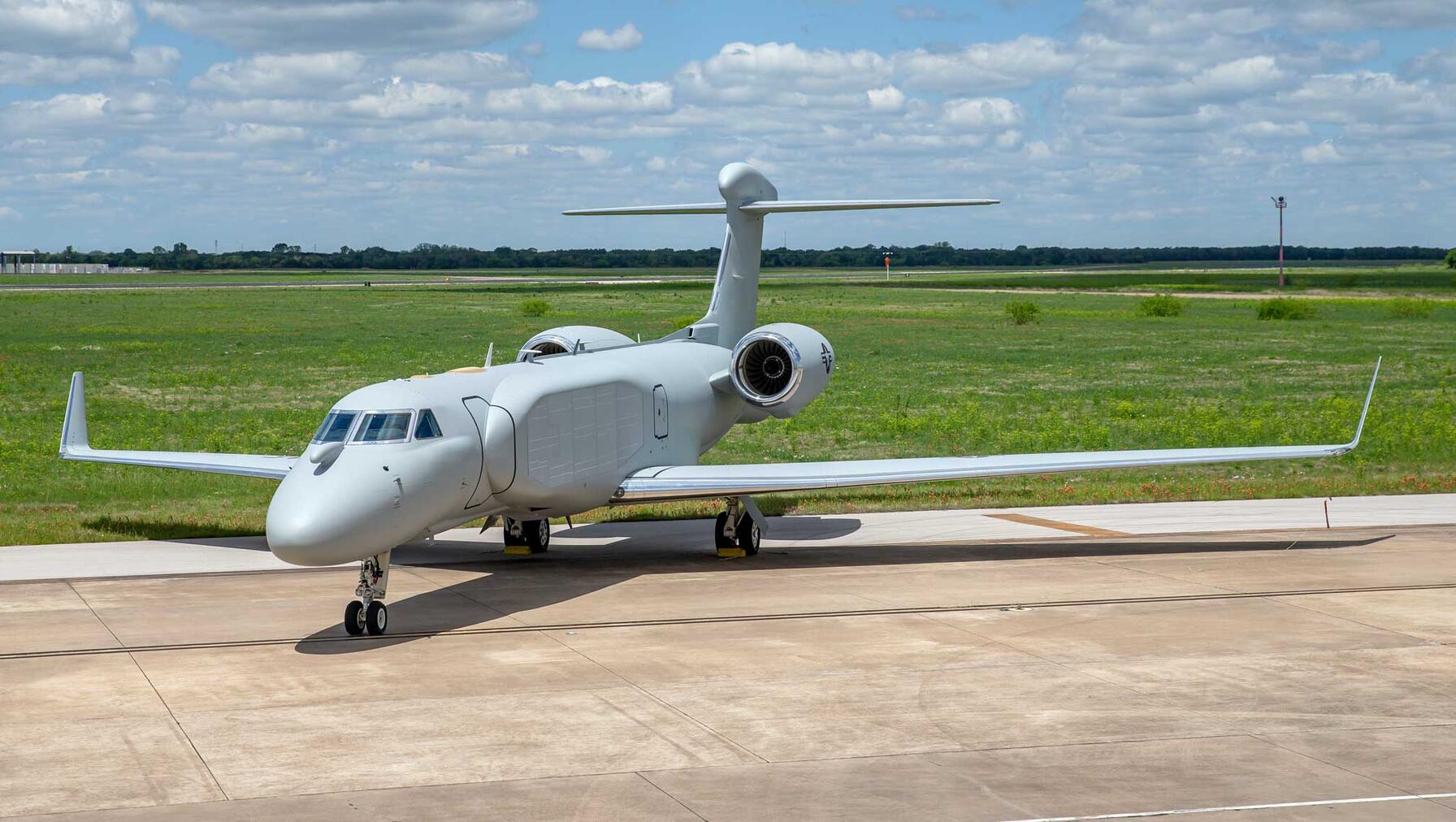
The number “37” references the base aircraft model on which the platform is built, while the suffix “B” designates the variant or production version. Meanwhile, Compass Call remains the name of the electronic warfare mission system itself, inherited from the earlier EC-130H programme and historically associated with U.S. airborne communications-jamming capabilities.
Transition to a Modern Jet Platform
Unlike its turboprop-powered predecessor, the EA-37B is built on the Gulfstream G550, a long-range business jet extensively modified for military use. The transition to a jet-powered platform marks a major leap in capability compared to previous Compass Call aircraft.
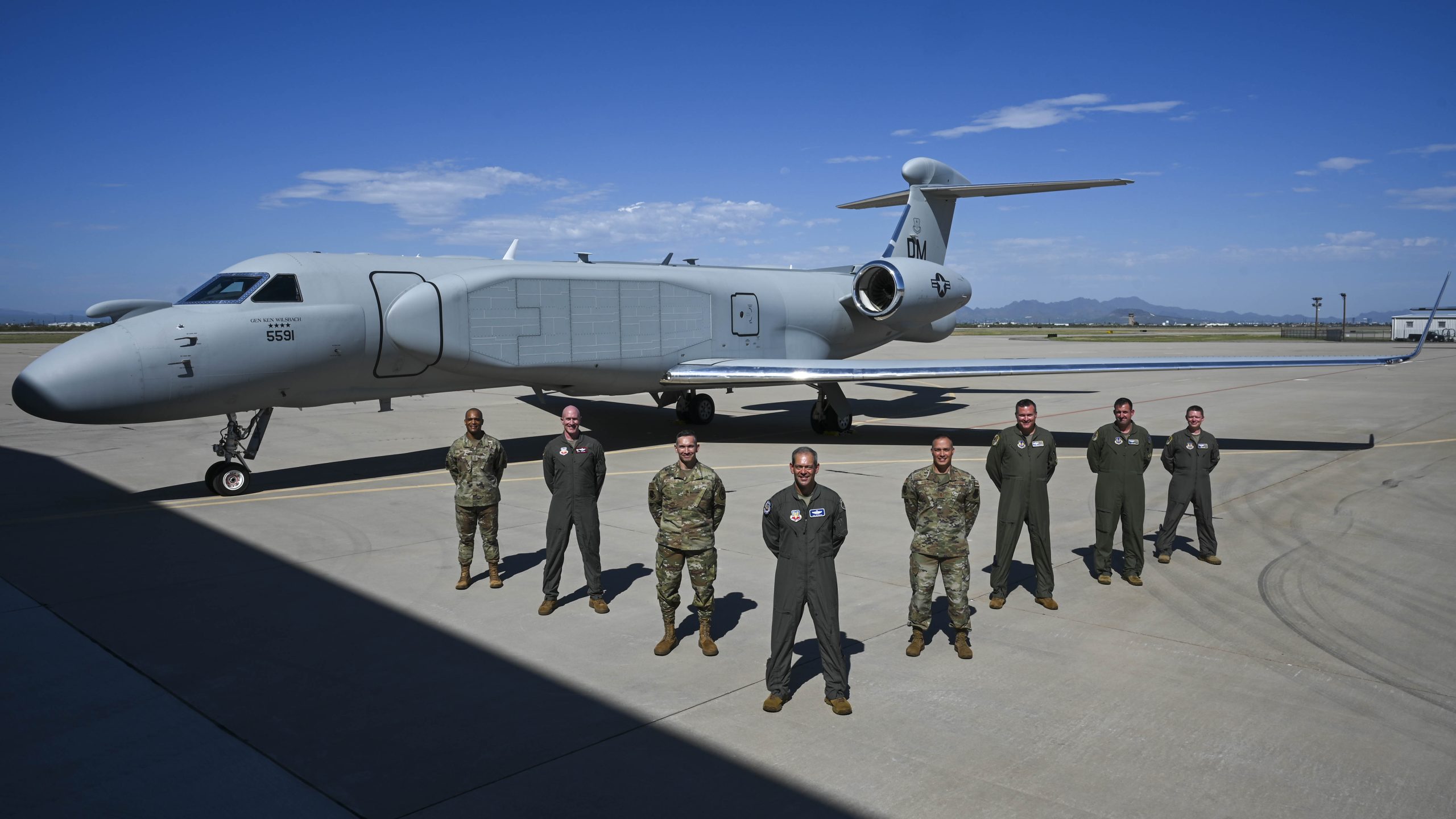
This shift offers several important operational advantages, including greater flight speed, higher operating altitude, extended range, and improved responsiveness between theatres of operation. The aircraft also benefits from significantly better fuel efficiency and lower maintenance demands than older-generation platforms, reducing long-term operating costs.
From a technical perspective, the modern airframe enables integration of more advanced electronic systems, including sophisticated sensors, signal analysis suites, and next-generation jamming equipment. Its spacious internal layout also accommodates the specialised mission crew required to operate these systems.
Core Mission: Electronic Attack at the Heart of Combat
The EA-37B belongs to the category of aircraft dedicated to electronic attack, meaning its primary purpose is not kinetic destruction but rather the disruption of enemy electronic capabilities.
Its mission focuses on undermining an adversary’s ability to communicate, exchange information, and coordinate military operations. Core tasks include:
Jamming hostile military communications
Disrupting command-and-control networks
Interfering with radar and air-defence systems
Supporting friendly air operations by shaping the electromagnetic battlespace
These capabilities directly target what may be described as the enemy’s “informational nervous system.” Modern armed forces rely heavily on uninterrupted digital communications and real-time information flow to manage combat operations. By disrupting those systems, the EA-37B can significantly degrade an opponent’s decision-making and battlefield coordination.
Advanced Electronic Warfare Systems
The aircraft employs an advanced suite of electronic warfare systems designed to operate across a broad range of electromagnetic frequencies. These include sophisticated signal interception and analysis systems, alongside powerful jamming equipment capable of targeting multiple forms of communication and radar systems.

These systems detect hostile emissions, analyse their characteristics and origin, then determine the most effective jamming technique to disrupt or deceive them. Crucially, this process occurs in near real time, allowing the aircraft to adapt rapidly in complex operational environments.
Role in Modern Air Operations
In modern warfare, combat aircraft no longer operate independently but as part of integrated networks involving air, space, cyber, and electronic assets.
Within this ecosystem, the EA-37B provides critical support to advanced combat aircraft such as the F-35 Lightning II, creating an electronic jamming umbrella that complicates the operation of hostile radar and air-defence systems.
The aircraft also contributes significantly to Suppression of Enemy Air Defences (SEAD) missions by reducing the effectiveness of radar systems tasked with detecting targets or guiding missiles. This creates safer operational conditions for strike aircraft and enhances the effectiveness of offensive air campaigns.
Operating Units and Development Timeline
The EA-37B is operated by U.S. Air Force electronic warfare units, most notably the 55th Electronic Combat Group, part of the 55th Wing based at Offutt Air Force Base, Nebraska.
Development progressed through multiple stages following the launch of the Compass Call Rehost programme in 2017. Aircraft modifications and testing were conducted over subsequent years, culminating in the platform’s first flight in 2023 and the delivery of the first operational aircraft to the U.S. Air Force in 2024.
Production and Cost: Limited Numbers, Strategic Impact
Despite its strategic importance, production of the EA-37B remains relatively limited. The U.S. Air Force plans to acquire approximately 10 aircraft to replace the ageing EC-130H fleet.
This modest number reflects the nature of the aircraft’s mission. A single electronic warfare aircraft can influence a battlespace extending across hundreds of kilometres, enabling it to support numerous combat aircraft simultaneously. As such, far fewer are required compared to conventional fighter platforms.
Each aircraft is estimated to cost around $150 million, reflecting the extreme sophistication of its onboard systems. Much of this cost stems not from the airframe itself but from its highly sensitive electronic warfare suite, signal analysis equipment, and advanced communications technologies.
At present, the United States remains the primary operator of the platform, while Italy has become the first foreign customer to contract for the aircraft as part of efforts to strengthen its airborne electronic warfare capabilities.
The Future Battlefield in the Electromagnetic Spectrum
The EA-37B reflects a broader transformation in airpower doctrine, where aerial combat is no longer limited to direct engagements between aircraft or the delivery of precision-guided munitions. Instead, conflict increasingly extends into the invisible but decisive domain of the electromagnetic spectrum.
Within this unseen battlespace, the ability to disrupt communications and disable enemy electronic systems can decisively shape combat outcomes. Platforms such as the EA-37B are therefore becoming essential tools of military power, enabling dominance not only in the skies, but in the realm of signals and data.
As digital technologies and networked warfare continue to advance, reliance on aircraft like the EA-37B is expected to grow—cementing electronic warfare as one of the key determinants of superiority in future conflict.
Infographic
EA-37B Compass Call
Mission: Electronic attack and disruption of military communications
Air Platform: Gulfstream G550
Technical Specifications
Length: Approximately 29.4 metres
Wingspan: Approximately 28.5 metres
Height: Approximately 7.9 metres
Maximum Speed: Approximately Mach 0.85 (around 900 km/h)
Range: More than 10,000 km
Operational Ceiling: More than 40,000 feet
Engines: Two Rolls-Royce BR710 turbofan engines
Crew: Approximately 9 personnel (two pilots + electronic warfare operators)