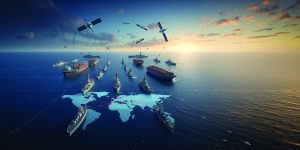
Maritime corridors have long held immense geostrategic significance, shaping the dynamics of international relations for centuries. As global dependence on maritime trade for the transportation of goods and energy has steadily increased, these waterways have evolved into critical control points governing the flow of commerce and resources between continents. Their importance also extends into the military domain, where competition among major powers for influence and control over strategic sea lanes has historically intensified during periods of conflict. Control over such corridors grants states decisive strategic leverage in times of war, a reality repeatedly demonstrated throughout military history. Against this backdrop, the international system has witnessed rapid geopolitical transformations in recent years, reviving the concept of “maritime corridor security” as one of the defining pillars of modern warfare. Amid escalating armed conflicts across multiple regions, maritime routes have emerged as both highly vulnerable components of the global economy and influential factors shaping the trajectory of contemporary wars.

The Geopolitics of Maritime Corridors
The 1982 United Nations Convention on the Law of the Sea reaffirmed the principles of transit rights and freedom of navigation through straits and maritime passages, while balancing the rights and obligations of littoral states. Maritime corridors are generally divided into two principal categories. The first category consists of natural straits formed through geological processes such as tectonic movements or coastal erosion. These waterways connect major bodies of water and include strategically significant passages such as the Strait of Gibraltar, the Strait of Malacca, Bab el-Mandeb, and the Strait of Hormuz. The second category comprises artificial canals constructed through excavation and large-scale engineering projects to facilitate maritime navigation and connect seas and oceans. Among the most strategically significant maritime corridors are the following:
Strait of Hormuz: The Strait of Hormuz is considered one of the world’s most vital maritime chokepoints due to its geopolitical position linking the Arabian Gulf to the Gulf of Oman and ultimately the Indian Ocean. Approximately 17–20 million barrels of oil and petroleum products transit through the strait daily, representing nearly 20 per cent of global daily oil consumption, more than a quarter of all seaborne oil trade, and close to 20 per cent of global liquefied natural gas trade. This strategic importance explains the far-reaching implications of any disruption to navigation through the strait, particularly following the tensions generated by the U.S. and Israeli strikes on Iran in late February 2026.
Bab el-Mandeb Strait: Bab el-Mandeb stretches roughly 30 kilometres in width and connects the Red Sea to the Gulf of Aden, making it a critical gateway for maritime traffic between Asia and Europe. The strait constitutes a major artery within global supply chains and facilitates the shortest maritime routes linking international markets. However, navigation through the passage has been significantly disrupted by threats posed by the Houthis in Yemen, resulting in major disturbances to shipping traffic and a sharp rise in maritime insurance costs. In response, several European countries established a multinational naval force under Operation Aspides to safeguard freedom of navigation and protect commercial shipping in the Red Sea and Bab el-Mandeb.
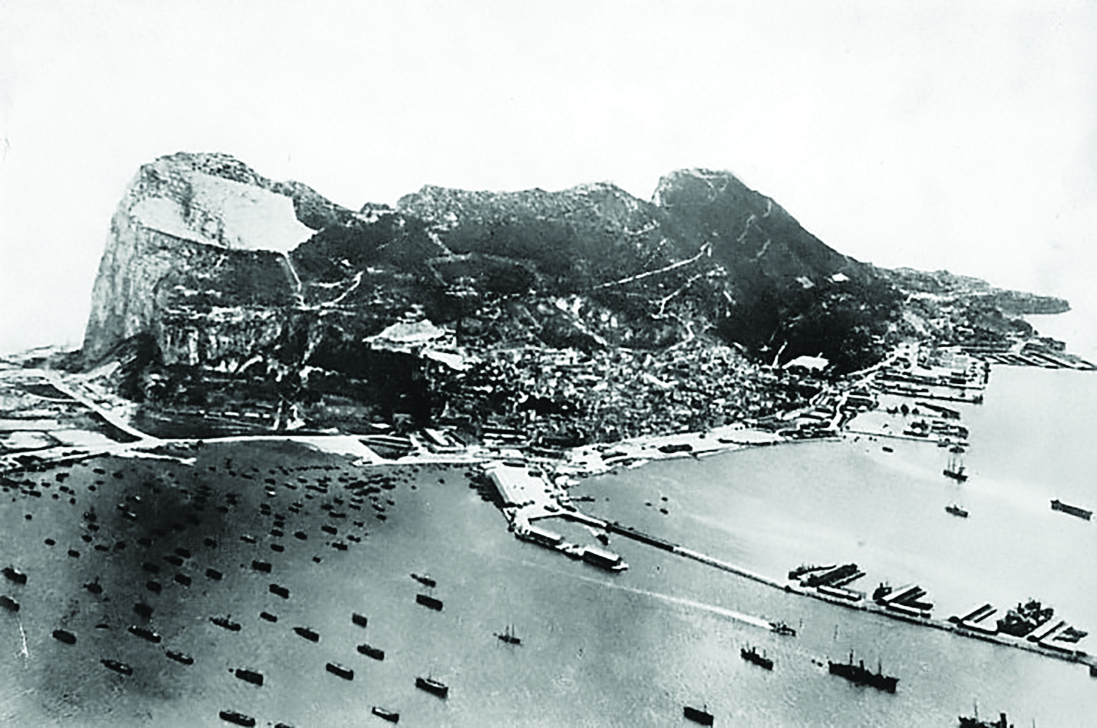
Strait of Gibraltar: The Strait of Gibraltar links the Mediterranean Sea with the Atlantic Ocean and lies between northern Morocco and southern Spain. More than 150 vessels pass through the strait daily, accounting for approximately five per cent of global oil trade. Historically, the region has represented a focal point of geopolitical rivalry, particularly between Spain and Britain following London’s acquisition of Gibraltar under the Treaty of Utrecht in 1713. The area hosts a strategically important British military base, in addition to the U.S. naval base at Rota north of the strait, which represents a major military asset for Washington and NATO in the Mediterranean.
Strait of Malacca: The Strait of Malacca lies between Indonesia’s Sumatra Island and the Malay Peninsula in Malaysia and ranks among the busiest maritime corridors in the world. It connects the Indian and Pacific Oceans and serves as a vital route for major Asian economies, including India, Japan, South Korea, and Taiwan. Approximately 94,000 vessels transit the strait annually, carrying nearly 30 per cent of globally traded goods. Consequently, the Strait of Malacca has become an indispensable route for the transportation of goods and energy supplies between East Asia and the Middle East, reinforcing its central role within global supply chains.
The Bosphorus and Dardanelles Straits: The Bosphorus and Dardanelles occupy a strategically sensitive position within Türkiye. The Bosphorus separates Europe from Asia and connects the Black Sea to the Sea of Marmara, playing a pivotal role in transporting energy and goods from Black Sea states to international markets. It also serves as a crucial transit route for both military and commercial vessels. The Dardanelles links the Aegean Sea, part of the Mediterranean basin, to the Sea of Marmara and forms a continuation of the Turkish Straits system connecting the Black Sea and the Mediterranean. These waterways gained historic prominence during the Gallipoli Campaign of 1915 in the First World War, when Allied forces attempted to seize control of the straits to establish a maritime route to Imperial Russia.
Strait of Dover: The Strait of Dover represents the narrowest section of the English Channel, connecting the North Sea with the Atlantic Ocean through the Channel. More than 500 vessels cross the strait daily between the United Kingdom and continental Europe. In addition, over 16 million passengers and nearly five million trucks transit the corridor annually, underscoring its economic and logistical significance.
Suez Canal: Suez Canal remains one of the world’s most important artificial waterways, linking the Red Sea with the Mediterranean Sea and providing a direct maritime route between Europe and Asia without the need to circumnavigate Africa. This strategic position has transformed the canal into a cornerstone of global trade. According to data from the United Nations Conference on Trade and Development (UNCTAD), approximately 10 per cent of global maritime trade and around 22 per cent of annual container trade pass through the Suez Canal. World Bank estimates further indicate that roughly 30 per cent of global oil trade transits the canal.
Panama Canal: The Panama Canal is located in Central America and connects the Caribbean Sea and Atlantic Ocean with the Pacific Ocean. The canal significantly reduces maritime transit times and transportation costs between eastern and western markets, making it a vital component of global trade flows between the Americas and Asia.
Although construction initially began under a French initiative in 1881, when Panama was still part of Colombia, the project stalled before the United States resumed and completed it after supporting Panama’s separation from Colombia in 1903. Following its completion, the canal remained under U.S. control for decades, generating recurring political tensions between Washington and Panama.
The agreements concluded between the two sides during the 1970s eventually led to the formal transfer of sovereignty over the canal to Panama in 1999. Nevertheless, the canal continues to face political and economic challenges affecting maritime navigation, particularly after U.S. President Donald Trump criticised the transfer of control, arguing that the canal represented a strategic American asset. At the same time, international assessments continue to warn of the potential consequences of persistent drought conditions affecting operations along the Panama Canal.
The Strategic Importance of Maritime Corridors
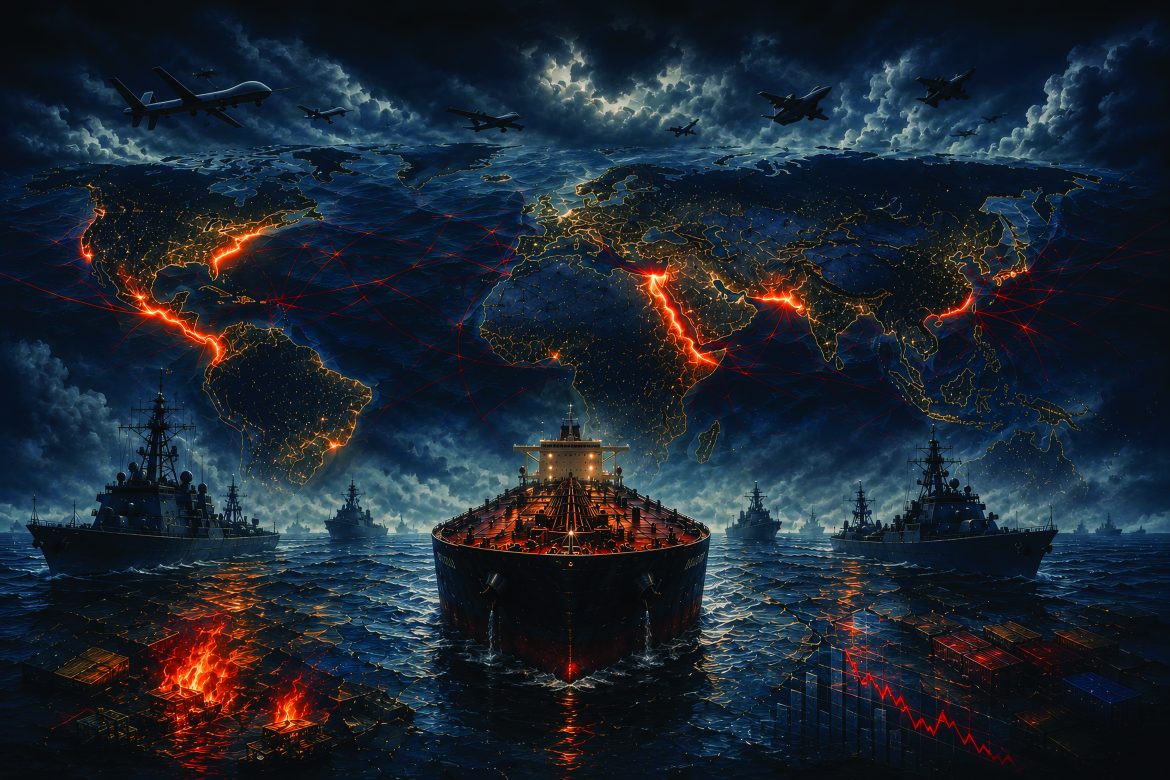
Maritime corridors possess immense strategic value, particularly given that nearly 90 per cent of globally traded goods are still transported by sea. From both geopolitical and geo-economic perspectives, these waterways represent the most sensitive transit points for the movement of energy resources from production centres to international markets. Consequently, any disruption, bottleneck, or closure affecting these corridors could trigger large-scale supply crises for industrialised nations that remain heavily dependent on fossil fuels.
This significance is further amplified by the fact that the majority of global oil-producing regions are situated near major maritime chokepoints, effectively transforming these passages into valves regulating the flow of global energy supplies. Nearly two-thirds of globally produced and exported crude oil passes daily through such corridors aboard massive oil tankers, explaining the growing international focus on maritime security.
Any threat to freedom of navigation — whether through direct closure, military escalation, or disruptions to normal shipping operations — constitutes a strategic dilemma with complex security implications. Maritime corridors, therefore, occupy a central position not only in economic calculations but also in global security doctrines.
From a military standpoint, maritime passages represent critical chokepoints within broader strategic calculations, granting significant advantages to the actor capable of controlling them. This reality explains why such waterways have frequently fallen within the sphere of geopolitical rivalry and military confrontation throughout modern history.
Although international law guarantees the protection of maritime routes, escalating global conflicts have reignited debates concerning the legal framework governing freedom of navigation and the use of force in international waterways, particularly under the provisions of the United Nations Convention on the Law of the Sea. While these legal frameworks regulate maritime movement in international corridors, their practical implementation faces mounting challenges whenever armed conflicts intersect with global economic interests.
One of the clearest examples lies in the maritime routes connected to the South China Sea, which represent both a strategic pressure point and a cornerstone of international trade. Approximately 24 per cent of total global maritime commerce transits through the region, alongside nearly 45 per cent of global crude oil shipments and around 26 per cent of the global automotive trade. The total value of goods passing through these waterways is estimated at approximately $5.3 trillion annually, meaning that any disruption in the region could severely destabilise the global economy.
The Role of Maritime Corridors in Previous Wars
Over the past decades, numerous wars and geopolitical confrontations have revolved around the control of maritime corridors or emerged as a consequence of disruptions affecting them. Conflicts, tensions, and threats involving these waterways have increasingly assumed an international dimension due to their direct connection to global security and their far-reaching economic consequences.
Historical experience demonstrates that maritime corridors have frequently been targeted by piracy, looting, and armed robbery at sea. According to records from the International Maritime Bureau, dozens of attacks were historically recorded annually in strategic maritime routes, often aimed at seizing cargo or detaining ship crews for ransom. European merchants once referred to the Strait of Hormuz as the “Pirates’ Coast” because of repeated attacks on commercial vessels travelling towards Europe.
Within this historical context, the Strait of Gibraltar played a decisive role during the Second World War (1939–1945), enabling the Allies to maintain control over maritime transport between the Mediterranean Sea and the Atlantic Ocean. Britain had controlled the strait since the eighteenth century, while Germany attempted unsuccessfully to seize it in 1940 under Operation Felix.
Following the end of the Second World War and the emergence of the Cold War international order, the strategic importance of the strait persisted as a major arena of competition between the two superpowers. Britain, in coordination with the United States, utilised the passage to monitor Soviet naval activities in the Mediterranean.
Similarly, the Dardanelles and Bosphorus — governed by Türkiye under the 1936 Montreux Convention — became the focal point of a severe crisis between the Soviet Union and Türkiye during what became known as the “Turkish Straits Crisis.”
In the aftermath of the Second World War, Soviet Deputy Prime Minister Lavrentiy Beria claimed that large areas of eastern Türkiye bordering the Black Sea historically belonged to Georgia, then part of the Soviet Union. Moscow also objected to Ankara allowing warships from non-Black Sea states to transit through the Turkish Straits, arguing that such actions violated the Montreux Convention. In 1946, the Soviet Union strengthened its military presence in the Black Sea in an effort to pressure Türkiye into revising the convention and accepting joint Soviet-Turkish control over the Dardanelles and Bosphorus. In response, Türkiye sought support from the United States, which dispatched naval forces to the region. This development coincided with the announcement of the Truman Doctrine in 1947, through which Washington sought to contain Soviet influence in the Mediterranean by integrating both Türkiye and Greece into the Western security architecture and later into NATO.
Beyond tensions in the Mediterranean, the Strait of Hormuz emerged as a central theatre of confrontation during the Iran-Iraq War, particularly during the so-called “Tanker War.” Following the Iranian Revolution in 1979, leaders in Tehran viewed the strait as a critical strategic pressure point that could be leveraged in conflicts involving regional or international powers. This was clearly reflected during the First Gulf War (1980–1988), when Iran retaliated against Iraqi attacks targeting its oil facilities by launching strikes against Gulf oil tankers, particularly Kuwaiti vessels. Kuwait subsequently requested American assistance, prompting the United States to launch Operation Praying Mantis in 1988, during which several Iranian ships and offshore platforms were targeted.
Meanwhile, the Suez Canal witnessed several major geopolitical confrontations, most notably the Tripartite Aggression against Egypt in 1956 following President Gamal Abdel Nasser’s decision to nationalise the canal. In addition, Bab el-Mandeb played a significant strategic role during the October War of 1973, underscoring once again the decisive military importance of maritime chokepoints in regional and international conflicts.
Maritime Corridors and the Trajectory of Modern Warfare
Recent wars and geopolitical crises have demonstrated that maritime corridors are no longer merely commercial routes, but have increasingly evolved into primary arenas for geopolitical rivalry and open confrontation among major powers.
In March 2022, following the outbreak of the Russia-Ukraine war, Türkiye announced the closure of the Bosphorus and Dardanelles straits to warships. Ankara justified the move as an implementation of the 1936 Montreux Convention, which grants Türkiye the right to restrict the passage of military vessels during wartime, while simultaneously allowing non-belligerent ships to return to their home ports.
Elsewhere, the war in the Gaza Strip highlighted the geopolitical significance of Bab el-Mandeb and the Suez Canal. The Houthis launched attacks against commercial vessels in the Red Sea and Bab el-Mandeb in response to Israeli military operations in Gaza, disrupting navigation across both the strait and the Suez Canal corridor.
Although Western naval forces deployed escorts for commercial shipping in the Red Sea and the United States carried out strikes against Houthi positions in Yemen, the attacks continued to expand in scale. Some Western assessments indicated that nearly 500 attacks were carried out in and around Bab el-Mandeb, the Red Sea, and the Gulf of Aden during the Gaza conflict, damaging more than 100 vessels and forcing additional shipping companies to reroute away from the strait.
With regard to the Strait of Hormuz, even extensive American strikes against Iranian naval assets failed to prevent the escalation of tensions. Iranian threats targeting vessels transiting the strait, followed by the deployment of naval mines, significantly disrupted trade and maritime traffic. Estimates suggest that shipping activity through the strait declined by nearly 97 per cent within the first two weeks of the conflict, resulting in cargo shipping losses estimated at approximately $2.4 billion per day.
Within this evolving environment, a new concept has emerged: “Strait Pirates.” The term refers to state actors, proxies, or armed groups that utilise maritime corridors as instruments of geopolitical coercion. The concept reflects a new phase in regional and international conflict, where traditional piracy increasingly overlaps with state-driven military strategies.
Piracy is therefore no longer confined to criminal groups operating outside the law, but has become integrated into broader geopolitical confrontations, blurring the distinction between conventional military operations and irregular warfare. Maritime corridors are consequently transforming into strategic pressure points and instruments of political leverage within regional and international power struggles.
At the same time, following his return to the White House in January 2025, Donald Trump called for American commercial and military vessels to transit both the Suez Canal and Panama Canal free of charge. Many observers viewed these remarks as a reflection of how major powers increasingly regard maritime corridors as essential instruments within contemporary geopolitical competition.
Meanwhile, the Panama Canal has emerged as another arena of international rivalry. Recent months have witnessed escalating tensions between the United States and China over influence in one of the world’s most important shipping routes. In mid-April 2026, Washington and several of its allies accused Beijing of delaying and obstructing vessels linked to Panama, arguing that China was attempting to politicise maritime trade.
Beijing rejected these accusations, countering that the United States itself had controlled the Panama Canal for decades and was now seeking to transform the waterway into an extension of American strategic influence at the expense of regional sovereignty. These developments suggest that competing global powers are becoming increasingly prepared to engage in open confrontation over maritime corridors, recognising them as decisive factors in future economic and military conflicts.
The Future of the Militarisation of Maritime Corridors
In parallel, a growing body of Western strategic literature has advanced the concept of the “militarisation of maritime corridors,” reflecting the transformation of these waterways into strategic instruments capable of threatening both regional and international security.
This trend is particularly evident amid intensifying U.S.-Chinese competition for influence over the Strait of Malacca, alongside escalating tensions in the Strait of Hormuz stemming from Iran’s closure of the strait, the imposition of transit fees on vessels, and the maritime blockade imposed by the United States against Tehran.
In this context, the severe escalation affecting strategic waterways — especially the current tensions in the Strait of Hormuz — indicates that international and regional powers may increasingly resort to counter-escalatory measures or expand their military presence in maritime corridors. This could occur through broad security alliances, intensified naval patrols, or permanent force deployments intended to safeguard freedom of navigation.
Beyond the immediate economic impact of disruptions in the Strait of Hormuz, several Western assessments argue that these developments expose broader strategic vulnerabilities within the global maritime system. They demonstrate how a single state can effectively hold critical maritime corridors hostage while exercising geopolitical pressure at comparatively limited cost.
Moreover, the transportation of energy through maritime corridors — long regarded as the backbone of global trade — is no longer confined to civilian logistical activity. Instead, it has become deeply integrated into the strategic military architecture of states, increasingly blurring the line between commercial shipping and military infrastructure.
European assessments have also warned of the structural transformations currently reshaping maritime corridors. Since the outbreak of war, Iran has effectively transformed the Strait of Hormuz into a fee-based transit route by imposing charges on passing vessels, while the U.S. Navy simultaneously enforces a maritime blockade in the Arabian Sea.
Conclusion
The growing number of conflicts and wars within the contemporary international system has underscored the increasing importance of maritime corridor security and the pivotal role these waterways now play in shaping the trajectory of modern warfare. Maritime passages have become integral components of geopolitical conflict rather than merely logistical routes supporting global commerce.
Current trends suggest that maritime corridors are likely to remain major flashpoints of international rivalry in the coming years, particularly as states increasingly employ them as instruments of geopolitical and geo-economic pressure. Major powers are also expected to intensify their military presence across critical waterways through the establishment of permanent military bases, expanded naval deployments, and new security alliances.
As a result, freedom of navigation within these strategic corridors may become increasingly dependent on shifting military balances, further accelerating the militarisation of the world’s most vital maritime routes.
By: Adnan Mousa
(Assistant Lecturer at the Faculty of Economics and Political Science – Cairo University)