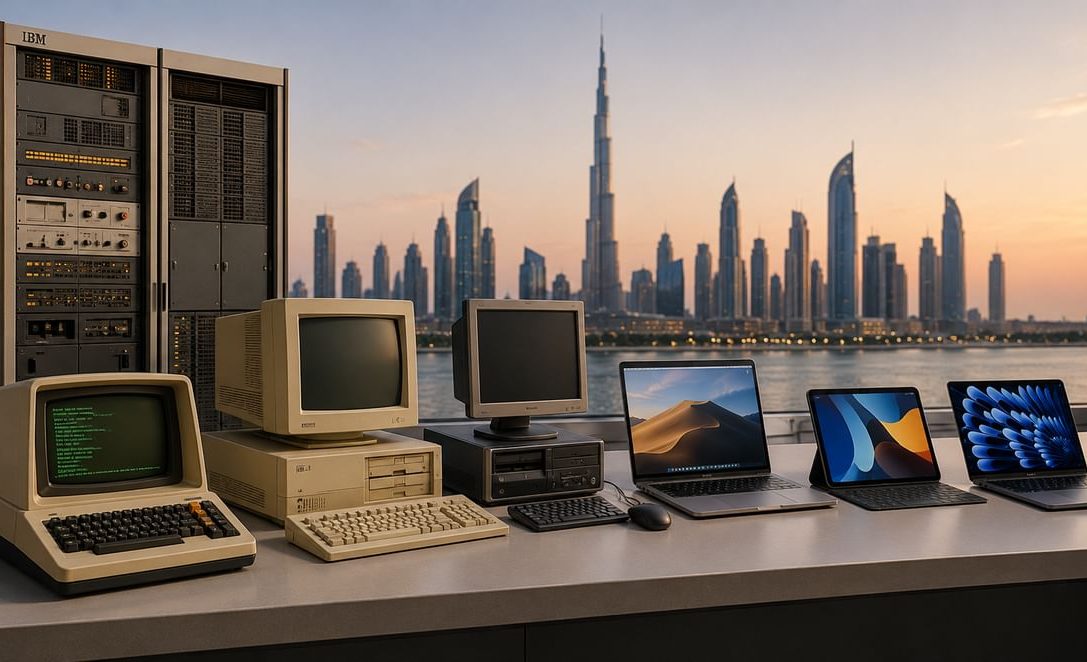
The evolution of computing in the United Arab Emirates reflects a remarkable chapter in the country’s broader digital transformation journey and its drive to build a knowledge-based economy. Over the course of just a few decades, the UAE has progressed from relying on large-scale traditional computer systems to embracing artificial intelligence (AI), cloud computing, advanced data analytics, and smart digital applications, reinforcing its position as a global hub for emerging technologies.
The UAE’s adoption of computer technologies began during the 1970s and 1980s, when government entities, financial institutions, and oil companies introduced large mainframe computer systems to support data processing, record management, and operational functions. These systems served as the backbone of critical sectors, enabling organisations to manage growing volumes of information and streamline administrative processes.
During this period, technologies developed by companies such as IBM, HP, and Digital Equipment Corporation were among the most widely used. The systems were characterised by their large physical footprint, requiring dedicated operating rooms and sophisticated cooling infrastructure. Data storage relied primarily on magnetic tapes and floppy disks, which represented a significant advancement in information management at the time.
A major shift occurred in the early 1990s with the widespread adoption of personal computers (PCs). Devices manufactured by Dell, Compaq, and IBM became increasingly common across government agencies, private enterprises, and educational institutions. This transition coincided with the growing popularity of software developed by Microsoft, particularly the Windows operating system, which accelerated digitalisation efforts, simplified office workflows, and improved organisational efficiency.
At the same time, products from Apple gained prominence in the media, design, and education sectors due to their advanced capabilities in graphics processing and digital content creation. Their adoption contributed to the expansion of technology-driven creative industries and modern educational practices across the country.
The arrival of the new millennium saw rapid growth in the use of laptops, mobile devices, and connected technologies. Products such as MacBook and iPad from Apple, alongside devices manufactured by Samsung Electronics, Lenovo, and HP, became integral components of modern workplaces, educational institutions, and smart government services. This period coincided with an accelerated pace of digital transformation across virtually every sector of the UAE economy.
A key enabler of this transition was the country’s expanding digital infrastructure. Telecommunications providers e& and du played a central role in expanding internet connectivity and digital services, laying the foundation for the growth of smart government initiatives, integrated e-services, and nationwide digital communications.
Today, the UAE relies extensively on cloud computing platforms, artificial intelligence applications, big data analytics, and hyperscale data centres to support innovation and digital growth. Through partnerships with global technology leaders, including Microsoft, Oracle, and Amazon Web Services, the country continues to accelerate the development of advanced digital solutions across a wide range of strategic sectors.
The UAE is also strengthening its position as a global centre for future technologies through major investments in AI and cloud infrastructure. In a significant recent development, Microsoft and G42 announced a major expansion of the country’s data centre ecosystem, adding 200 megawatts of capacity to support sovereign Azure cloud services and next-generation AI capabilities. The initiative is expected to further enhance the nation’s digital infrastructure and support the objectives of the UAE’s digital economy strategy.
Artificial intelligence and intelligent computing systems are now embedded across key sectors, including education, healthcare, energy, government services, and cybersecurity. Guided by a national vision centred on innovation and advanced technology, the UAE continues to invest in future-focused digital capabilities that strengthen economic competitiveness and support long-term sustainable growth.
As the Fourth Industrial Revolution reshapes the global technological landscape, the UAE’s journey from room-sized mainframes to AI-powered computing highlights the scale of its transformation.