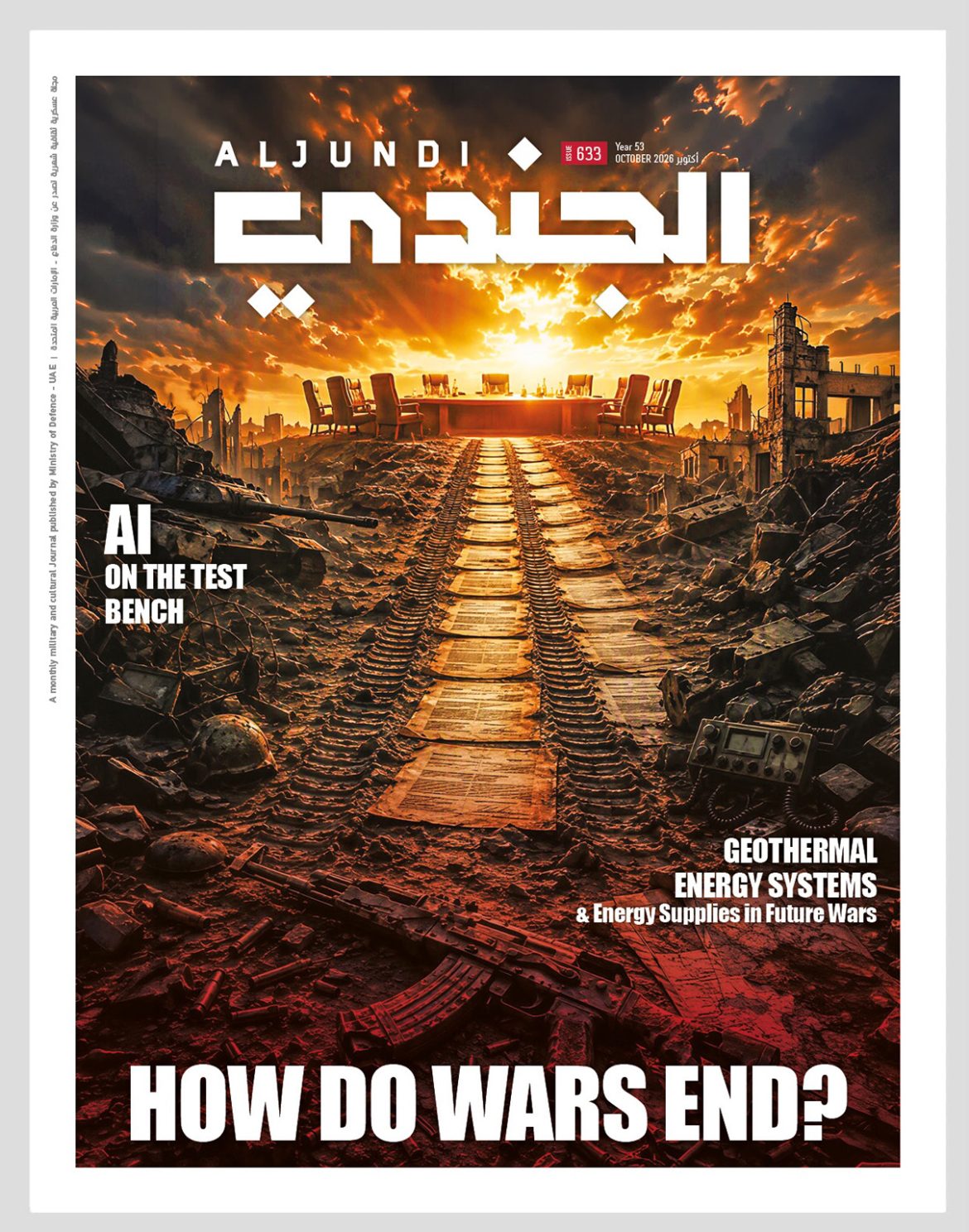
The transformation of modern warfare extends beyond the evolution of combat tools and capabilities to include the ways in which wars come to an end. Since the end of the Second World War, the centrality of decisive military victory has gradually declined, while the roles of ceasefires, negotiations, mediation, and internationally backed settlements have expanded. This has occurred alongside the growing prevalence of civil and irregular wars, as well as conflicts supported by external actors. Consequently, the strategic question has shifted from simply determining who wins to understanding when continued fighting can no longer achieve political objectives, and how this realisation translates into a cessation of violence and ultimately a settlement.
This study provides a historical and forward-looking examination of the dynamics of ending wars since 1945. It is based on the premise that the end of a war is not a single event but a multi-stage process that may begin before fighting ceases and whose effects may continue long afterwards. It also assumes that victory is not purely a military reality, but a political and perceptual outcome determined by the extent to which the use of force can achieve the intended political objective, and by whether one or both sides come to recognise that continuing the war is no longer worthwhile. Understanding how wars end therefore requires an analysis of the interaction between the balance of power, the cost of continued fighting, changing objectives, the nature of the actors involved, external intervention, opportunities for negotiation and mediation, and post-conflict arrangements. These factors determine whether an exit from war is possible, when it may occur, and what form its conclusion will take.
An important distinction must also be made between ending a war and resolving a conflict. The former concerns the cessation of organised violence, while the latter goes further by addressing the political and social structures that allow a conflict to persist or violence to recur. Fighting may therefore stop without the underlying conflict being resolved, making the process of exiting a war broader than simply bringing hostilities to an end. Against this backdrop, the study addresses the following question: What are the strategic and political dynamics that determine whether a war can end, when it ends, and what form its conclusion takes? This question provides a framework for examining the relationship between military decision-making and political objectives, the effects of attrition and external intervention, and changes in the calculations of the belligerents. It also considers how these shifts translate into a cessation of hostilities and, ultimately, the conditions that determine the transition from the military end of a war to its post-war phase.
The Dynamics of Ending Wars
The Second World War represented the historical peak of the concept of total military victory, ending with the unconditional surrender of Nazi Germany and Japan. Yet this comprehensive victory also contributed to making the model increasingly difficult to repeat. The enormous human and material costs of the war, followed by the emergence of nuclear weapons, meant that total victory between major powers could carry strategic costs greater than its expected gains. Military thinking therefore gradually shifted from a focus on decisive victory towards escalation management and deterrence. Preventing war itself became part of the strategic function, without eliminating the possibility of military victory but rather redefining it in light of political objectives and acceptable costs.
The Korean War provided an early example of this transformation. After the balance of power shifted several times, Chinese intervention, supported by the Soviet Union, prevented US and South Korean superiority from developing into a decisive victory. The conflict ended in July 1953 with an armistice that returned the two sides approximately to their starting positions, without a final peace treaty. The Korean case demonstrates that internationalising a war can alter not only the balance of power but also the possibility of achieving a decisive outcome, making a partial settlement more attainable than continued efforts to secure total victory.
The distinction between military victory and strategic success is therefore essential to understanding how wars end. The wars of decolonisation, particularly the Algerian case, demonstrated that military superiority does not necessarily guarantee the achievement of political objectives. The National Liberation Front did not defeat the French Army in a conventional military sense. However, it succeeded in making the cost of continuing the war and maintaining the French presence greater than the political value of doing so. The conflict consequently ended with the Evian Accords and Algerian independence. Victory, therefore, is not determined solely by the outcome of military operations, but by their ability to influence the adversary’s will and connect the use of force to the political objective for which the war was initiated.
In this context, the battle must be understood as part of a broader strategy: a means of achieving an objective rather than an objective in itself. The First World War demonstrated the limitations of an approach that places the decisive battle at the centre of victory, as the opposing sides fought major engagements without any single battle bringing the war to an end. This logic was reinforced by the Vietnam War, where US military pressure coincided with the Paris negotiations while changing political will and declining external support led to the US withdrawal and, ultimately, the fall of South Vietnam in 1975. The conclusion of the conflict was therefore not the result of a single battle, but of the interaction between military power, political will, the ability to sustain the war, and external support.
Afghanistan likewise illustrates the limitations of equating withdrawal with the end of a war. The Soviet Union withdrew in 1989, after which the government of Mohammad Najibullah later collapsed following a decline in external support. Similarly, the US withdrawal in 2021 was followed by a rapid shift in the balance of control in favour of the Taliban. These cases demonstrate that the end of an external power’s involvement does not necessarily mean that the political objectives for which it entered the war have been achieved. An exit strategy should therefore not be measured by withdrawal alone, but by the relationship between the conditions of withdrawal and the political outcome that follows.
The Afghan case also demonstrates how the classification of an adversary and the limits placed on its inclusion in a political process can influence the course of a conflict and the prospects for ending it. Where opportunities for achieving an acceptable political outcome for actors capable of continuing the fighting are limited, the likelihood of prolonged confrontation increases. This does not necessarily involve granting any party prior political or legal legitimacy, but rather recognising how the structure of available options influences calculations of whether to continue or cease fighting.
The dynamics of ending wars become even more complex because warfare does not merely pursue fixed political objectives; it also reshapes them. As conflicts continue, costs increase, new actors become involved, and the balance of power changes, the original objectives may become less achievable, or may expand or contract. The outcome of a war therefore cannot be measured solely by comparing the final settlement with the objectives announced at its outset. One of the key functions of strategic leadership is to reassess the relationship between objectives and means in light of the new realities created by the war itself.
This means that flexibility in defining political objectives becomes an integral part of managing both war and its conclusion. When the strategic environment changes while the original objectives remain fixed, the gap between what political leadership seeks to achieve and what military means can deliver may widen. At this point, the continuation of the war depends not only on the balance of power, but also on the ability of political leaders to redefine what constitutes an acceptable outcome in light of changing conditions.
In this context, the external factor assumes critical importance. Since 1945, networks of financial, military, and political support have enabled weaker parties to continue fighting despite unfavourable local balances of power. Nicaragua provides a clear example. US support for the Contra forces transformed the Sandinistas’ 1979 victory into a prolonged counter-war. External support does not merely add resources to the balance of power; it also changes the time horizon of a conflict, giving certain actors the ability to sustain fighting that would not have been possible through their domestic resources alone.
This factor can also operate in the opposite direction. A decline in external sponsorship can reshape the balance of a war and bring it closer to an end, as demonstrated by the experiences of Vietnam and Afghanistan. Consequently, the conditions for ending many contemporary conflicts are not determined solely on the battlefield, but are also influenced by the decisions of supporting powers and their willingness to continue bearing the political, military, and economic costs of the conflict.
Economic and social attrition is no less important than the military balance of power. Prolonged wars test the ability of economies, societies, and external alliances to sustain the war effort, rather than merely the capabilities of armed forces. The First World War demonstrated that political and social will can erode before an army loses its ability to operate effectively on the battlefield. Attrition therefore becomes one of the factors that can compel parties to reassess the value of continuing the conflict and create an opportunity to shift from seeking decisive victory towards pursuing a political exit.
The concept of the balance of power must therefore be understood more broadly. It encompasses not only troop numbers, weapons, and territorial control, but also economic capacity, social cohesion, tolerance for casualties, continued external support, and the length of time each side can sustain the war. In protracted conflicts, the ability to endure may have a greater influence on the outcome than operational superiority at a particular stage.
These challenges become even more pronounced in civil wars, where combatants compete not only over borders or territory but also over political space, authority, and representation within the same state. This makes it difficult to separate the termination of fighting from the resolution of the underlying conflict. The data presented for the period 1946–2021 indicate that approximately 40% of conflicts ended through a reduction in the intensity of fighting, around 30% through victory, 13% through a ceasefire, 13% through a peace agreement, and approximately 4% through other outcomes.
These figures demonstrate that military victory is not the only path to ending a war. A significant proportion of conflicts do not conclude with a clear political settlement, but rather through a gradual reduction in violence, a ceasefire, or a state of stalemate. The end of a war should therefore be understood as a spectrum of possible outcomes rather than a single point that clearly separates war from peace.
From the Possibility of Ending a War to the Cessation of Fighting
If the balance of power, costs, attrition, and external intervention determine when a war becomes amenable to termination, the next question concerns the mechanisms that translate this strategic shift into an actual cessation of fighting. Here, ceasefires, negotiations, and mediation emerge as tools that operate within the logic and calculations of war rather than outside them.
A ceasefire is one of the most common of these mechanisms, but it does not in itself constitute peace. It may simply suspend military operations without addressing the underlying causes of the conflict, as demonstrated by the Korean case since 1953. A ceasefire can therefore represent the “operational end” of a war without constituting its political or legal conclusion.
The role of ceasefires has expanded alongside the development of international institutions dedicated to conflict management since 1945, particularly the United Nations. Nevertheless, a ceasefire remains fundamentally an arrangement governing the use of force. It may become a transitional stage towards a settlement or evolve into a long-term mechanism for freezing a conflict. Its strategic significance therefore depends on what follows the cessation of military operations, rather than on the suspension of fighting itself.
Negotiations, meanwhile, do not usually begin because the parties have suddenly become more inclined towards peace. Rather, they begin when calculations of gains and losses change. A combatant that believes military victory remains attainable has little incentive to alter its position. The Iran-Iraq War illustrates this dynamic. At various stages, Iran rejected ceasefire proposals when it believed victory remained within reach. It later accepted UN Security Council Resolution 598 in 1988 after the operational balance shifted and the economic and military costs of the war increased.
However, the transition to negotiations does not necessarily require one side to approach collapse. It may occur when both parties recognise that what can be achieved through a settlement has become more compatible with their interests than the outcome of continued fighting. Even a militarily superior party must assess the costs required to convert its military advantage into a political outcome, while the weaker side must reassess its ability to alter the balance by continuing the conflict.
The end of a war therefore involves, even in cases of significant military superiority, a process of determining the conditions under which fighting will cease. The issue is not simply how much power each side possesses, but whether continued use of that power can produce a political outcome different from the one that could be achieved through negotiations.
For this reason, fighting and negotiations should not necessarily be viewed as successive stages. Force may be used to improve a party’s negotiating position, while negotiations may be initiated to test settlement terms, reshape alliances, or manage time. The two processes can therefore operate in parallel, with the use of force itself becoming part of the environment in which negotiations take place.
The Suez Crisis of 1956 reveals another dimension of this interaction. The shift in the US position, together with its use of political and economic pressure, altered the calculations of France, Britain, and Israel and contributed to their acceptance of a ceasefire and withdrawal. The case demonstrates that the transition to negotiations or a cessation of hostilities does not always result from changes in the balance of power on the battlefield. It may instead arise from a change in the position of an ally or external sponsor.
Formal negotiations may also be preceded by a more complex stage involving what can be described as “negotiating the negotiations”: who participates, what is placed on the agenda, where talks are held, whether a ceasefire should precede them, and what guarantees are required. Although these questions may appear procedural, they are directly linked to the balance of power, political recognition, and the limits of possible concessions.
It is within this space between the continuation of war and the possibility of settlement that mediation plays an important role. Mediators may facilitate the exchange of messages, build confidence, develop compromises, and help arrange issues involving prisoners, borders, weapons, and refugees. This role has expanded to include states, international and regional organisations, humanitarian bodies, and specialised centres, particularly when direct communication between combatants is limited or politically costly.
However, mediation does not operate independently of the strategic structure of a conflict. Its effectiveness depends on the extent to which the parties are already prepared to adjust their calculations and whether the conflict has reached a stage at which the costs of continued fighting differ significantly from its expected benefits. The success of mediation is therefore linked to what conflict-resolution literature describes as “ripeness”: the existence of conditions that make the search for a negotiated exit more likely.
The transition from war to a cessation of fighting therefore does not occur through a single mechanism. Rather, it results from the convergence of changes in the strategic environment with a political mechanism capable of translating those changes into action. Ceasefires, negotiations, and mediation become more effective when the relationship between what combatants expect to achieve through force and what they can obtain through settlement begins to change. The end of fighting thus represents a point of convergence between shifts in the balance of the war and the political framework capable of accommodating them.
From the Cessation of Fighting to a Genuine Exit from War
A war does not necessarily end when organised military operations cease. Violence may continue through acts of revenge, assassinations, militias, organised crime, and residual insurgencies. An international war may also end only to be followed by an internal conflict. The concept of exiting a war is therefore broader than a clear-cut distinction between “war” and “post-war”, as it captures the transitional period in which major military operations decline while certain structures of violence remain in place.
The post-Second World War period in Europe, as well as in Asia and Africa, demonstrated that the cessation of fighting did not automatically bring an end to other forms of violence. Acts of revenge, displacement, and political unrest continued, while in other regions the collapse of empires paved the way for wars of independence and new civil conflicts. This experience demonstrates that the “cessation of hostilities” does not necessarily constitute a complete break with the dynamics of war.
This may give rise to what is sometimes described as “violent peace”: the absence of large-scale military operations alongside continued forms of coercion, killing, and instability. A reduction in the level of violence is therefore insufficient on its own to determine when a society has fully transitioned from war to peace, as some of the structures and relationships shaped by the conflict may persist after the fighting has stopped.
Exiting a war therefore involves the gradual dismantling of the social and institutional structures associated with it. This includes disarmament, demobilisation and reintegration of combatants, prisoner exchanges, the return of refugees, mine clearance, border control, security-sector reform, and the restoration of the state’s legitimate monopoly over the use of force. For this purpose, the United Nations and other international organisations have developed disarmament, demobilisation, and reintegration programmes, alongside peacekeeping and international monitoring operations.
Security and geographical measures also play an important role in consolidating a cessation of fighting, as demonstrated by the Demilitarised Zone on the Korean Peninsula. Such mechanisms do not necessarily address the root causes of a conflict. They reduce opportunities for direct confrontation and limit the likelihood of a rapid return to large-scale operations, but they may also freeze a conflict without resolving it politically.
The end of a war can itself generate new forms of violence if certain actors believe that emerging arrangements threaten their positions or interests. Parties opposed to a settlement may therefore use limited violations to test their opponents’ commitment or influence the political process. The period following a cessation of fighting consequently requires mechanisms for monitoring, verification, and the management of violations, enabling limited breaches to be distinguished from a complete collapse of the arrangements that brought the war to an end.
The process of exiting a war extends beyond institutions and weapons to the political and symbolic spheres. Military outcomes do not always correspond to how a society defines victory or defeat. A state may achieve substantial gains on the battlefield, yet the significance of those gains remains linked to the costs incurred and the extent to which its political objectives have been achieved. Conversely, the withdrawal of a stronger power may become a political success for a weaker party if it manages to endure and establish itself as an actor in the subsequent political arrangements.
Narratives of victory and defeat therefore become part of the post-war process. How the parties interpret the outcome of a conflict influences their behaviour towards the emerging arrangements and whether they regard those arrangements as the conclusion of the conflict or merely as a temporary phase. This does not mean that narratives replace material capabilities and institutions; rather, they become one of the factors interacting with them to determine the durability of the political outcome.
The post-1945 experience indicates that these issues will remain central to the study of future wars. As the number of actors increases, external support expands, and conflicts become intertwined with deep political, religious, or ethnic divisions, the prospect of achieving a single, definitive resolution becomes more complex, increasing the importance of managing the multiple stages of disengagement and exit.
External sponsors will continue to influence this process to the same extent that they influence the continuation of war itself. If external support can prolong fighting, its modification, withdrawal, or linkage to political arrangements can alter the conditions for an exit from war. Negotiations to end conflicts may therefore need to operate on two parallel levels: between the combatants within the conflict zone and between the external powers that influence their ability to continue fighting.
Ceasefire agreements will also remain a key instrument for managing the transition, but they do not, by themselves, determine the nature of the outcome. They may lead to a subsequent settlement, a prolonged freezing of the conflict, or a phase in which the balance of power is reshaped. It is therefore important to distinguish analytically between the cessation of fighting as a military event and the exit from war as an extended political, security, and social process. In this context, the management of time becomes part of understanding the end of war itself. A war may not stop all at once; its intensity may decline before rising again, or it may shift from conventional confrontation to insurgency, or from an internal war to a border conflict or a frozen conflict. The end of war is therefore not defined by a single moment, but by a series of transformations through which the use of organised force gradually declines or is reshaped into other forms.
Conclusion
Historical experience since 1945 demonstrates that ending a war is not synonymous with winning it, just as a cessation of fighting is not synonymous with exiting it. Military victory determines the outcome on the battlefield, but does not, by itself, determine the political trajectory of a conflict. Likewise, a ceasefire may suspend the use of force without dismantling the structures that make its resumption possible. The end of war therefore emerges from the interaction of three interconnected transformations: a change in the parties’ ability to continue fighting, a change in their assessment of the value of continuing, and the availability of a political framework capable of managing the transition from war to what follows.
By: Professor Wael Saleh (Director at TRENDS Research & Advisory – France and Canada)