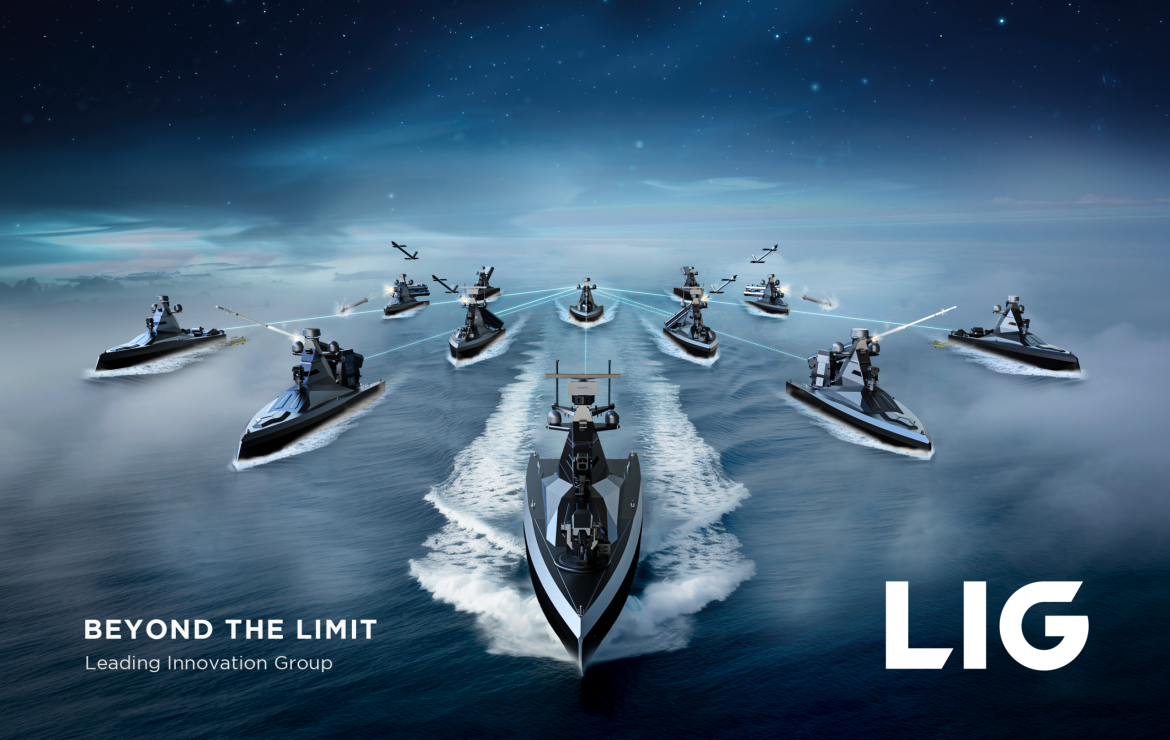
An unmanned vessel’s most important design decision begins before the hull takes shape: what mission must it accomplish? For maritime operators protecting ports, offshore infrastructure and sea routes, the answer determines which sensors and weapons are needed, how the vessel should operate and how it should work with other assets.
Autonomous navigation supports both transit to the mission area and the manoeuvring required for mission execution. Delivering operational effect requires the platform, payloads, autonomy and command and control to function as one system. How that system will work with other assets must also be considered from the outset. This is where mission-driven design begins.
Translating Mission and Payload Knowledge into System Design
LIG Defense&Aerospace(LIG D&A)’s Sea Sword series development began in 2015. The company secured a reconnaissance USV development contract in December 2024 and an agreement to develop core combat USV technologies in December 2025. Across successive designs, its experience highlighted a lesson: payload requirements must inform platform architecture from the outset.
Different mission equipment places different demands on weight distribution, power, cooling, data and manoeuvrability. Understanding those demands early helps designers determine what a common platform should accommodate and where specialised configurations are needed. Modularity therefore begins with understanding the vessel’s missions and its role within the wider force.
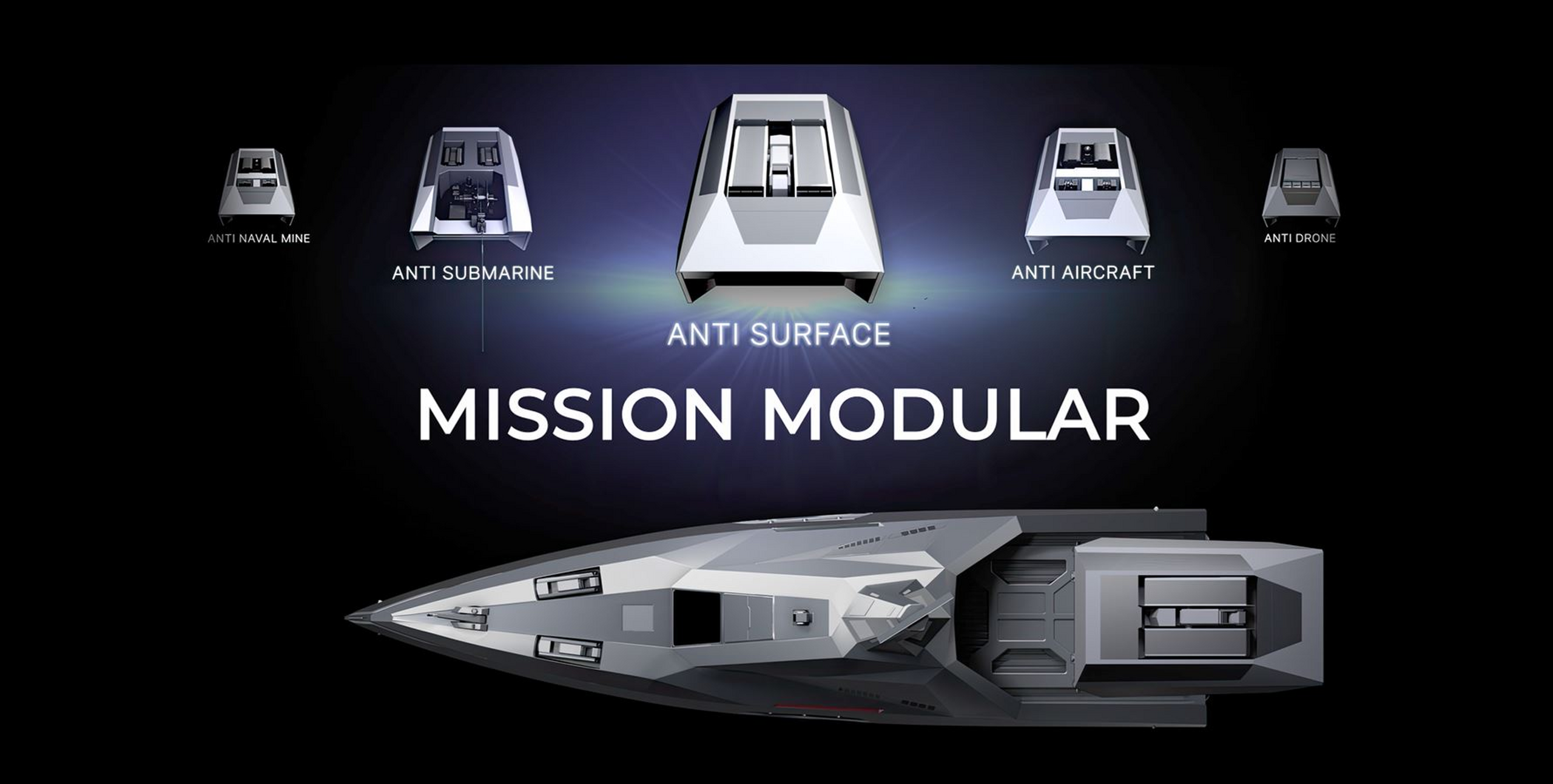
Sea Sword-X illustrates how mission-driven thinking can shape modular design. Its concept combines a standardised platform with interchangeable payloads for anti-surface, anti-submarine and counter-drone missions.
Achieving that flexibility requires designers to account for each payload’s space, weight, power and data requirements from the outset.
Modularity must also encompass mission equipment control, data exchange and integration with command and control. An understanding of the mission and its payloads must therefore guide the design, ensuring that each new payload configuration functions as part of the wider mission system.
LIG D&A brings the perspective of a system integrator with expertise in designing and manufacturing sensors and mission payloads for underwater, air defence, and surface warfare missions. This perspective, combined with the company’s capabilities in mission-oriented USV integration and configuration, as well as its autonomy software expertise, supports its ability to translate operational requirements into mission-effective USV solutions.
“Mission flexibility begins at the design stage. Understanding what each payload needs allows us to build adaptability into the system from the outset.”
— Shin Ick Hyun, CEO, LIG D&A
From Individual Vessels to an Integrated Force
The same principle extends beyond a single vessel. A wider USV family can offer different payload combinations, with movement and mission execution developed together. Each configuration should be evaluated on its ability to perform its assigned task and its contribution to the overall mission through cooperation with other systems. Equipment installation marks the start of integration. Validation must then establish whether the systems can interoperate and work together to deliver the required effect under actual operating conditions.
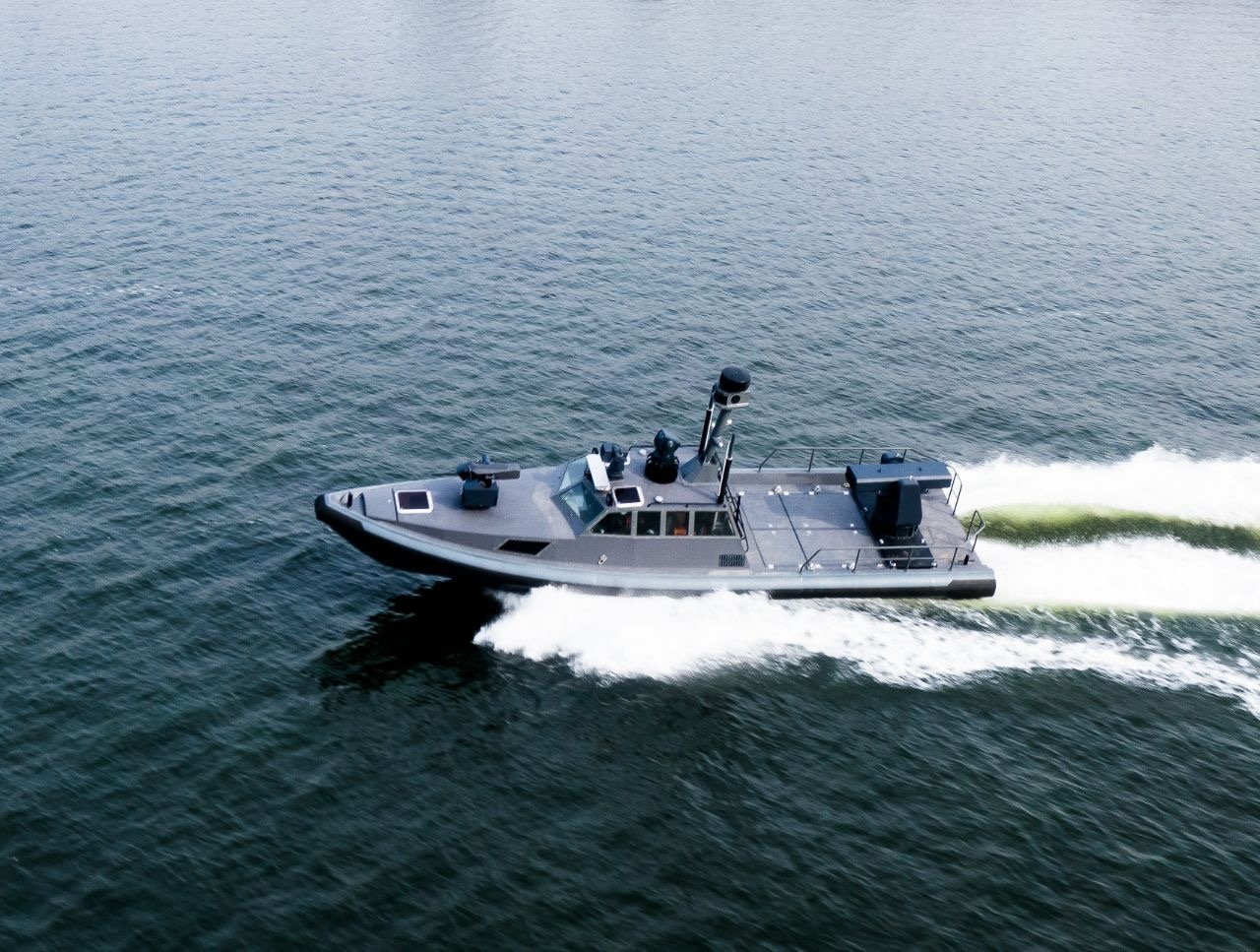
This mission-driven approach extends to heterogeneous teaming, with USVs, unmanned underwater vehicles and unmanned aircraft working towards a common mission. Role allocation, information exchange and command-and-control requirements must therefore inform the design of each system from the outset.
In harbour protection, for example, complementary observations from the air, surface and underwater environment could contribute to a shared operational picture. Based on this shared awareness, roles and tasks could be allocated and adjusted, with mission results shared in turn to coordinate capabilities across domains towards a common mission outcome.
Requirements for interoperability with existing crewed assets should be also incorporated into the initial design. Manned-unmanned teaming can then expand progressively through joint mission planning, integration across sensors, command and control, and response capabilities, and mutually supporting operations.
The objective is to make the appropriate capability available where and when it is needed, under clearly defined command-and-control authority and responsibility. Progress should be measured by both individual system performance and the force’s collective mission performance.
For the UAE, the starting point would be locally defined missions and operating conditions. End users, shipyards and technology partners could translate those requirements into designs, prototypes and operational trials. LIG D&A’s payload and mission-system expertise could complement local capabilities in platform construction, connectivity and autonomy. Training, maintenance and upgrade capacity would support continued development within the country.
As threats evolve, maritime operators will need systems that can adapt to changing tasks and work alongside other assets. Mission-driven design provides a basis for allocating roles across systems and determining what to standardise, what to adapt and what to connect. Success should be measured by how effectively platforms, payloads, command-and-control systems and other crewed and uncrewed assets work together to accomplish the common mission. Understanding the mission, each system’s capabilities and how those systems will share roles and work together must therefore be the starting point for unmanned maritime capability.