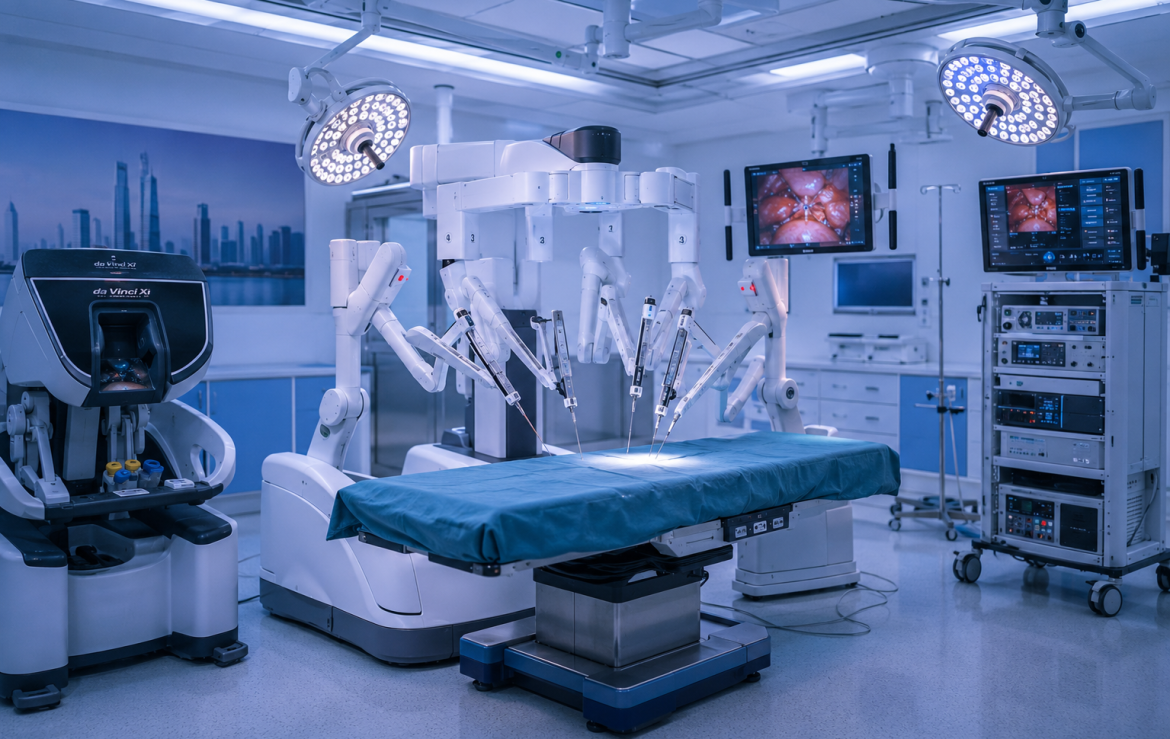
The UAE is rapidly expanding the use of medical robotics as part of its vision to build a smarter, more advanced healthcare system. Supported by a sophisticated healthcare infrastructure and sustained investment in future technologies, robotic solutions are becoming an integral part of medical practice, enhancing the quality of care, improving clinical efficiency, and reinforcing the country’s position as a leader in adopting advanced healthcare innovations.
Medical robots are now deployed across a wide range of healthcare services in the UAE, performing tasks that extend from blood collection and minimally invasive surgery to joint replacement procedures, cardiac catheterisation, automated pharmacy operations, remote diagnostics, and rehabilitation. This growing integration of robotics reflects the country’s accelerating transition towards an innovation-driven healthcare system powered by artificial intelligence and advanced medical engineering.
Dr Shafik Seidani, Director of the Robotic Surgery Programme at Cleveland Clinic Abu Dhabi, said robot-assisted surgery represents a major advancement in minimally invasive procedures, enabling surgeons to perform complex operations through small incisions. This approach helps minimise surgical trauma, reduces pain and blood loss, shortens recovery times, and lowers the risk of complications in suitable cases.
He explained that Cleveland Clinic Abu Dhabi operates an advanced robotic surgery programme equipped with state-of-the-art platforms, including the Da Vinci surgical systems. These systems provide surgeons with high-definition three-dimensional visualisation and magnified views of the surgical field, while highly flexible robotic arms manipulate specialised instruments capable of reaching areas that are difficult to access using conventional techniques. Surgeons control the instruments from a dedicated console, with the robotic platform translating their hand movements into precise, filtered actions while eliminating natural hand tremors to enhance surgical accuracy.
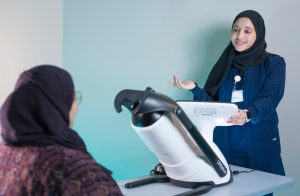
Healthcare facilities operated by Emirates Health Services have also introduced AI-powered robotic blood collection systems that use infrared technology to create three-dimensional maps of patients’ veins, including those that are not visible to the naked eye. The technology accurately identifies the most suitable vein and determines the optimal needle depth before collecting a blood sample within seconds, helping reduce pain and bruising while cutting patient waiting times by as much as 50%.
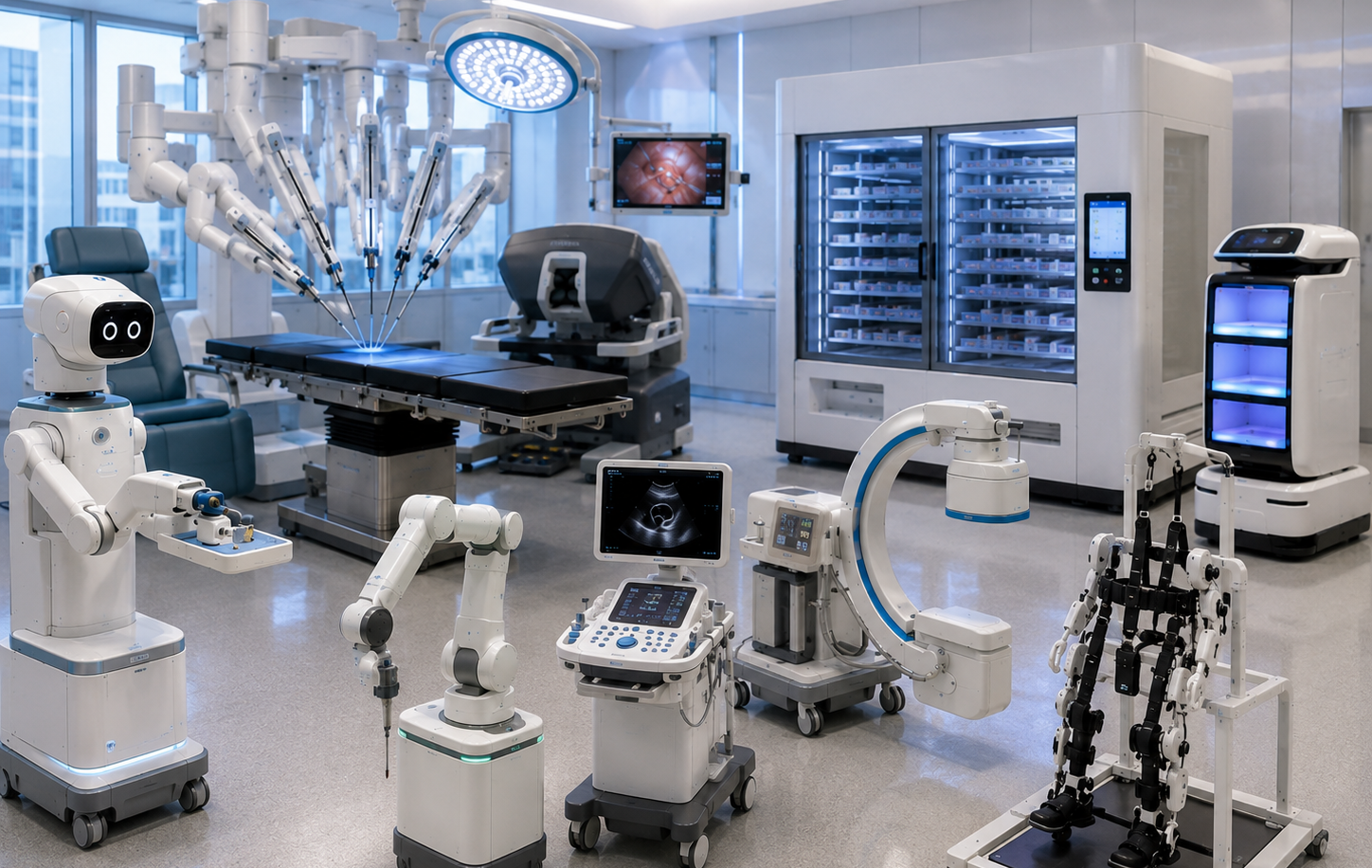
Several hospitals across the UAE have adopted robotic-assisted joint replacement systems to support orthopaedic surgeons during knee and hip replacement procedures. Using three-dimensional models generated from patients’ CT scans, the robotic systems assist with bone preparation and implant positioning with millimetre-level precision, while built-in safety features automatically halt the robotic arm if it moves beyond predefined safe boundaries, helping protect surrounding healthy tissues and ligaments.
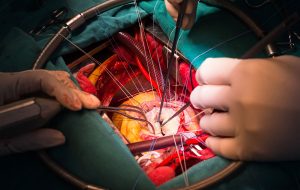
At Al Qassimi Hospital, robotic cardiac catheterisation technology enhances the precision of minimally invasive procedures inside the arteries. Physicians control the intervention through a digital platform, while robotic arms guide wires and stents with exceptional accuracy, reducing the risk of procedural errors and limiting physicians’ exposure to radiation during catheterisation procedures.
Smart robotic pharmacies have also become an important component of healthcare automation in several UAE hospitals. These systems automatically store, organise, monitor expiry dates, and dispense medications using electronic prescriptions and barcode verification. Robotic arms retrieve the required medication from automated storage systems within seconds, helping minimise dispensing errors while improving the speed, efficiency, and accuracy of pharmaceutical services.
Meanwhile, remote robotic ultrasound systems are expanding access to specialised healthcare, particularly in remote mountainous regions. Through ultra-high-speed communication networks, robotic arms replicate the real-time movements of physicians conducting ultrasound examinations, transmitting diagnostic images instantly and enabling patients to receive specialist assessments without travelling long distances.
Robotic exoskeletons are also transforming rehabilitation services by helping patients recovering from paralysis or stroke regain their ability to stand and walk. Equipped with sensors that interpret muscle signals and body movement, these wearable robotic systems use precision electric motors to provide joint support, enabling patients to move with greater stability, confidence, and safety during rehabilitation.
The expanding adoption of medical robotics highlights the rapid transformation of the UAE’s healthcare sector, where robotic technologies are becoming an increasingly important part of clinical practice across multiple medical specialties. By combining artificial intelligence with advanced medical engineering, these innovations are improving healthcare quality, enhancing operational efficiency, and delivering more precise treatment outcomes, while medical professionals continue to play the central role in clinical oversight and therapeutic decision-making.