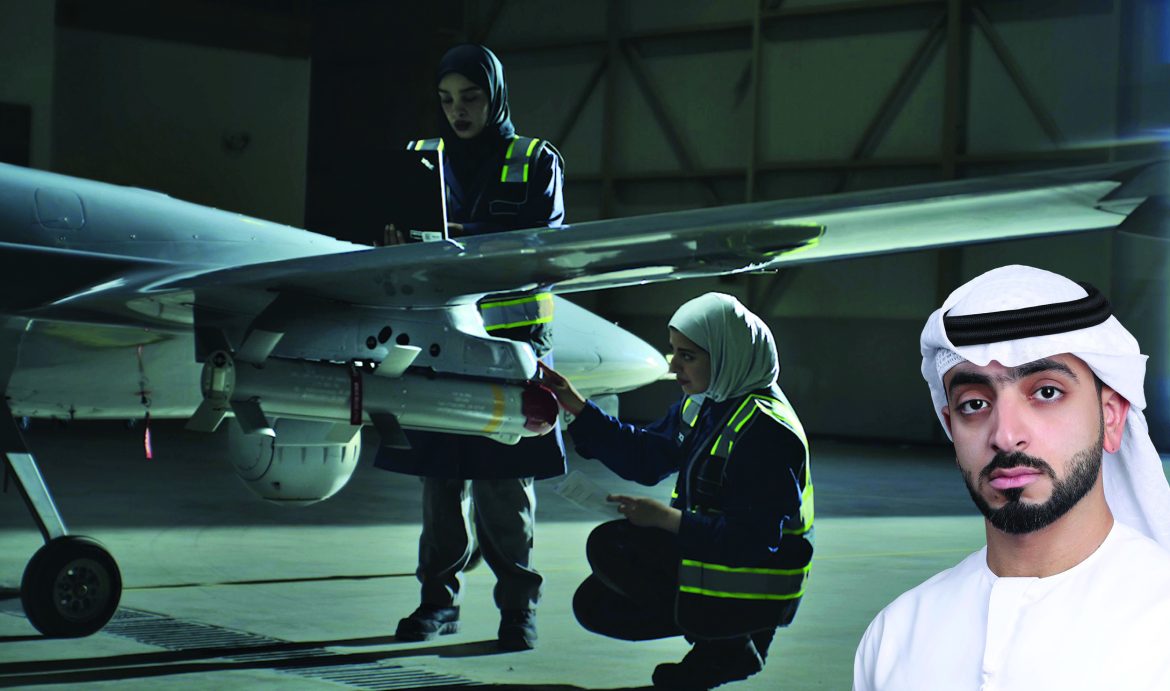
As the UAE advances its ambitions to build a sovereign, globally competitive defence industry, HALCON is playing a key role in translating indigenous engineering expertise into operational capability. As CEO, Saeed Al Shamsi is leading the company’s efforts to develop and manufacture advanced precision-guided weapons, air defence systems and next-generation technologies for the UAE Armed Forces and international partners.
In this context, Al Jundi Journal interviewed Saeed Al Shamsi, CEO of HALCON, to discuss the company’s contribution to the UAE’s sovereign defence capabilities, its approach to innovation and advanced weapons development, and its strategy for translating indigenous engineering expertise into operational advantage and global competitiveness. The following is the full interview:
Please give our readers a brief introduction to yourself and your route to becoming CEO of HALCON.
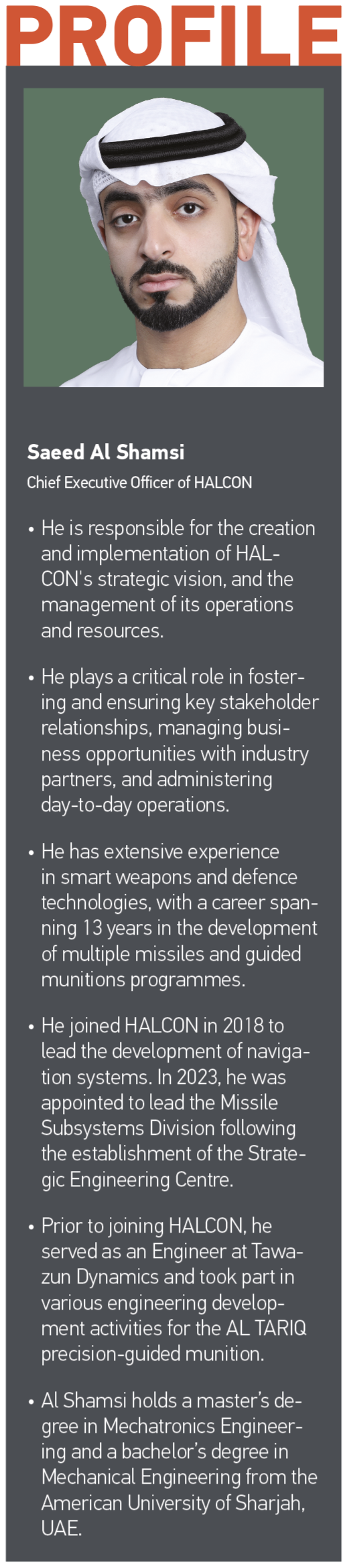
I am an engineer by training. I hold a bachelor’s degree in Mechanical Engineering and a master’s degree in Mechatronics Engineering from the American University of Sharjah, and I began my career at Tawazun Dynamics, working on engineering development for the AL TARIQ precision-guided munition. I joined HALCON in 2018 to lead the development of navigation systems, and in 2023 I was appointed to lead the Missile Subsystems Division. I was appointed Acting CEO in 2025 and became CEO in 2026. Thirteen years on missile and guided munition programmes have taught me that precision must run through engineering, manufacturing and delivery, and that principle guides how I lead HALCON today.
HALCON has become an important contributor to the UAE’s defence industry. How do you see the company’s role evolving within the UAE’s broader vision for sovereign defence capabilities and a globally competitive defence sector?
HALCON is a strategic partner to the UAE Armed Forces, developing and manufacturing smart weapons critical to the nation’s defence and sovereignty. Contracts worth AED 4.7 billion for the DESERT STING 25 (DS-25) and AED 2.14 billion for THUNDER precision-guided munitions reflect that trust. We support the ‘Make it in the Emirates’ and ‘Industry 4.0’ initiatives and contribute to the Ministry of Industry and Advanced Technology’s ‘Operation 300bn’ strategy, generating in-country value and strengthening the national defence industrial base. Sovereignty and global competitiveness go hand in hand. According to Janes, HALCON captured the third-largest share of the global precision-guided weapons market in 2024.
The UAE has placed strong emphasis on developing advanced, homegrown defence technologies. What are the key capabilities HALCON is currently developing to address the evolving requirements of the UAE Armed Forces and its strategic partners?
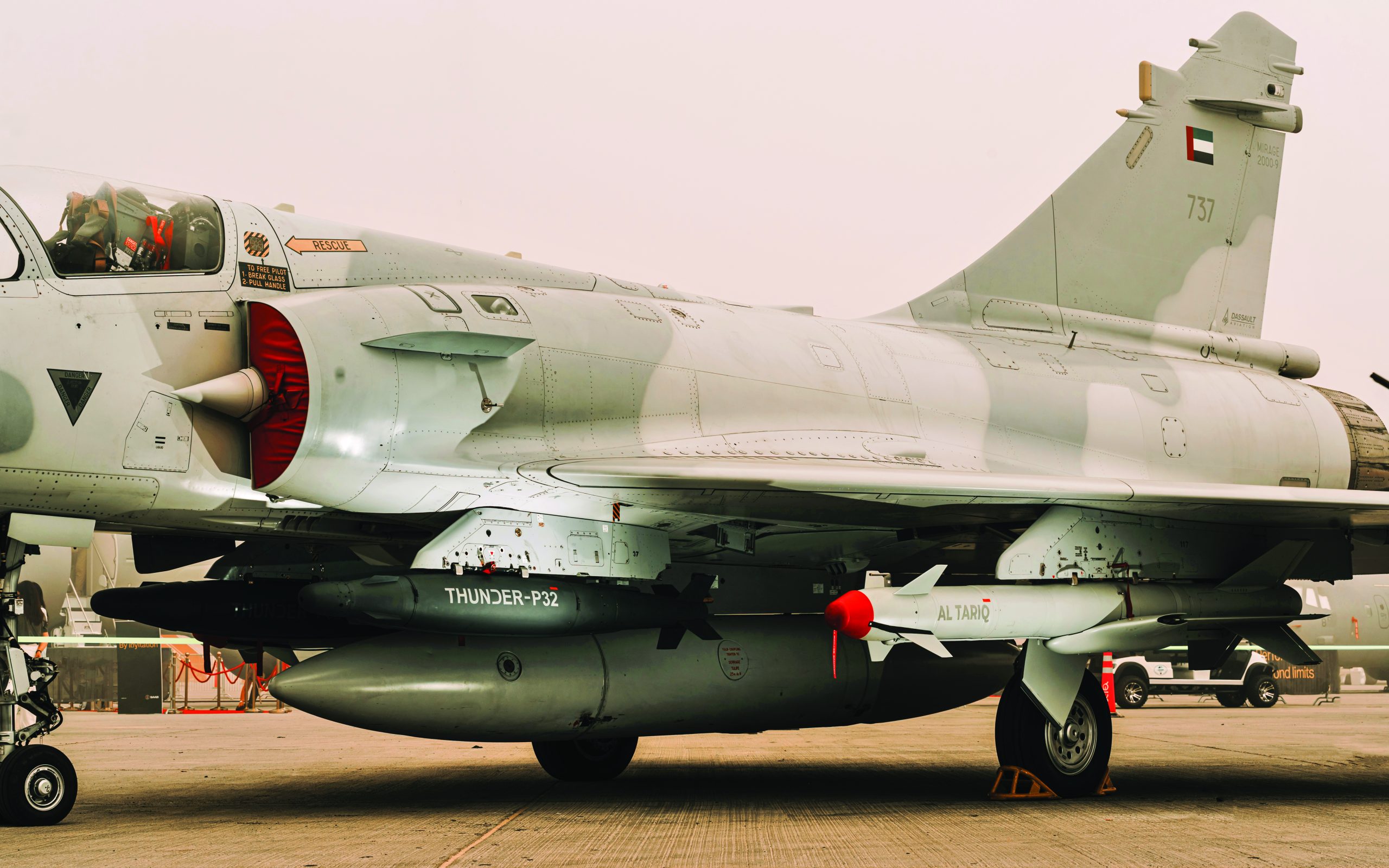
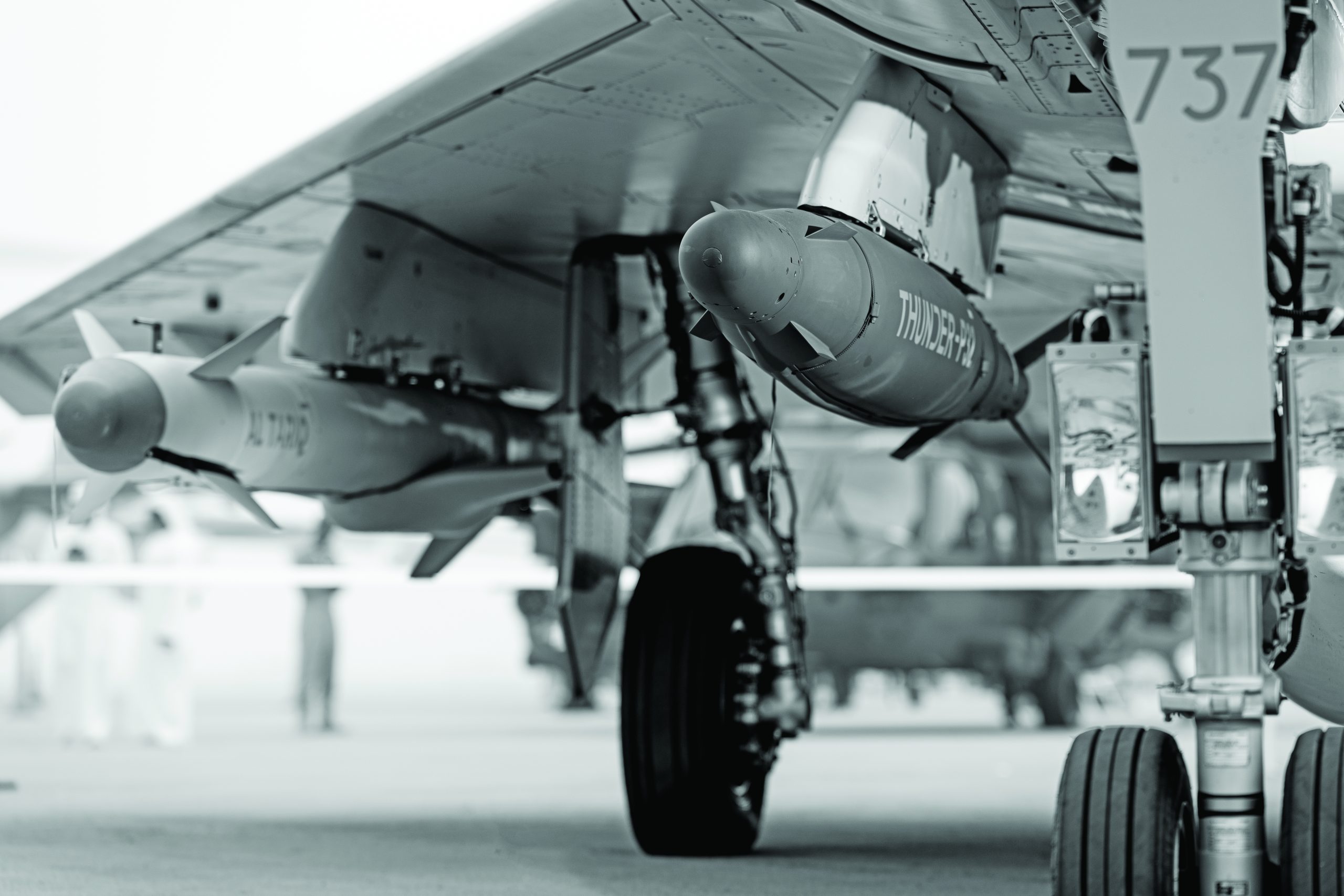
Our DESERT STING guided-glide weapons and THUNDER precision guidance kits are in production and in service. The DESERT STING 16 (DS-16) is a 23 kg guided-glide weapon with a range of up to 15 km, while THUNDER kits turn MK-series general-purpose munitions into precision weapons. THUNDER ER will add a wing kit for a significantly greater stand-off range. In air defence, our SKYKNIGHT air defence missile system counters saturation attacks by drones, rockets, artillery and mortars and is progressing towards full system qualification. We are also developing new missile concepts, including a cost-effective cruise missile.
Modern warfare is increasingly shaped by precision strike, autonomous systems, artificial intelligence, and networked operations. How is HALCON integrating these technologies into its next generation of defence solutions?
Precision today means performing when satellite navigation is degraded and targets are moving. We are investing in anti-jamming and anti-spoofing protection, vision-based navigation, sensor fusion and artificial intelligence so our systems remain effective when GNSS signals are denied, with the human operator always setting the parameters of an engagement. The DS-16, designed for unmanned and manned aircraft, has been integrated on Baykar’s Bayraktar TB2. SKYKNIGHT shows networked operations in practice, working alongside radar, guns and command-and-control systems in a layered air defence architecture that assigns each threat to the most suitable effector.
HALCON has demonstrated a strong focus on indigenous innovation. What are the most significant challenges and opportunities in transforming advanced research and engineering into operationally proven defence systems?
The greatest challenge is turning a successful prototype into a system operators can rely on every time, one that withstands extreme environments and can be manufactured consistently at volume. Our systems are tested to leading military standards, including MIL-STD-810, MIL-STD-461 and MIL-STD-1316. Time is the second challenge, and our answer is modularity. The DS-16 and DS-25 retain the same seeker, guidance module and tail kit as the kits already in service, shortening development and reducing risk. The opportunity lies in owning expertise across the entire value chain, so lessons from the production line and from the end user feed straight back into design.
The UAE’s defence industry is increasingly looking beyond national requirements and competing in international markets. What is HALCON’s strategy for establishing itself as a trusted global supplier of advanced defence technologies?
Trust is earned through proven performance and long-term partnership. International customers benefit from systems validated by the UAE Armed Forces, and EDGE recently signed a contract to supply DS-16 and THUNDER P-31 for the Royal Moroccan Air Force’s unmanned combat aerial vehicle fleet. We collaborate with businesses big and small, nurturing mutually beneficial relationships. Our partnership with Baykar opens new platforms and markets. As part of a Group with a growing footprint across five continents, we also benefit from EDGE’s established supply chains, regional partnerships and expanding customer base.
Defence capability is not only about developing sophisticated systems, but also about building the industrial ecosystem behind them. How is HALCON contributing to the development of Emirati talent, engineering expertise, supply chains, and specialised manufacturing capabilities?
We attract top industry talent and develop young Emirati engineers through hands-on experience on live programmes, building national expertise in the subsystems that make a guided weapon truly sovereign, such as navigation, guidance and seekers. Our in-house manufacturing covers everything from high-precision components through to complete assembly, including CNC machining, surface treatment, and printed circuit board assembly. HALCON also operates the UAE’s only cathodic electrodeposition coating facility. By investing in automation and robotics, dual sourcing critical components and working closely with EDGE entities such as EPI and LAHAB, we keep more value, knowledge and jobs in the UAE.
From your perspective as CEO, what does ‘innovation’ mean in the context of defence, and how do you ensure that innovation at HALCON translates into tangible operational advantage for the end user?
Innovation only matters when it reaches the end user and makes a difference to the mission. I apply three tests. Does it solve a real operational problem? Can we produce it reliably, affordably and at volume? Can we deliver it quickly enough to matter? THUNDER kits are a good example, delivering accuracy at a cost that allows for wide use. We stay close to the UAE Armed Forces and our partners, test rigorously against their requirements and feed what we learn back into design. When an operator trusts a HALCON system to perform exactly as intended, every time, innovation has done its job.
» Interviewed by: ALJUNDI