

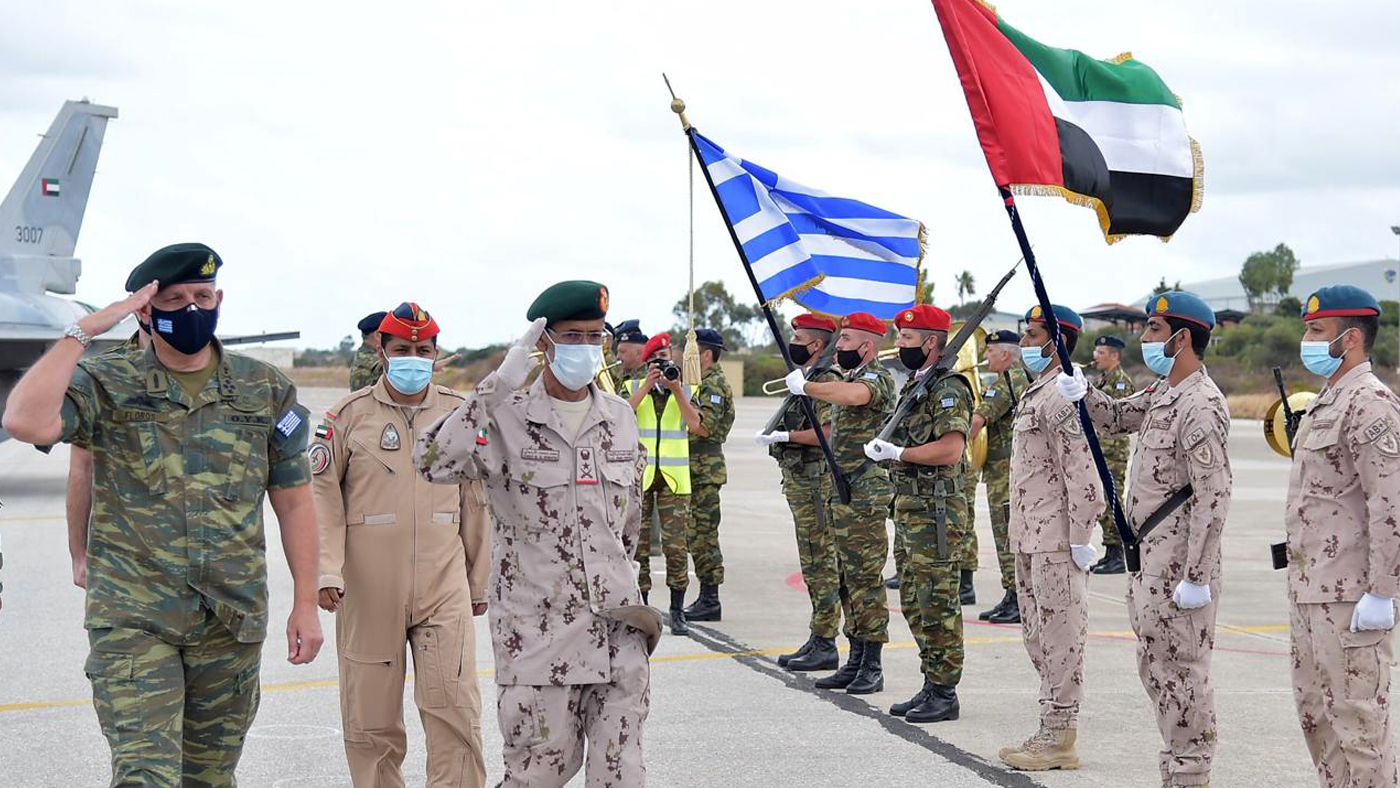
The international strategic environment is undergoing profound transformations that have revived fundamental questions regarding the nature of security guarantees, the limits of reliance on traditional alliances, and the position of powers within the international order. In this context, security debates are no longer confined to the dynamics of great-power competition, but are increasingly shifting towards examining the role of middle powers that possess advanced military, industrial, and technological capabilities without reaching the status of traditional great powers.
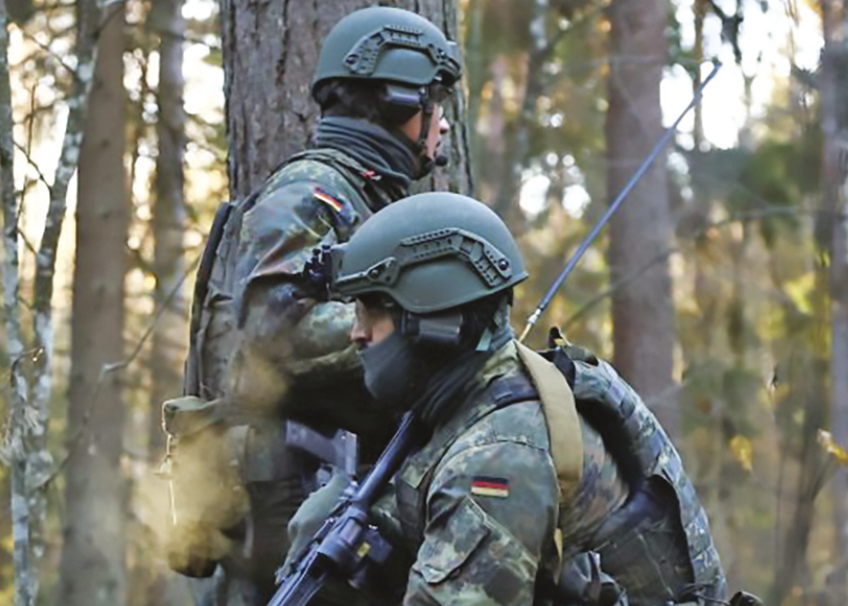
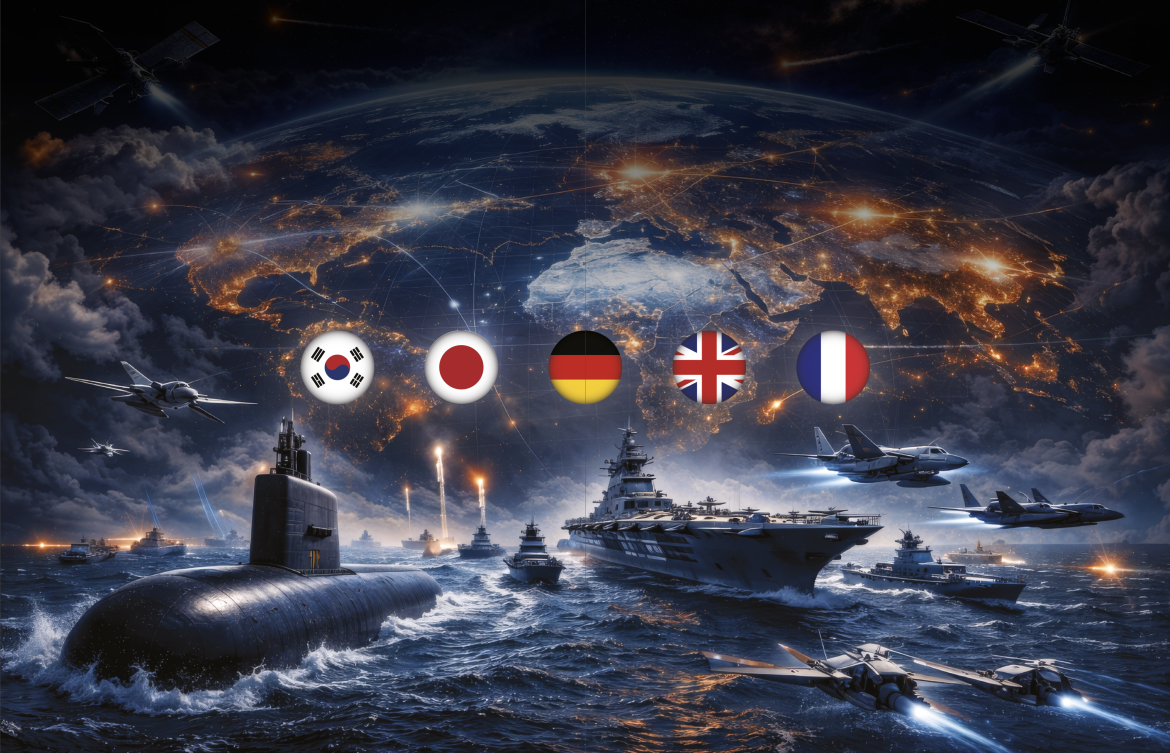
Against this backdrop, the proposed “Middle Powers Five” (MP5) grouping-comprising South Korea, Japan, France, the United Kingdom, and Germany-emerges as a significant reflection of the ongoing transformations in the structure of international power and of the growing need for more flexible and independent security frameworks.
These developments do not merely represent technical modernisation in military capabilities, but rather reflect a deeper transformation in the strategic doctrines of these states. Increasingly, they are moving away from reliance on external security guarantees-particularly those provided by the United States-towards rebuilding their deterrence capabilities, expanding their strategic autonomy, and forging more diversified partnerships. This dynamic has become particularly evident amid the relative decline of the concept of extended deterrence and the resulting demand for new forms of coordination among middle powers.
Within this framework, the study analyses the MP5 proposal introduced by Dr Cheong Seong-Chang (see references) through three interconnected levels: the transformation of the international strategic environment, doctrinal and military shifts within the five states, and the military, operational, and technological agenda that could position this proposal as an emerging framework for redefining the role of middle powers in the post-extended deterrence era. Accordingly, MP5 should not be viewed merely as an organisational arrangement, but rather as an indicator of a deeper structural transformation in the architecture of international security and as a model that other middle powers may draw upon in seeking to expand their strategic autonomy.
The Transformation of the International Strategic Environment and the End of Traditional Security Certainty
The principal starting point for understanding the rise of alliance-building among middle powers, including the MP5 proposal, lies in the shift in the American approach to international security, particularly with regard to the concept of extended deterrence. For decades, this concept represented one of the central pillars of the U.S.-led security order, whereby Washington provided broad security guarantees to its allies in Europe and Asia, positioning itself as the primary guarantor of deterrence-based stability across numerous international theatres.
However, the U.S. National Security Strategy issued in December 2025, alongside the National Defence Strategy released in January 2026, no longer grants extended deterrence the same central role it occupied in previous strategic doctrines, reflecting a significant transformation in American military strategic thinking. U.S. priorities have increasingly shifted towards homeland defence, containing China, burden-sharing with allies in security and military affairs, and strengthening the defence industrial base.
This indicates that the protection of allies is no longer viewed as an objective in itself, but has become conditional upon allies assuming a greater share of responsibility for their own security. In this sense, allies are no longer seen merely as recipients of guarantees, but are increasingly expected to become more autonomous actors in managing their regional security environments.
This shift aligns with the logic of “Offshore Balancing,” a strategic approach based on reducing direct American engagement while enabling allies to manage their own security environments, with Washington retaining the role of an external balancer rather than a comprehensive guarantor.
Consequently, this transformation has weakened traditional alliance models centred on U.S. leadership and has opened the door to the search for new forms of coordination among middle powers in an international environment where old security certainties are steadily eroding.
The MP5 Proposal as a Framework for Redefining Middle Power Status and Bridging Gaps in Traditional Alliances
The concept of “middle power,” as reflected in studies and proposals such as MP5, does not simply refer to states of medium size, but rather to states possessing independent strategic capabilities, advanced defence industrial bases, and influential positions in regional and international balances of power. It may therefore be more accurate to describe these nations as “strong middle powers” rather than relying solely on the conventional concept of middle powers, as the five proposed states are not merely positioned between major and smaller powers, but possess military, economic, and technological capabilities that qualify them for broader military and security roles.
The significance of this conceptual framework becomes more evident when comparing the G7, Quad, and MP5. While the G7 remains fundamentally an economic and financial forum, the Quad focuses primarily on Indo-Pacific security and the containment of China, without European representation. By contrast, MP5 emerges as a qualitatively distinct framework, integrating security, technology, nuclear dialogue, defence cooperation, and a degree of independence from direct U.S. military structures. It also grants South Korea a foundational role not available within other frameworks, while simultaneously linking the European and Asian strategic theatres within a unified security and military structure.
Accordingly, the MP5 proposal addresses three structural gaps simultaneously. It moves beyond the predominantly economic nature of the G7 by incorporating a security and military dimension; surpasses the narrow geopolitical focus of the Quad by adopting a broader approach not limited to the Indo-Pacific theatre; and resolves the issue of South Korea’s exclusion-despite its growing strategic importance-from both frameworks by granting it a central role within a more balanced and integrated security cooperation structure.
Doctrinal and Military Transformations Within the Five States
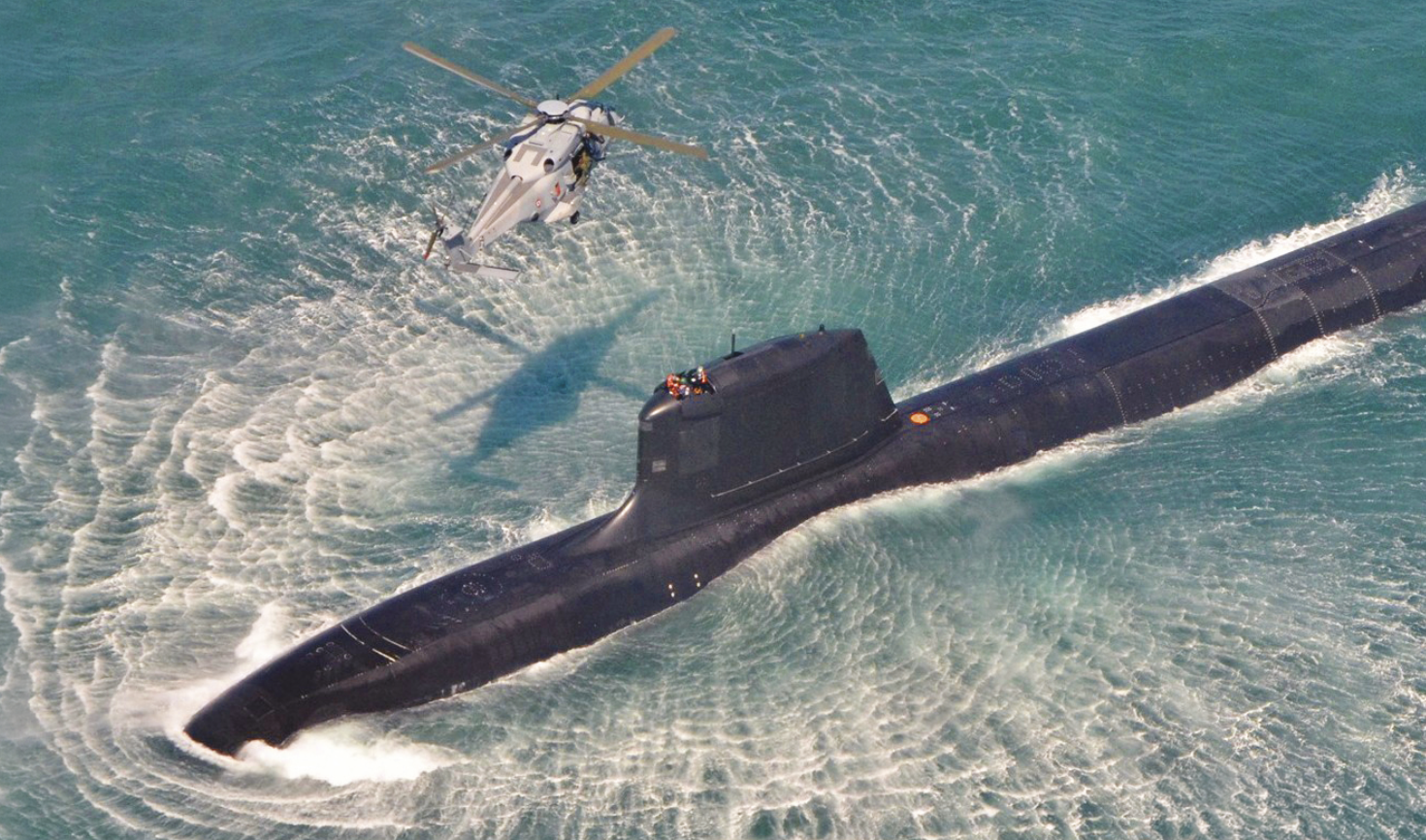
1. France: Strategic Independence as a Security Doctrine: Within MP5, France represents the most complete model in terms of combining strategic independence with autonomous military capability. It does not perceive security as an extension of American protection, but rather as an integral component of its national strategic identity. This position is underpinned by its possession of independent nuclear deterrence capabilities, including ballistic missile nuclear submarines, Barracuda/Suffren-class attack submarines, and a domestic uranium enrichment infrastructure, linking political decision-making directly to deterrence capability without structural dependence on external actors. France’s significance extends beyond its nuclear dimension to its operational reach outside Europe. Under its updated strategy, France considers itself a permanent Indo-Pacific power and maintains a sustained military presence in its overseas territories, granting it the ability to operate across a theatre that extends beyond the narrow European framework. As such, within MP5, France appears not only as a European power with independent deterrence, but also as a strategic and operational bridge between Europe and Asia. In this sense, France represents the most mature model of a military doctrine built upon the integration of nuclear deterrence, political autonomy, and long-range operational deployment, positioning it as a foundational actor in any effort to construct a less dependent and more independent security architecture.
2. The United Kingdom: From Intelligence Superiority to Operational Reach: If France embodies the model of deterrent independence within MP5, the United Kingdom represents the model of highly capable intelligence-operational power. It stands out not merely as a European military power, but as an actor possessing irreplaceable capabilities in signals intelligence (SIGINT), cyber security, and strategic information-sharing networks, making it a critical component in any emerging security structure. Yet Britain’s importance extends beyond intelligence capabilities to its ability to translate that superiority into active operational presence. The rhetorical decline of concepts such as “Global Britain” has not translated into military retrenchment; rather, British engagement in the Indo-Pacific has continued and expanded through Operation High Mast, centred around the aircraft carrier HMS Prince of Wales, reaffirming London’s ability to project power beyond the European sphere. The United Kingdom’s significance within MP5 is further amplified by the precedent of AUKUS, which has provided experience in naval nuclear propulsion, as well as by the Franco-British Northwood Declaration, which demonstrated the potential for coordinating independent deterrence capabilities. Britain thus serves as a nexus linking intelligence superiority, operational capacity, and institutional expertise in nuclear and deterrence cooperation.
3. Germany: From Strategic Restraint to Constrained Engagement: Germany represents a qualitatively different case within MP5 compared to France and the United Kingdom, as it enters this framework not through sovereign deterrence or cross-theatre operational capability, but through its industrial-technological strength, which makes it one of the silent pillars of any advanced collective security structure. From this perspective, Germany’s significance lies not in what it lacks relative to France or Britain, but in the distinct type of power it contributes to the grouping. This role has become increasingly important following the transformation in German security thinking after the Zeitenwende turning point, which demonstrated that Germany can no longer remain solely an economic civilian power detached from the realities of strategic conflict. Nevertheless, this transformation remains constrained by deep historical, political, and cultural limitations, making Berlin an example of “constrained strategic engagement”-that is, active participation in collective security-building without embracing direct nuclear deterrence logic or extensive operational expansion. Germany’s true value therefore lies in advanced defence manufacturing, precision sensing technologies, space and cyber capabilities, and naval platform construction. In this sense, Germany embodies an important shift in the concept of power, whereby strategic weight is no longer measured solely by nuclear weapons or military deployment, but also by the capacity to produce technology and sustain collective defence infrastructure.
4. Japan: From Alliance-Constrained Defence to Expanding Autonomy: Japan represents within MP5 one of the clearest examples of a quiet yet profound transformation in the security doctrine of middle powers. It is not moving from full dependency to complete independence, but rather navigating a more complex space between maintaining alliance commitments and expanding autonomy-making it a critical case for understanding how advanced states are reshaping their security posture amid declining certainty in the American security umbrella. Japan is no longer content with the alliance-constrained defensive logic that shaped its security policy for decades. Instead, it has moved towards expanding its autonomous capacity through increased defence spending, the development of counterstrike capabilities, and diversification of military-industrial partnerships beyond the direct American framework. This shift does not indicate abandonment of its alliance with Washington, but rather reflects the recognition that the alliance alone is no longer viewed as a sufficient substitute for building national capabilities. Japan’s importance within MP5 is enhanced by its role as a bridge between Asian security and the technological-operational structure of middle powers. It adds advanced Asian strategic weight and serves as a key contributor to maritime, industrial, and technological integration with South Korea, alongside French and British expertise in naval nuclear propulsion, sensing, and maritime deployment.
Proposed Military and Operational Agenda for MP5
The significance of MP5 extends beyond political symbolism to its potential evolution into a functional security structure built upon practical tools for enhancing collective strategic autonomy, particularly in sensitive areas such as nuclear cooperation, maritime security, and defence technology.
Cooperation in Nuclear Submarines and Atomic Energy Technologies
Nuclear submarines and atomic energy technologies occupy a central place within the MP5 agenda, particularly for South Korea, where nuclear propulsion is no longer viewed merely as a technical option but as a necessity for enhancing long-range maritime deterrence. With continued U.S. restrictions on nuclear technology transfer, cooperation with France and the United Kingdom emerges as a strategic alternative that reduces technological dependency. France is of particular importance due to its use of low-enriched uranium in Barracuda submarines, reducing non-proliferation constraints compared to highly enriched models. This form of cooperation therefore extends beyond technical considerations to establish a more legally and politically flexible pathway. The creation of a specialised working group on maritime security and nuclear propulsion also reflects MP5’s transition from political coordination towards structured institutional and technical development.
Technological Security and Building an Independent Defence Supply Chain
Technological security stands out as one of the principal drivers behind MP5, particularly in light of a clear American contradiction: demanding that allies shoulder greater security burdens while maintaining strict restrictions on transferring sensitive technologies. This creates the need for middle powers to build a more autonomous defence and technological base capable of reducing dependence on the United States in critical sectors.
This agenda is reflected in four main tracks: establishing an independent maritime surveillance network, jointly developing unmanned systems, designing maritime surveillance assets, and strengthening cyber and space cooperation. This demonstrates that the transformation in middle-power military strategy no longer centres solely on modernising armies and combat platforms, but increasingly includes rebuilding the technological infrastructure of defence and security on more diversified and integrated foundations.
Linking European and Asian Security
MP5’s significance also lies in transcending the traditional separation between European and Asian security, based on the recognition that threats are no longer confined to isolated regional frameworks, but instead form part of a broader Eurasian theatre in which the interests of Russia, China, North Korea, and Iran increasingly intersect. From this perspective, the concept of a Eurasian maritime security initiative gains particular relevance, as it moves cooperation beyond political dialogue towards joint exercises, operational missions, and regular maritime coordination. This reflects a broader shift in middle-power strategic doctrine-from focusing on narrow regional environments to recognising the interconnection of major security theatres.
Nuclear Dialogue in the Post-Extended Deterrence Era
MP5 does not seek to become an alternative nuclear umbrella, but rather to initiate strategic nuclear dialogue amid the widening deterrence gap created by declining confidence in U.S. extended deterrence. The objective is not to replicate NATO arrangements, but to discuss deterrence alternatives and the place of French and British nuclear capabilities within a more flexible strategic balance. Accordingly, MP5’s significance lies not only in its role as a new framework for security cooperation, but also in its function as a strategic laboratory for redefining security, deterrence, and autonomy in an increasingly fluid and multipolar world.
Conclusion
Despite the ambitious nature of the MP5 project, it is not without structural, political, and historical obstacles that may limit the speed of its development. Chief among these are historical mistrust between South Korea and Japan, the possibility of American reservations should the initiative be interpreted as a parallel structure to U.S.-led security arrangements, sensitivities surrounding the transfer of defence and nuclear technologies, and differing domestic political positions among member states. Nevertheless, these constraints do not diminish the project’s value; rather, they underscore that its success depends on gradual implementation, flexibility, and political accommodation, ensuring that it remains complementary rather than competitive. In this context, the MP5 proposal demonstrates that the transformation currently underway in the military strategies of middle powers is not merely a temporary response to changing security conditions, but reflects a deeper shift in the logic of strategic positioning itself. These powers no longer perceive their security as an automatic extension of inherited alliances or stable external guarantees, but are increasingly moving towards assuming a greater share of responsibility of their own security through a combination of deterrence, technology, institutional coordination, and operational engagement. As such, MP5 goes beyond being a simple organisational framework among five states, instead reflecting a new strategic consciousness among middle powers in the post-extended deterrence environment.
Moreover, the proposal is not limited to its potential members, but may also serve as a model for other middle powers in Europe, Asia, and the Middle East seeking to expand their strategic autonomy without severing ties with existing alliances. From this perspective, MP5 offers a practical vision for the transition of middle powers from security dependence to participation in security production through flexible forms of cooperation based on functional integration rather than complete symmetry in capabilities or interests.
By: Prof. Wael Saleh, (Director at TRENDS Research & Advisory, France and Canada)