Military affairs are undergoing one of their most profound strategic transformations since the Industrial Revolution, as artificial intelligence (AI) evolves from a supporting technology into a foundational pillar reshaping military power, national sovereignty, and strategic autonomy. Military superiority is no longer determined solely by the size of armed forces or the sophistication of weapons systems. Instead, it increasingly depends on a nation’s ability to extract knowledge from vast amounts of data and transform it into faster, more accurate, and more effective operational decisions in real time. In this context, data, algorithms, computing infrastructure, and communication networks have become essential components of military power, standing alongside traditional combat platforms.
This transformation, however, presents a significant strategic paradox. While AI equips armed forces with unprecedented capabilities in surveillance, analysis, forecasting, and decision support, it simultaneously introduces new forms of technological dependence when states rely on software, digital infrastructure, or cloud-based services that remain beyond their direct control. Consequently, the central challenge is no longer the mere acquisition of AI technologies, but ensuring they can be employed without compromising national decision-making or limiting strategic freedom of action.
Against this backdrop, digital sovereignty has evolved beyond a purely technical concept associated with data protection or cybersecurity. It has become a fundamental prerequisite for military sovereignty. Rather than pursuing complete technological self-sufficiency—an increasingly unrealistic objective in globally interconnected innovation ecosystems—digital sovereignty requires armed forces to manage strategic dependencies while retaining effective control over critical technologies, diversifying supply sources, and maintaining sovereignty over the data, algorithms, and digital infrastructure underpinning defence systems. Possessing the world’s most advanced weapons cannot guarantee strategic independence if the software operating them, the data sustaining them, or the digital services ensuring their functionality remain subject to external control or restrictions.
Artificial Intelligence Beyond the Battlefield
The influence of AI extends well beyond enhancing military capabilities. It is also reshaping the structure of defence institutions by redistributing expertise and influence among governments, armed forces, technology companies, and software developers. As a growing share of operational expertise shifts towards commercial technology providers, new questions emerge concerning governance, legal and ethical accountability, the appropriate role of the private sector in developing military capabilities, and the mechanisms required to ensure that the ultimate decision to employ force remains both human and sovereign.
Equally important, the future of warfare should not be viewed as an inevitable outcome of technological progress alone. Technology does not evolve in isolation; rather, its trajectory is shaped by political, economic, and geopolitical realities, as well as by the interests of states, defence industries, and prevailing military doctrines. Consequently, understanding military AI requires moving beyond a purely technical perspective and recognising it as a strategic issue that directly affects the distribution of power, the management of technological dependencies, and the future of national sovereignty.
Accordingly, this study argues that the principal challenge posed by military AI is not simply building smarter armed forces, but achieving “defence without dependence”—leveraging advanced technologies while preserving national decision-making autonomy and maintaining human responsibility over the use of force. To examine this issue, the study is organised into two interconnected sections. The first explores “Military Digital Sovereignty: Ensuring the Freedom to Operate, Manage, and Develop Defence Capabilities,” analysing the shift in strategic advantage from conventional military platforms to data, algorithms, and digital infrastructure, and its implications for sovereignty and strategic independence. The second examines “Building Defence Digital Sovereignty,” focusing on governance, the management of strategic dependencies, and the development of national capabilities to ensure that artificial intelligence strengthens, rather than erodes, national sovereignty.
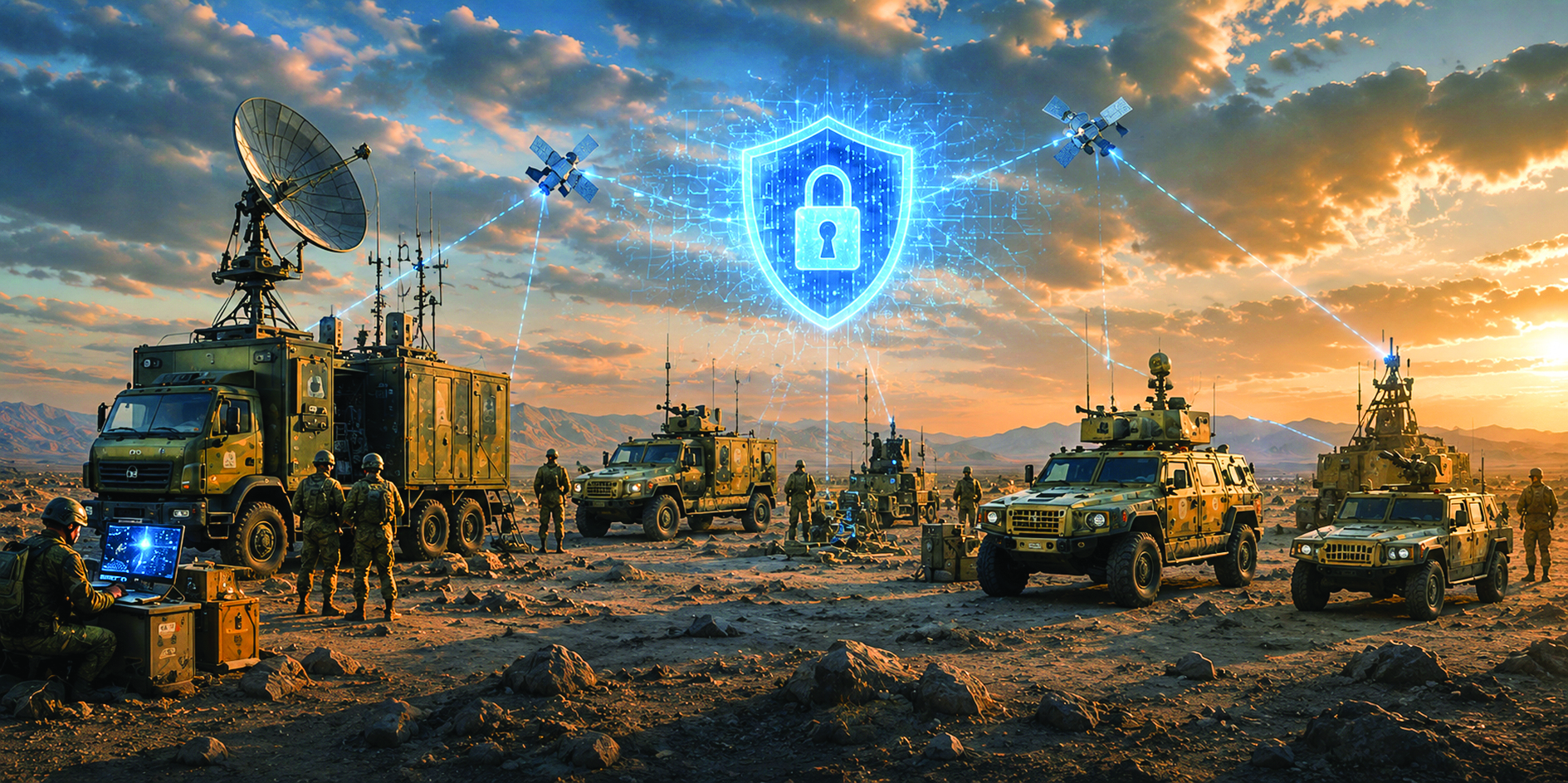
Military Digital Sovereignty: Ensuring the Freedom to Operate, Manage, and Develop Defence Capabilities
Artificial intelligence has fundamentally transformed the concept of military power. Strategic superiority is no longer measured solely by troop strength or advanced weapons systems, but increasingly by an armed force’s ability to convert vast quantities of data into rapid, accurate operational decisions. Traditional warfare relied primarily on firepower, logistical readiness, geographical deployment, and control of land, sea, and air domains. Contemporary military operations, however, have introduced a new dimension: information superiority. Data has evolved from a supporting asset into a strategic resource underpinning command and control, intelligence, surveillance, reconnaissance, and targeting systems, making it one of the defining factors of battlefield initiative.
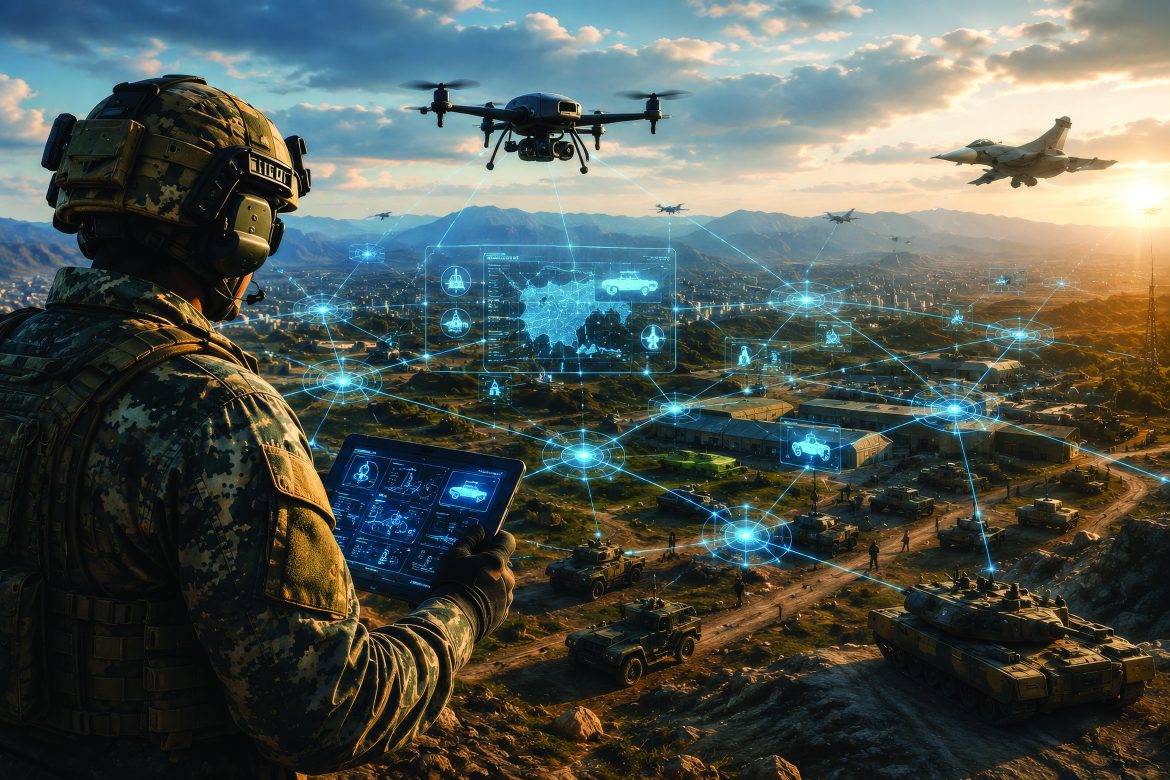
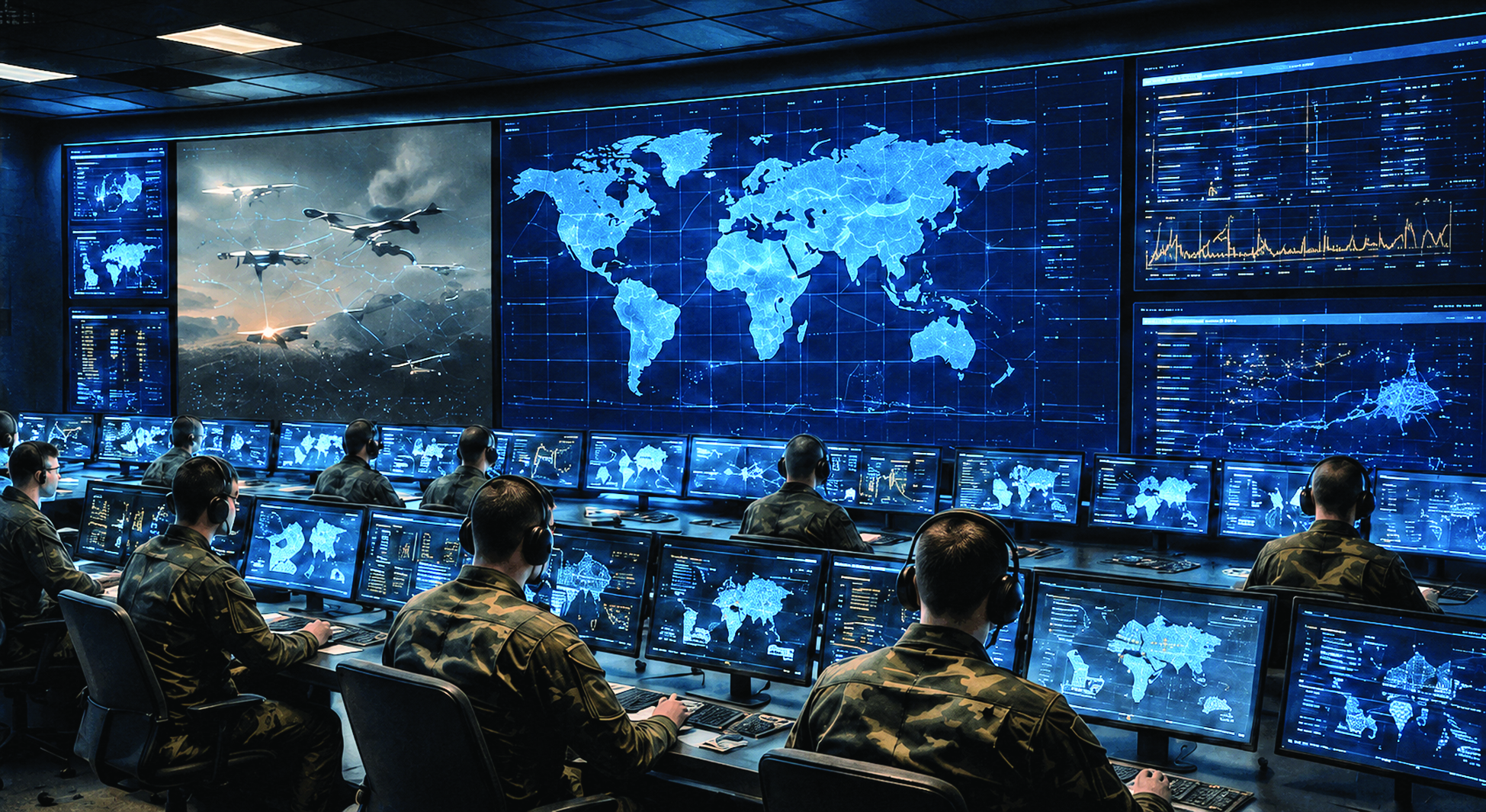
Modern operational environments generate enormous volumes of information from satellites, unmanned aerial systems, radar networks, sensors, navigation systems, and open-source intelligence platforms—far exceeding the capacity of human operators to process them with the speed and accuracy required. Artificial intelligence has therefore become the critical intermediary capable of transforming this flood of information into actionable knowledge by integrating data, identifying patterns, prioritising threats, and generating a comprehensive operational picture that enables commanders to make informed decisions in real time. Consequently, military advantage no longer depends simply on possessing information, but on converting it into decisive action before an adversary can do the same.
The impact of this transformation is particularly evident in the military decision-making cycle, especially the Observe–Orient–Decide–Act (OODA) Loop, which has become a key benchmark of operational effectiveness. The shorter the interval between detecting a threat and responding to it, the greater the ability of armed forces to seize and maintain the operational initiative. Yet this acceleration is not without risk. Excessive reliance on algorithmic recommendations under severe time pressure may reduce opportunities for human judgement and strategic assessment. Rather than replacing human decision-makers, artificial intelligence requires a careful redefinition of the relationship between speed, accuracy, and accountability in military operations.
The Changing Nature of the Fog of War
Artificial intelligence has also transformed the traditional military concept of the “fog of war.” In the past, uncertainty primarily resulted from limited information or delays in obtaining it. Today, however, ambiguity increasingly stems from an overabundance of data, conflicting information, poor data quality, and the deliberate manipulation of information through deception and disinformation. Consequently, modern warfare is no longer solely a contest for territorial control or the neutralisation of enemy forces. It has also become a struggle over the production, management, and interpretation of knowledge, as well as the ability to distinguish reliable information from deception and signal from noise. In this environment, artificial intelligence serves not only as a tool for collecting and analysing information, but also for evaluating its credibility, placing it within its operational context, and detecting attempts to deceive command-and-control systems. Ironically, many of these deception campaigns are themselves increasingly generated or enhanced by artificial intelligence, turning the battlefield into a contest between AI systems designed to generate trustworthy knowledge and those engineered to distort and manipulate it.

AI technology in the army. Warfare analytic operator using vr virtual reality glasses checking coordination of the military team with tablet device augmented reality operating troops outdoors
Redefining Military Sovereignty
This transformation has profound implications for the concept of military sovereignty. Traditionally, sovereignty has been associated with the state’s monopoly over the legitimate use of force within its territory and its ability to maintain armed forces capable of defending national independence. In the digital era, however, sovereignty extends beyond the possession of physical military assets to encompass control over the information ecosystem that underpins military decision-making. If the data supporting defence operations are collected, stored, or processed beyond national control, or if the algorithms informing operational decisions are owned by external entities, strategic autonomy becomes vulnerable to technical limitations and political constraints imposed by others. Consequently, digital sovereignty has emerged as a fundamental pillar of military sovereignty, ensuring that states retain the freedom to operate, manage, and develop their defence capabilities independently. Digital sovereignty, however, should not be equated with complete technological self-sufficiency. The structure of the global digital economy makes it virtually impossible for any single nation to domestically produce every critical technology. Semiconductor manufacturing, cloud computing, artificial intelligence, and electronic supply chains all rely on highly specialised international networks of production and innovation. Strategic autonomy, therefore, does not require eliminating dependencies altogether, but rather managing them in ways that minimise vulnerabilities and prevent them from becoming instruments of political or military pressure. A truly sovereign state is not one that operates without external partnerships, but one that retains the freedom to determine the nature of those partnerships, diversify its sources of technology, and sustain military operations even if one supplier becomes unavailable or geopolitical conditions change.
Managing Strategic Dependence
The importance of this approach is particularly evident in relations between states and their allies or technology partners. Access to satellite services, intelligence sharing, cloud computing platforms, and advanced communications networks provides operational capabilities that would be difficult and costly to develop independently. At the same time, excessive reliance on these services can reduce strategic flexibility if their continued availability depends on the political will or conditions imposed by the provider. Accordingly, the true measure of sovereignty is not the complete absence of external dependence, but rather a state’s ability to ensure that such dependence never evolves into strategic subordination capable of constraining independent military decision-making.
This challenge becomes even more pronounced as military value increasingly shifts from hardware to software. Modern defence systems are no longer static products purchased once and operated indefinitely. Instead, they rely on continuous software updates, cloud-based services, evolving algorithms, and ongoing digital support throughout their operational lifespan. As a result, the relationship between governments and defence suppliers has evolved from a one-time procurement arrangement into a long-term partnership encompassing operation, maintenance, software upgrades, and data management. Without adequate safeguards, this dependency may lead to what is commonly described as vendor lock-in, where replacing a supplier or transitioning to an alternative system becomes prohibitively costly or operationally disruptive, ultimately reducing combat readiness and limiting strategic freedom of action.
The Rise of the Military–Technology Complex
Within this evolving landscape, the military–technology complex has emerged as one of the most influential actors shaping the future defence environment. Technology companies are no longer merely suppliers of software or digital services; they have become indispensable partners in generating military capability through the development of algorithms, management of data, operation of cloud infrastructure, and delivery of advanced AI solutions. Consequently, a growing share of operational expertise, technical knowledge, and functional capability has shifted from traditional military institutions to the technology sector. This evolution requires governments to reassess their relationships with private industry, strengthen governance mechanisms, refine defence procurement frameworks, and establish oversight structures that ensure technological control does not become a channel for influencing sovereign decision-making. Ultimately, artificial intelligence is redefining not only the nature of military power but also the meaning of sovereignty itself. Possessing the world’s most advanced weapons can no longer guarantee strategic independence if a state lacks control over the data that power those systems, the algorithms that govern them, or the digital infrastructure that sustains their operation. Digital sovereignty has therefore become the foundation of military sovereignty in the twenty-first century. In the age of artificial intelligence, effective defence begins with control over decision-making before control over weapons, and with mastery of knowledge before mastery of military platforms. The true measure of power no longer lies solely in the tools a nation possesses, but in its ability to manage them independently, securely, and sustainably.
Building Defence Digital Sovereignty: Governance and Strategic Autonomy in the Age of Artificial Intelligence
If artificial intelligence has redefined the concepts of military power and digital sovereignty, the principal strategic challenge is no longer the acquisition of these technologies in itself, but the ability to integrate them into a defence ecosystem that safeguards national decision-making and prevents it from becoming hostage to digital dependencies. Military history demonstrates that superiority is achieved not simply by possessing advanced technologies, but by effectively integrating them into robust institutions, coherent military doctrine, and governance frameworks that balance operational efficiency with sovereign control. Artificial intelligence should therefore be viewed not as an end in itself, but as a strategic enabler whose value depends on how it is designed, governed, and subjected to institutional oversight.
Keeping Humans at the Centre of Military Decision-Making
Preserving meaningful human control over military decision-making is the cornerstone of building defence digital sovereignty. Although intelligent systems possess an unprecedented capacity to analyse data, forecast scenarios, and generate operational recommendations at speeds beyond human capability, military decisions—particularly those involving the use of force—cannot be reduced to probabilistic calculations alone. They inevitably incorporate legal, political, ethical, and strategic considerations that lie beyond the scope of algorithmic models. Artificial intelligence must therefore remain a decision-support tool rather than a decision-maker, with military commanders retaining genuine authority to review, understand, question, and, where necessary, reject the system’s recommendations. The importance of this principle is further reinforced by the growing phenomenon of automation bias, whereby individuals tend to place excessive trust in algorithmic recommendations even when these conflict with professional judgement or observable reality, particularly when the outputs are delivered rapidly and appear highly objective. Under such circumstances, human operators risk becoming little more than validators of automated decisions, rendering human oversight largely symbolic. Effective human control therefore requires more than merely placing a person within the decision-making loop; it demands that decision-makers possess sufficient time, knowledge, and authority to understand the system’s reasoning, assess its limitations, and independently evaluate its recommendations.
Explainability and Accountability
This issue is closely linked to the explainability of artificial intelligence systems. As AI models become increasingly sophisticated, understanding how they reach specific conclusions becomes progressively more difficult, giving rise to the well-known “black box” problem. This is not merely a technical concern but one that directly affects national sovereignty. States cannot responsibly base military decisions on systems whose limitations, potential biases, or internal decision-making processes remain opaque. Consequently, explainable AI, together with the ability to audit and independently evaluate intelligent systems, should be regarded as an essential requirement of defence governance rather than simply a desirable technical feature.
Artificial intelligence also necessitates a fundamental reassessment of accountability within military institutions. In traditional command structures, responsibility could be traced through a clearly defined chain of command. AI-enabled military operations, however, involve a complex interaction between software developers, data engineers, technology providers, military commanders, and system operators. Responsibility should therefore not rest solely with the individual executing a decision, but should be distributed across all parties involved in designing, deploying, approving, and operating the system. Such an approach prevents technological complexity from becoming a means of obscuring responsibility or avoiding accountability.
Artificial Intelligence and the Political Use of Force
The impact of artificial intelligence extends beyond military decision-making to reshape the political environment surrounding the use of force. Unmanned and autonomous systems significantly reduce the risks faced by military personnel, representing an important operational and humanitarian advantage. However, they may also lower the political cost of military action, making the decision to employ force appear less consequential. As direct human casualties decline, political and societal constraints that have traditionally made war an exceptional policy choice may likewise diminish. Military AI should therefore be evaluated not only according to its operational effectiveness, but also in terms of its broader influence on political decision-making and democratic oversight of the use of force.
Within this context, the concept of algorithmic warfare has gained increasing prominence, reflecting the assumption that future military superiority will depend upon automating as many military functions as possible, from intelligence collection and analysis to operational planning, targeting, and logistics. While this approach promises significant gains in speed and efficiency, it also carries the risk of reducing warfare to a data-processing challenge solvable through increasingly sophisticated algorithms. In reality, war will remain an inherently political and profoundly human phenomenon shaped by will, identity, culture, and perception—factors that cannot be fully captured within mathematical or statistical models.
Building National Capabilities
Accordingly, establishing defence digital sovereignty requires the ability to critically assess prevailing technological narratives that portray full automation or artificial command as inevitable developments. Such narratives are not objective scientific certainties but strategic choices shaped by economic interests, institutional priorities, and particular military doctrines. Every nation must therefore develop its own approach to military AI that reflects its unique security interests and strategic priorities, rather than simply adopting models developed by major technological powers.
Achieving this objective requires sustained investment in national capabilities. This includes developing human capital that combines military expertise with advanced digital competencies, while strengthening cooperation among the armed forces, universities, research institutions, and domestic industry. It also requires reforming defence procurement policies so that contracts extend beyond acquiring military platforms to include guarantees concerning data ownership, software accessibility, long-term system updates, and safeguards against vendor lock-in. Complementing these efforts should be the establishment of permanent national mechanisms for assessing the risks associated with military AI, conducting regular system reviews, evaluating their impact on military doctrine, and ensuring continued alignment with national sovereignty and strategic autonomy. Digital sovereignty, however, should not be interpreted as technological isolation or a rejection of international cooperation. Rather, it entails managing interdependence in ways that prevent it from evolving into strategic dependence. Cooperation with allies remains indispensable given the complexity and cost of technological innovation, but it should be based upon diversified partnerships, shared risk management, and the preservation of national control over critical defence functions. Viewed from this perspective, digital sovereignty becomes not merely a technological objective, but a long-term institutional and political project.
Conclusion
Building defence digital sovereignty has become an essential prerequisite for preserving strategic autonomy in the age of artificial intelligence. Future military superiority will not be determined solely by access to the most advanced algorithms, but by the ability of armed forces to integrate them within a robust governance framework that safeguards national decision-making, effectively manages technological dependencies, and preserves human, legal, and ethical responsibility for the use of force. Ultimately, the true value of military artificial intelligence lies not simply in its capacity to accelerate decision-making or enhance operational efficiency, but in the extent to which it remains aligned with national objectives, institutional oversight, and independent strategic judgement. Only under these conditions can artificial intelligence serve as a force multiplier for national sovereignty rather than a catalyst for its erosion. In this sense, the principle of “Defence Without Dependence” evolves from a theoretical aspiration into a practical strategic doctrine—one that redefines national security in the digital era and shapes the ability of states to protect their interests, exercise their sovereignty, and preserve strategic autonomy during future conflicts and crises.
By: Professor Wael Saleh (Director at TRENDS Research & Advisory – France and Canada)