Dubai will host the fourth edition of the Global Governance Summit 2026 on June 24–25, bringing together more than 800 senior leaders, decision-makers, and experts from over 30 countries in a major international gathering dedicated to advancing governance, risk management, compliance, and organisational performance.
The two-day summit comes at a time when organisations worldwide are facing increasingly complex regulatory and technological challenges. Its programme will provide a high-level knowledge platform featuring keynote speeches, panel discussions, and practical workshops focusing on critical issues such as artificial intelligence, organisational resilience, regulatory developments, and digital transformation.
These discussions aim to help institutions integrate governance, risk, compliance, and performance frameworks in order to enhance the quality of strategic decision-making and guide organisations towards a more sustainable and resilient future.
A specialised knowledge platform for corporate governance
The Global Governance Summit in the UAE is recognised as a specialised platform that combines theoretical insight with practical application. It brings together leading international experts in governance, risk management, compliance, and corporate strategy.
Over two days, the summit will deliver more than 40 hours of intensive content, including keynote sessions, in-depth panel discussions, masterclasses, and practical workshops lasting between one and two and a half hours. These sessions will provide participants with practical insights into the latest trends shaping governance and risk management practices worldwide.
An accompanying exhibition will also showcase advanced technological solutions and innovative strategies in governance, risk, and compliance management, enabling organisations to explore tools that can be directly implemented within their operational environments.
The fourth edition of the summit will focus on several key themes, including governance and oversight trends, technology-driven GRC strategies, risk management and impactful decision-making, business continuity and organisational resilience, ESG-based compliance frameworks, AI governance, and organisational and personal data privacy.
Day One: Strategic integration and evolving governance trends
The first day will open with remarks by Michael Rasmussen, international analyst specialising in governance, risk, and compliance at GRC 20/20 Research, who will address global shifts in corporate governance management and the growing importance of integrating risk with strategy to strengthen organisational performance.
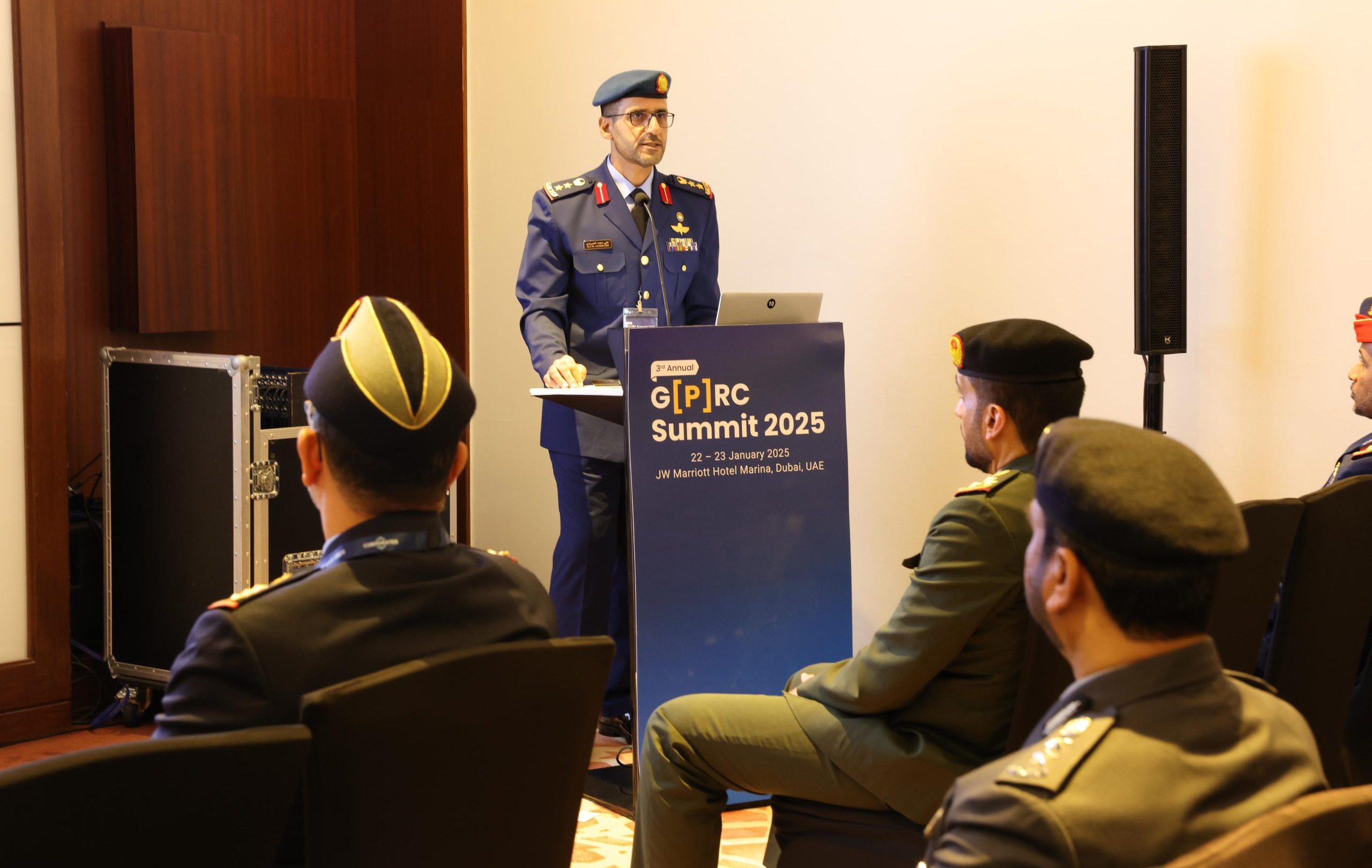
The opening programme will also feature a keynote by Mohammed Al Kuwaiti, Head of Cyber Security for the UAE Government, alongside an address by the Ministry of Defence UAE, highlighting the role of digital governance and cybersecurity in strengthening institutional resilience in the digital era.
In addition, Tor Inge Vasshus, Founder and CEO of Corporater, will present insights into how connected enterprises leverage governance, risk, and compliance frameworks to improve resilience and align operational activities with corporate strategy.
Governance as a strategic decision-making tool
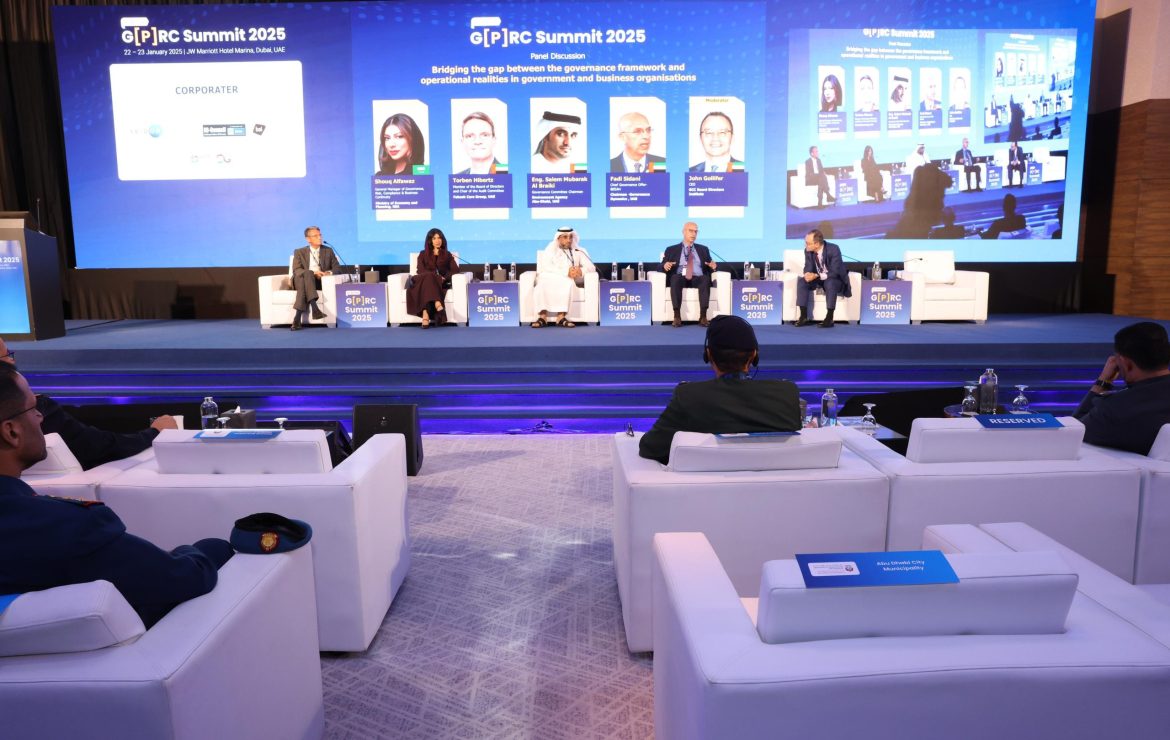
One of the summit’s key panel discussions will examine the integration of governance, risk, and compliance frameworks with business strategy and operational goals.
Experts note that many organisations still view GRC primarily as a regulatory compliance function rather than a strategic management tool capable of enhancing organisational performance.
The panel will feature international experts, including Stephen Wackerle, Chief Risk Officer at TAQA; John Gollifer, CEO of the GCC Board Directors Institute; Amna Faridoon, Chief Audit Executive at the Federal Authority for Nuclear Regulation; and Verity Blair, Regional Vice President at NAVEX.
Moderated by Rasmussen, the discussion will explore how embedding governance, risk, and compliance frameworks within corporate strategy can improve decision-making, reduce risks, and strengthen organisational competitiveness.
Advancing corporate governance models
During the first day, Firas Saifan, Managing Director of CUBES Platform, will present insights on developing modern governance models that go beyond traditional frameworks, emphasising the importance of linking strategy, risk, and organisational performance through what experts describe as “process governance.”
Meanwhile, Rajeev Dutt, General Manager for the Middle East, Africa, and Asia-Pacific at Swiss GRC, will discuss the role of strategic risk management in enhancing organisational resilience and enabling institutions to navigate future challenges.
Another panel will examine the challenges faced by governance, risk, and compliance leaders when managing organisational transformation initiatives. The discussion will highlight how modern leadership can leverage GRC frameworks to foster innovation, build trust within organisations, manage emerging risks, and accelerate performance.
Participants will include Saifan, Vaibhav Javaria, Group Director of Audit at Ghassan Aboud Holding, and Marc Haberland, Founder and CEO of Clariba SEIDOR.
Future strategies: Vision 2036
A major highlight of the first day will be the keynote titled “Business 2036 – Craft Your Strategic Moonshot” delivered by Anael Granoux, Founder and Director of Strategy Reignited.
The session will explore the profound global transformations expected over the coming decade. Analysts predict that the next ten years could bring more change than the past century, prompting leaders to rethink their long-term strategies and address fundamental questions about planning, preparedness, and future ambition.
Practical lessons from organisational experiences
The summit programme will also feature a case study by Salwa Albreiki, Corporate Performance Manager at AD Ports Group, highlighting the organisation’s experience in applying strategic performance management and excellence frameworks supported by modern technologies.
Another specialised session will explore the role of women leaders in shaping governance, risk, and compliance practices. The discussion will include Amna Faridoon and Arbnora Jashanica, ESG Advisory Consultant at the International Finance Corporation, who will share their experiences in advancing governance and fostering institutional innovation.
Practical workshops – Day One
In addition to the main sessions, the first day will feature several specialised workshops aimed at translating knowledge into practical application.
One of the most prominent sessions is the strategic leadership workshop led by Anael Granoux, designed for senior executives and board members. The workshop will focus on how organisations can translate strategic plans into measurable outcomes, particularly given that studies show nearly 90% of strategic plans fail during the execution phase due to insufficient implementation mechanisms.
Another workshop will be delivered by Atiq Bajwa, Chief Risk Officer at Sulaiman Alrajhi Holding Company, who will explore risk management from multiple perspectives, including enterprise risk, investment risk, operational safety risk, project risk, and third-party risk management.
The programme will also include a session led by John Gollifer on investor relations and board governance, highlighting how corporate governance frameworks can strengthen investor confidence, enhance transparency in financial reporting, and improve stakeholder engagement.
Another workshop will focus on building organisational resilience, examining the core principles of resilience, practical implementation strategies, and the role of technology in ensuring institutional sustainability and crisis preparedness.
Day Two: Innovation and risk management in the age of AI
The second day of the summit will focus on practical implementation and the future of risk management amid accelerating technological transformation.
The programme will begin with a masterclass on third-party and supplier risk management delivered by Michael Rasmussen, who will explore how modern organisations increasingly rely on complex ecosystems of suppliers, partners, and interconnected supply chains.
The session will discuss how institutions can effectively govern these networks while ensuring accountability, transparency, and reduced exposure to risks associated with external dependencies.
Courageous leadership in risk management
A keynote presentation by Nik Sunita Azura Ab Rahim, Founder and Principal of The Liminal Code, will explore the concept of courageous leadership in risk management.
The session will examine how leadership behaviour and organisational culture influence risk outcomes, noting that many failures in risk management stem not from the absence of frameworks but from cultural factors such as fear, organisational silence, or excessive control.
It will also highlight the importance of building a culture of trust, accountability, and open dialogue when addressing risks.
From risk management to leading uncertainty
Another keynote will be delivered by Michael Sparks, focusing on the evolving role of Chief Risk Officers in modern organisations and the shift from traditional risk management to leading through uncertainty.
A panel discussion on integrating strategy, risk management, and crisis leadership will feature several international experts, including Carlo Loveri, strategic advisor in risk management and organisational resilience; Atiq Bajwa, Chief Risk Officer at Sulaiman Alrajhi Holding Company; Mohamed Hassan, Head of GRC Solutions at Corporater; and Sohail Khimani, Business Continuity Relationship Head at Abu Dhabi Islamic Bank.
The session will explore strategies for strengthening organisational resilience and improving crisis response mechanisms to help institutions navigate growing global disruptions.
Governance as a driver of institutional performance
The programme will also feature a case study by Michael Shane Cowen, Corporate Performance Management expert at the Environment Agency Abu Dhabi, examining how governance, risk, and compliance frameworks can evolve from regulatory obligations into tools that actively support strategic projects and organisational performance.
Another session by Bachier Alchaar, Senior Legal Manager at Deloitte, will discuss the transition underway across GCC countries from regulatory development to the effective implementation of governance frameworks in areas such as data protection, taxation, ESG standards, and corporate governance.
AI governance and the future of risk management
Artificial intelligence will feature prominently in the summit’s discussions. Akshay Dalal, Head of Regional Risk and Compliance for the Middle East and North Africa at Google, will present a session on AI governance as an enabler of responsible innovation.
The session will examine how organisations can balance innovation with accountability through governance frameworks that ensure the ethical and responsible use of AI technologies.
Another panel discussion will examine whether artificial intelligence represents an opportunity or a threat for risk management leaders.
The session will feature a number of experts and specialists, including Nishanth Kumar Pathi, Director of Cyber Security and Governance at Gulf Air Group; Akshay Dalal, Regional Head of Risk and Compliance for the Middle East and North Africa at Google; and Basima Al Jabri, Head of the Project Management Office and Transformational Leadership at a government entity in the United Arab Emirates.
Participants will discuss how AI technologies are reshaping risk management frameworks while also presenting new strategic opportunities alongside ethical and regulatory challenges.
Practical workshops – Day Two
The summit will conclude with a series of specialised workshops focusing on risk management in AI-driven environments and the challenges associated with rapid digital transformation.
One session led by Nishanth Kumar Pathi will examine Zero-Trust GRC frameworks for AI agents and the emerging risks associated with intelligent systems, including prompt-injection attacks and security vulnerabilities arising from interconnected digital agents.
Another interactive workshop by Nik Sunita Azura Ab Rahim will address courageous risk-management leadership and the role of executives in making decisions under pressure while fostering transparency and accountability within organisations.
The workshops will conclude with a session by Mohamed Hassan, exploring how artificial intelligence can strengthen organisational resilience and help institutions adapt to rapid change.
Through this comprehensive programme, the Global Governance Summit in Dubai aims to reinforce the UAE’s position as a global hub for knowledge exchange and the development of best practices in governance, risk management, and compliance—empowering organisations to address future challenges with confidence and agility.
Infographic
Global Governance Summit Numbers & Figures
800+ leaders, experts, and decision-makers
30+ participating countries
40+ hours of sessions and workshops
2 days of specialised discussions