Over the past several decades, Türkiye has undergone a significant transformation in its defence industry, gradually moving from a country heavily reliant on imported military systems and equipment to one with a national industrial and technological base capable of designing, developing and producing a wide range of defence systems.
This transformation has been driven not simply by increased production, but by a long-term strategy focused on building comprehensive national capabilities. This has included developing engineering and technical expertise, strengthening research and development, localising critical technologies and reducing dependence on external sources. As a result, the Turkish Armed Forces have gained access to solutions tailored to their operational requirements, while also acquiring the ability to continuously upgrade and modernise them.
Over time, Türkiye’s defence industry has evolved from a focus on local manufacturing and production towards a more advanced model centred on indigenous design, development and innovation. This shift has resulted in a broad range of Turkish-designed systems and products across multiple domains, featuring increasingly sophisticated technologies and operational capabilities.
Today, Türkiye’s defence sector encompasses an integrated ecosystem of companies and institutions specialising in aviation, unmanned aircraft and systems, missiles and precision-guided munitions, air defence, land vehicles, naval systems, radar and electronics, communications, electronic warfare, space systems and other advanced technologies.
A key feature of this model is the integration of government institutions, major defence companies, specialised firms and domestic supply chains. This has helped establish an industrial and technological environment capable of developing complex systems and integrating their various components into comprehensive solutions designed to meet modern military requirements.
Türkiye’s defence industry is no longer focused solely on meeting the requirements of its armed forces. Turkish companies have increasingly expanded into international markets, benefiting from their growing technological capabilities and their ability to offer diverse products that can be adapted to the requirements of different users.
This approach has strengthened Türkiye’s position in the global defence market, with several of its products and systems becoming widely recognised, particularly in unmanned systems, missiles and precision-guided munitions, armoured vehicles, naval and electronic systems, and air defence.
The evolution reflects an important shift in the nature of Türkiye’s defence industry. Competition is no longer based solely on the ability to manufacture military equipment, but increasingly on technological ownership, innovation, rapid development, systems integration and the delivery of flexible solutions capable of being upgraded and adapted to changing operational requirements.
A Network of Specialised Defence Companies
As this transformation has progressed, a number of Turkish companies have emerged as key pillars of the national defence industry. Each operates in a specialised field while maintaining a high degree of integration with other elements of the wider industrial ecosystem.
These companies cover areas ranging from electronics, radar, communications and electronic warfare to aviation, unmanned systems, land vehicles, naval platforms, missiles and munitions, air defence and space systems.
This diversity has created a broad industrial base that does not depend on a single company or sector. Instead, it is supported by an integrated network of capabilities and expertise, providing Türkiye’s defence industry with greater flexibility to develop new products and respond to changing requirements on the modern battlefield.
Roketsan: Specialised Expertise in Missiles and Defence Systems
Among the companies that have played a prominent role in this development is Roketsan, which has become one of Türkiye’s leading organisations specialising in the development and production of missiles and defence systems.
Established in 1988, Roketsan was founded to strengthen Türkiye’s capabilities in missiles and rocket systems and to meet the requirements of the Turkish Armed Forces by establishing a dedicated national capability in the field.
Since its establishment, the company has progressively expanded its technological and engineering capabilities, moving beyond missiles and rocket systems to develop a broad portfolio of advanced defence solutions.
Today, Roketsan operates across several fields, including tactical missiles, precision-guided munitions, anti-tank missiles, air defence systems, cruise missiles, naval systems, as well as technologies and systems related to space and ballistic protection.
The diversity of its portfolio reflects the company’s broad engineering and technological expertise and its ability to develop systems for a variety of missions and operational environments across land, sea and air.
Roketsan also represents a prominent example of the transformation of Türkiye’s defence industry, from reliance on external technologies and components towards the development of advanced indigenous solutions, and from focusing primarily on domestic requirements to developing products for international markets.
The company’s importance extends beyond the development of missiles as individual products. It possesses integrated capabilities covering design, engineering, development, testing, production and systems integration—essential elements in establishing an advanced missile industry capable of keeping pace with the rapid evolution of modern weapons technologies.
ATMACA: A Model of Türkiye’s Evolving Missile Capabilities
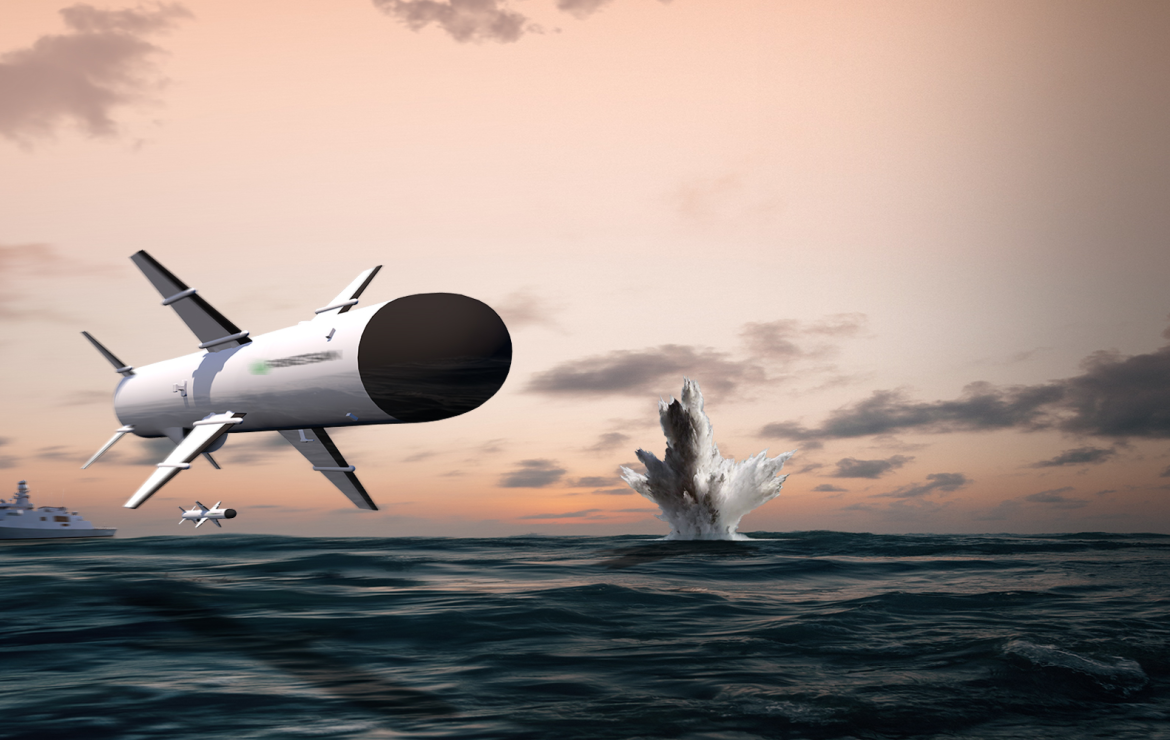
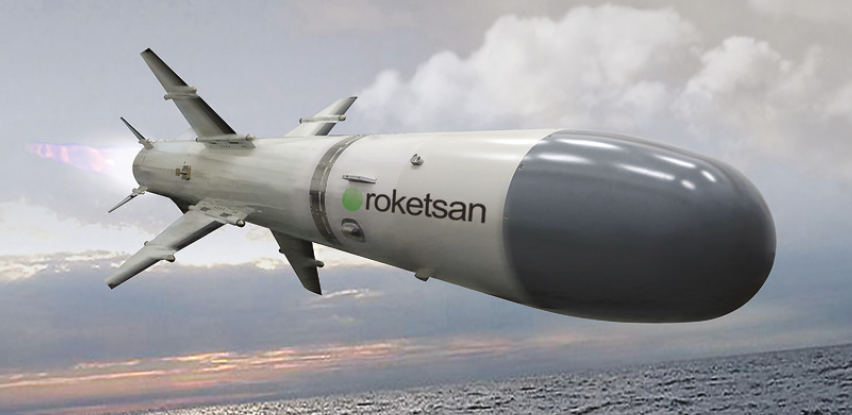
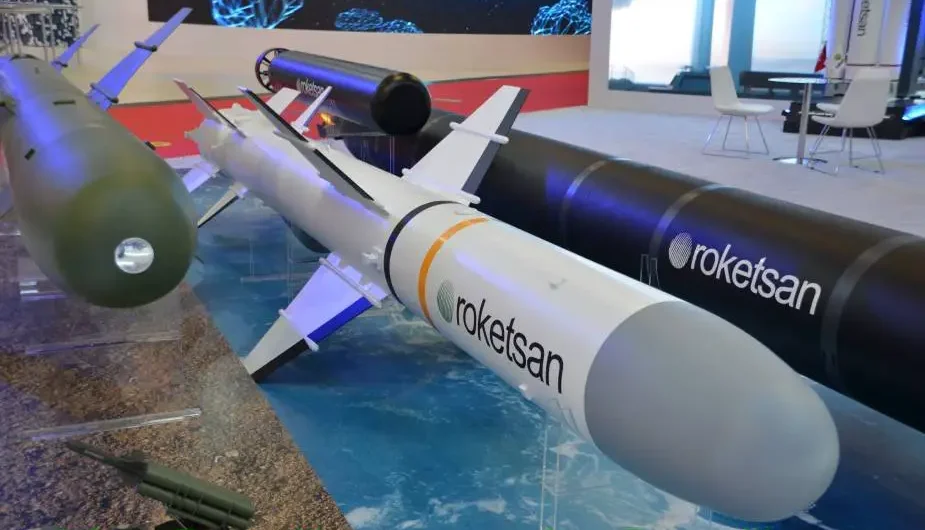
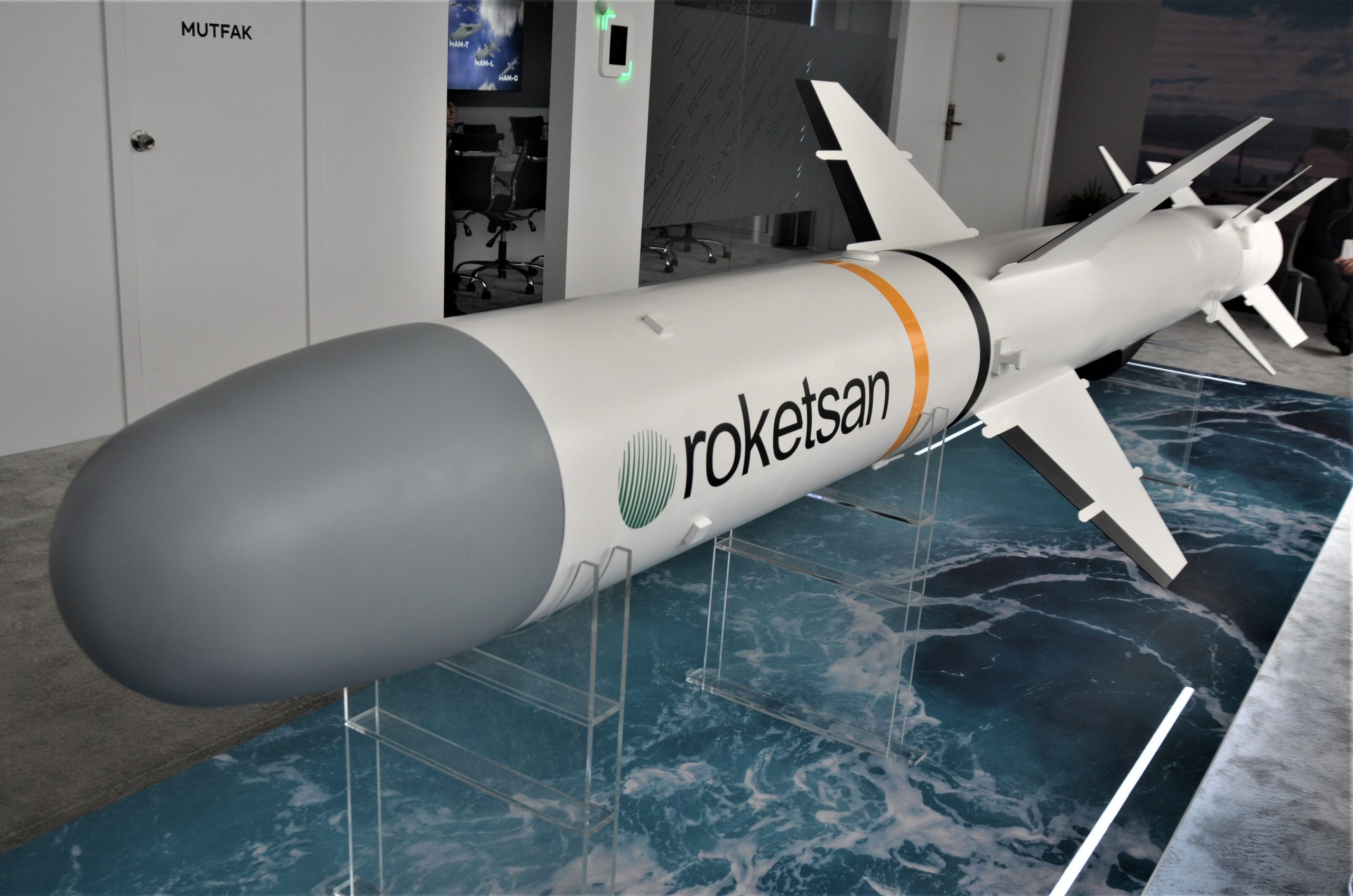
Among the most prominent products demonstrating this evolution is ATMACA, a new generation of indigenous Turkish naval strike missiles developed by Roketsan to provide an advanced long-range precision engagement capability against maritime targets.
ATMACA represents a significant example of Türkiye’s progress in guided missile technology and the growing sophistication of its domestic defence industry. Its combination of advanced guidance, autonomous operation, data-link connectivity and three-dimensional mission-planning capabilities provides a flexible solution for modern naval warfare.
A Long-Range Missile for Precision Naval Strikes
ATMACA is designed for integration on assault boats, corvettes and frigates, while its stated architecture also supports engagement from underwater platforms.
The missile has a declared range of 250 km and a launch weight of less than 750 kg. This gives naval forces the ability to engage targets at extended distances while retaining a relatively compact form factor suitable for integration aboard a range of maritime platforms.
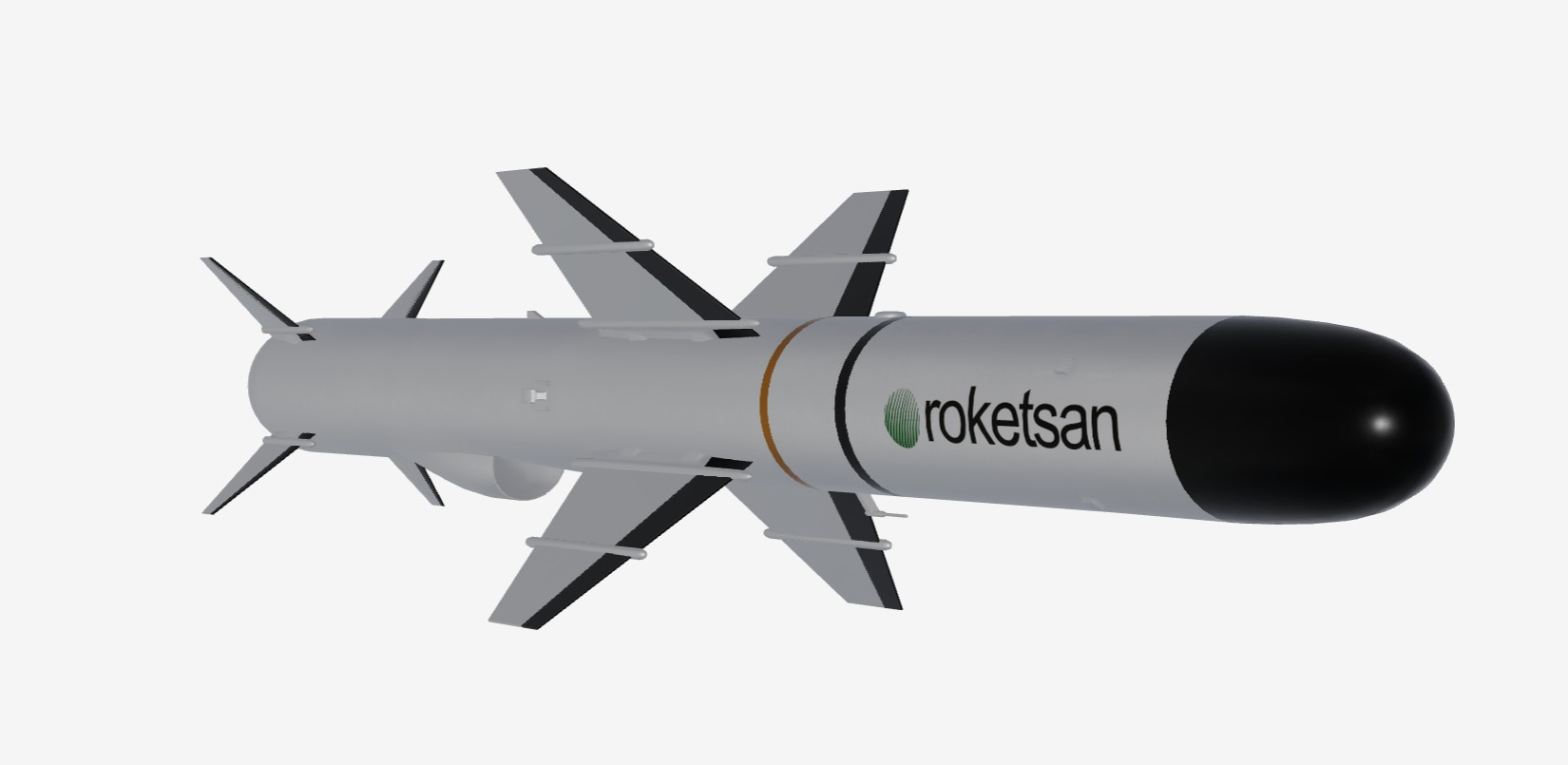
ATMACA measures between 4.3 and 5.2 metres in length, depending on configuration. Its guidance architecture combines an Inertial Navigation System (INS) and GPS with barometric and radar altimeters.
This multi-sensor navigation suite is designed to support accurate flight over the maritime environment before the missile transitions to its terminal engagement phase.
For terminal guidance, ATMACA employs an active radio-frequency (RF) seeker. This provides the missile with an autonomous target-engagement capability and contributes to its high-precision strike performance.
Roketsan also identifies a low radar cross section and resistance to countermeasures among the system’s principal characteristics, reflecting the operational demands of modern naval warfare, where survivability and target discrimination are increasingly important.
ATMACA is also designed for all-weather operation, allowing it to maintain its intended mission capability across varying environmental conditions.
Warhead and Multi-Mission Capability
The missile is equipped with a 220 kg high-explosive fragmentation warhead with effective penetration capability. Combined with its precision guidance system, this warhead is intended to provide significant effects against maritime targets.
ATMACA’s capability set also extends beyond conventional anti-ship operations, with the system designed to engage both land and surface targets from surface and underwater platforms.
Data-Link Connectivity and Mission Flexibility
A significant feature of ATMACA is its network-enabled mission flexibility. Through its data-link capability, the missile can receive target updates during an engagement and supports re-attack and mission-abort functions.
This provides commanders with greater flexibility to respond to changing tactical circumstances after launch, rather than relying exclusively on a fixed pre-launch engagement plan.
The mission can therefore be adjusted in response to new information or changing tactical conditions, enhancing decision-making throughout the engagement process.
Three-Dimensional Mission Planning and Strike Coordination
ATMACA also incorporates three-dimensional mission planning. According to Roketsan, this supports several coordinated engagement concepts, including Time on Target (ToT), Designated Time on Target (DToT), Simultaneous Time on Target (SToT) and Ripple/Salvo firing.
Such functions can enable multiple missiles or engagement elements to be coordinated against designated targets and timelines, supporting more complex maritime strike scenarios.
This ability to plan and coordinate engagements according to specific timings and routes provides naval forces with greater flexibility when conducting multi-axis or coordinated strikes.
Integrated Capabilities for Naval Strike Operations
With a range of 250 km, an active RF seeker, a 220 kg warhead and network-enabled mission functions, ATMACA provides a combination of reach, precision and operational flexibility.
Its autonomous architecture, long-range reach, low-observable characteristics and countermeasure resistance are intended to enhance its effectiveness in contested maritime environments, where survivability and flexible mission execution are increasingly important.
Its ability to operate from surface and underwater platforms further broadens the potential employment options available to naval forces.
As Türkiye continues to develop indigenous defence technologies, ATMACA stands as a key component of its approach to modern maritime precision strike. Its combination of autonomous operation, advanced guidance, data-link connectivity, three-dimensional mission planning and multi-platform employment reflects the evolving requirements of naval warfare, where long-range engagement and flexible mission execution are increasingly central to maritime combat power.
Technical Specifications
Length: 4.3–5.2 m
Weight: <750 kg
Range: 250 km
Guidance: Inertial Navigation System (INS) + Global Positioning System (GPS) + Barometric Altimeter + Radar Altimeter
Warhead: High Explosive Fragmentation Effective Penetration
Warhead: 220 kg high-explosive fragmentation
Seeker: Active RF
System Specifications:
Autonomous
Long range
Low Radar Cross Section
High Precision
Operable in All Weather Conditions
Resistant to Countermeasures
Target Update, Re-Attack and Mission Abort Capability via Data Link
3D Mission Planning
Time on Target [ToT], Designated Time on Target [DToT], Simultaneous Time on Target [SToT], Ripple [Salvo] Fire
Engagement against Land and Surface Targets from Surface and Underwater Platforms