The rapid rise of artificial intelligence is redefining the global labour market, with industry leaders outlining what they describe as a “survival toolkit” for workers—centred on coding proficiency, critical thinking, and human-centric skills—while uncertainty persists about the scale of jobs that may be displaced by this technological shift.
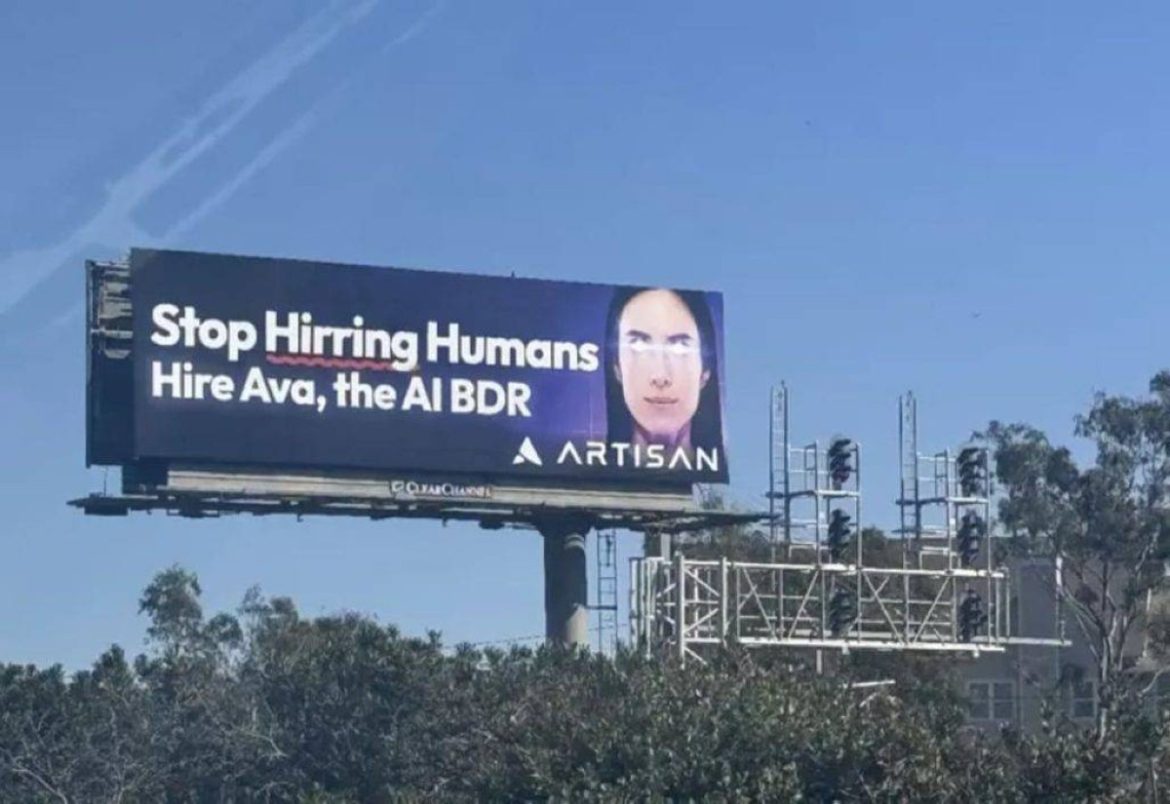
These themes emerged during the HumanX Conference 2026, a four-day gathering held in San Francisco in April 2026, which brought together around 6,500 investors, entrepreneurs, and technology executives. At the venue’s entrance, one exhibitor drew attention with a provocative sign reading: “Stop hiring humans.”
On the main stage, May Habib, CEO of Writer, stated that senior executives across major U.S. corporations are experiencing what she described as “collective panic” over AI’s implications.
Despite such concerns, many participants argued that attributing recent waves of layoffs to AI is often misleading. Sam Altman, CEO of OpenAI, previously referred to this trend in February 2026 as “AI washing,” suggesting that companies may be overstating AI’s role in workforce reductions.
A broad consensus nevertheless emerged among investors, start-up founders, and corporate leaders that AI will transform “every company, every job, and every way of working,” as summarised by Matt Garman, CEO of Amazon Web Services.
While discussions often avoid directly addressing job losses—framing AI instead as “just a tool”—adaptation remains the dominant theme. However, opinions diverge on what that adaptation should look like.
Two years ago, Jensen Huang, CEO of Nvidia, sparked controversy by suggesting that “no one should learn to code anymore,” arguing that AI would perform such tasks faster and more efficiently. This view was strongly challenged by Andrew Ng, founder of DeepLearning.AI, who described it as “one of the worst career advices ever.”
Ng maintained that programming remains a fundamental skill—now made more accessible by AI. Rather than writing code manually, he argued, professionals should leverage AI tools to enhance productivity. However, this shift also implies leaner teams, with projects that once required 15 engineers now achievable by just two.
At the same time, there is a growing emphasis in Silicon Valley on so-called “soft skills”—human and behavioural attributes. Greg Hart, CEO of Coursera, stressed that what distinguishes employees today are human capabilities such as critical thinking, communication, and teamwork, noting that demand for critical thinking courses has tripled over the past year.
The Value of Human Judgement
Daniela Amodei, co-founder of Anthropic, reinforced this perspective in February 2026, stating that “what makes us human will become more important,” highlighting communication, empathy, and curiosity as key hiring criteria.
Similarly, Florian Douetteau, CEO of Dataiku, argued that human value lies in the ability to exercise judgement—summarising complex issues, forming opinions, and making informed decisions. He envisioned a workflow in which AI systems operate autonomously overnight, with humans reviewing and refining outputs during the day.
However, he warned of a potential downside: an entire generation may grow up without ever producing complete work independently from start to finish—an outcome he described as deeply concerning.
The industry’s guidance may also appear detached from the realities faced by younger workers entering the job market. AI has already automated many entry-level tasks traditionally used for training and skill development.
According to a study by SignalFire, hiring for candidates with less than one year of experience at major U.S. technology companies declined by 50% between 2019 and 2024.
Moreover, Al Gore has warned of potential job losses across multiple sectors, calling for proactive measures to identify at-risk roles and prepare workers for reskilling. He stressed the importance of avoiding a repeat of the economic disruptions seen during the early 2000s wave of deindustrialisation driven by globalisation.
At the same time, he acknowledged that open discussion of such risks is often sidelined, as it may dampen enthusiasm for technological progress—despite the urgent need for balanced and forward-looking policy responses.