In 2026, the United Arab Emirates continues to lead the global space sector through a series of achievements and strategic initiatives that reflect its vision of positioning space as a vital frontier for advancing human knowledge—driven by highly skilled national talent and a new generation of ambitious youth.
On 12 April 2026, the UAE joined the world in commemorating the anniversary of the first human journey into space, coinciding this year with the adoption of the National Space Strategy 2031. The strategy builds on previous efforts and marks a new step towards enhancing the contribution of the space sector to economic growth and future development.
The strategy is anchored in three core objectives: establishing a flexible and investment-attractive space ecosystem, achieving global leadership in space partnerships and market access, and developing competitive infrastructure and facilities aligned with international standards.
Among its key targets are doubling the revenues of the space economy, positioning the UAE among the world’s top 10 space economies by 2031, increasing the sector’s economic value, and expanding the number of national companies operating within it. The strategy also aims to double the number of countries importing UAE space-related exports, increase investment in infrastructure assets, and expand the number of space-focused start-ups headquartered in the UAE.
These ambitions build on the strong results of the previous national space strategy, under which the UAE successfully developed advanced local capabilities in research, development, and manufacturing in space technologies. The country has launched a series of pioneering scientific and exploratory missions, strengthened both local and international partnerships, developed 30 satellites, and expanded its space economy to include more than 170 entities.
The UAE began 2026 by announcing the extension of the Emirates Mars Mission—Hope Probe—for an additional three years, following its continued success since launch. The probe’s scientific instruments remain fully operational, enabling the ongoing collection of precise data on the Martian atmosphere and climate phenomena.
The extended mission is expected to generate valuable scientific insights and operational expertise for current and future deep-space missions, while continuing to provide unique data on Mars’ atmospheric dynamics.
Since its launch, the Hope Probe has delivered a series of landmark scientific achievements, including the release of more than 10 terabytes of scientific data to the public and the publication of 16 data releases over five years in Martian orbit. The mission’s research team has also published over 35 peer-reviewed papers in leading international journals.
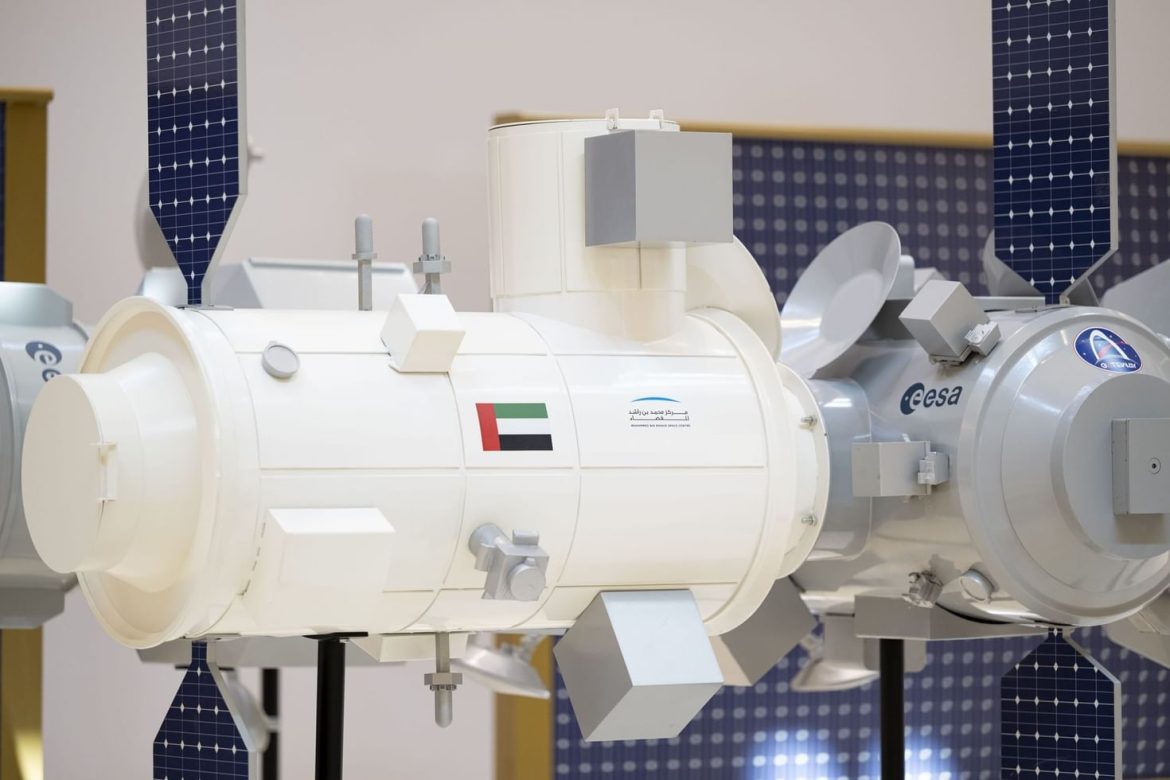
In January 2026, the Mohammed bin Rashid Space Centre released a new set of high-resolution images captured by the Mohammed bin Zayed Sat satellite, marking one year since its launch. The milestone highlights the satellite’s advanced capabilities and its growing role in supporting the UAE’s space ambitions.
Further developments followed in March 2026, with the issuance of an Emiri decree establishing the Sharjah Space and Astronomy Complex. During the same period, the cube satellite “Sharjah-Sat 2” was launched, designed to provide high-resolution and hyperspectral data to support research activities and strategic planning across participating entities, particularly in the Emirate of Sharjah.
On the research front, an international team led by Professor Pantcho Neumov of New York University Abu Dhabi, in collaboration with Professor Hongyu Zhang of Jilin University in China, developed a new class of organic crystals capable of self-repair even under extremely low temperatures. This breakthrough represents a significant step towards creating lightweight, durable materials suitable for harsh environments such as outer space, deep-sea conditions, and polar regions.
In parallel, the National Space Academy, affiliated with the UAE Space Agency, announced the launch of the first edition of the “Arab Youth Space Hackathon”—titled “Challenge 813 for Earth Observation and Hyperspectral Data Applications.” The initiative serves as an innovative platform that brings together young talent, offering opportunities for hands-on learning, collaboration, and practical application within the space sector.
Through these continued achievements, the UAE is reinforcing its position as a key global player in the space industry—driven by innovation, strategic investment, and a forward-looking vision for a knowledge-based future.