As the character of warfare continues to evolve and militaries increasingly prioritise advanced technologies to address emerging threats, uncrewed systems have become a cornerstone of modern defence strategies. From intelligence, surveillance, and reconnaissance (ISR) missions to collaborative combat operations, these capabilities are transforming the way armed forces operate across all domains.
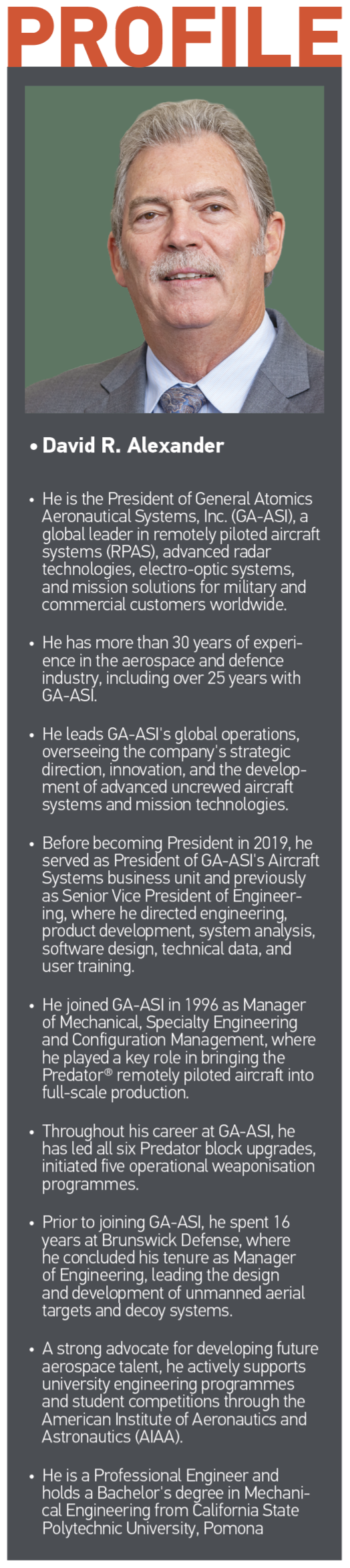
In this context, Al Jundi Journal interviewed David R. Alexander, President of General Atomics Aeronautical Systems, Inc. (GA-ASI), one of the world’s leading developers of Uncrewed Aircraft Systems (UAS) and conducted the following interview:
GA-ASI has been a leader in UAS for over 30 years. What is the key to keeping pace with the evolving needs of the modern battlefield?
We have a unique advantage. Our uncrewed aircraft have logged over 9 million operational hours in environments ranging from permissive to highly contested. This firsthand exposure to emerging threats lets us continually adapt our systems. Our company philosophy is to anticipate future needs rather than react to them.
And being privately held means we aren’t pressured by quarterly profit targets like publicly traded defence firms. Instead, we invest heavily in Independent Research and Development (IRAD), giving us the flexibility to innovate ahead of market demand. This commitment has always helped us stay ahead.
Can you give us a recent example of how that independent investment has paid off for you?
Our work on the U.S. Air Force’s CCA program is a direct result of our IRAD spending. The Air Force outlined clear goals, and we were able to invest in ways that reduced risk across the board. We designed a system that could be mass-produced in our facilities, allowing us to quickly begin building the FQ-42A. We’re now serially producing it, thanks to that early investment.
You’ve had orders for MQ-9B come in from all over the globe. At the same time, much of the focus recently has been on CCAs. Do you intend to shift focus from MQ-9B to more CCA-style aircraft?
No, these platforms are complementary, not competing. Think of them like a sports car and a pickup truck — each is valuable for different missions.
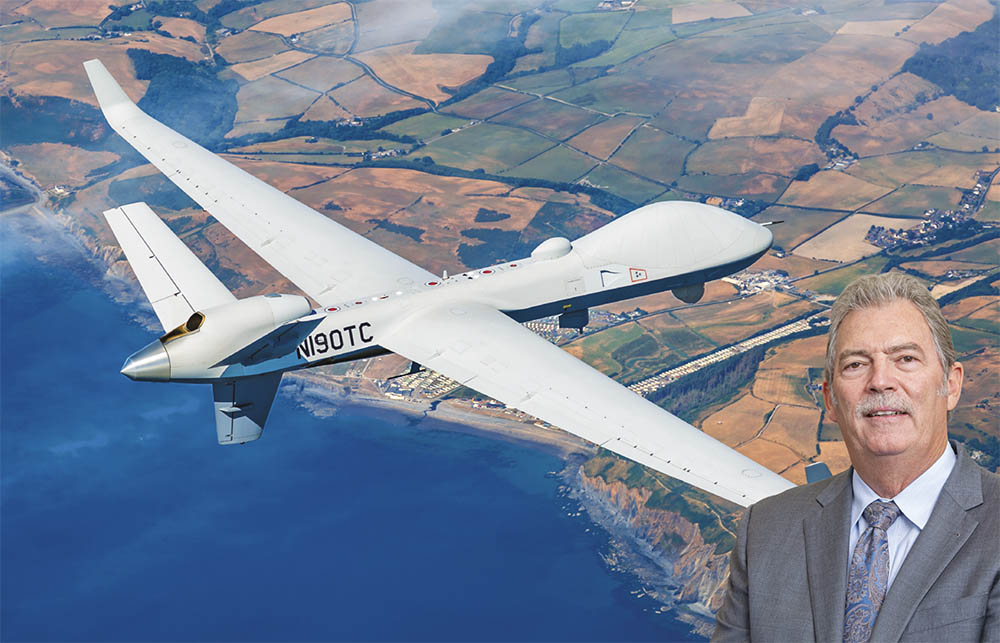
The MQ-9B remains central to our portfolio, with strong relevance for both military and civil missions. Its multi-domain, long-range, and long-endurance capabilities are essential for areas such as the Middle East or Asia-Pacific, and it delivers these at a much lower cost than crewed aircraft.
We’re continuously refining MQ-9B’s capabilities. For example, we’ve partnered with Saab to develop an Airborne Early Warning and Control (AEW&C) package for MQ-9B SkyGuardian. We have also advanced cooperative engagement capabilities, allowing a crewed fighter to fire on a target identified by an MQ-9B, increasing standoff range. We’re also advancing our Anti-Submarine Warfare package for operations over the ocean — the list goes on and on.
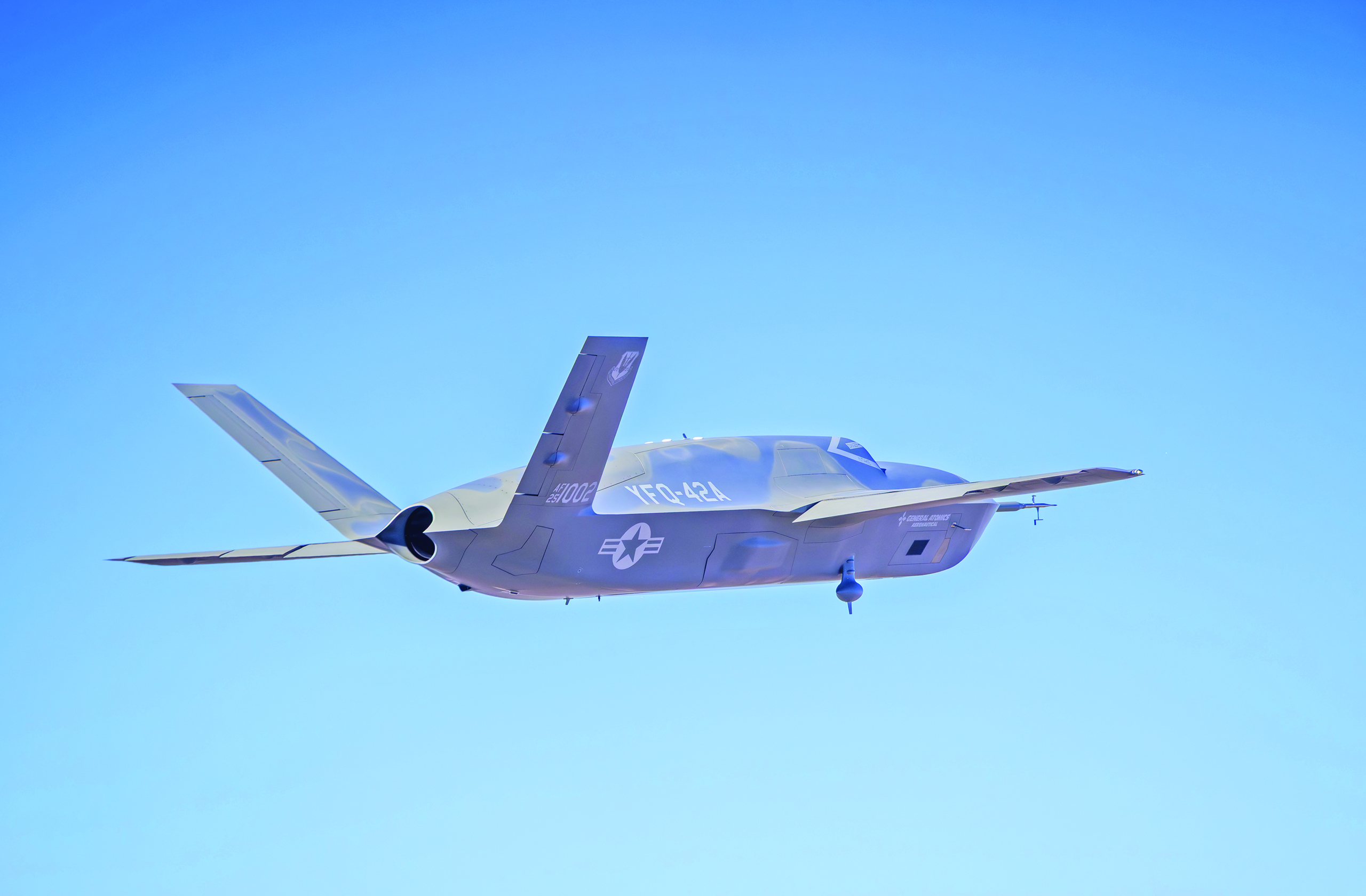
CCAs, meanwhile, are crucial for creating affordable mass and establishing air superiority in high-end conflicts. We’re proud that our YFQ-42A, the aeroplane that preceded the production-model FQ-42A, was the first CCA to take flight.
The future of aviation is uncrewed, and both our MQ-9B and CCA platforms will be indispensable going forward.
How do you ensure you keep CCAs both relevant and affordable in large numbers and not let the desire for increased capability lead to increased costs?
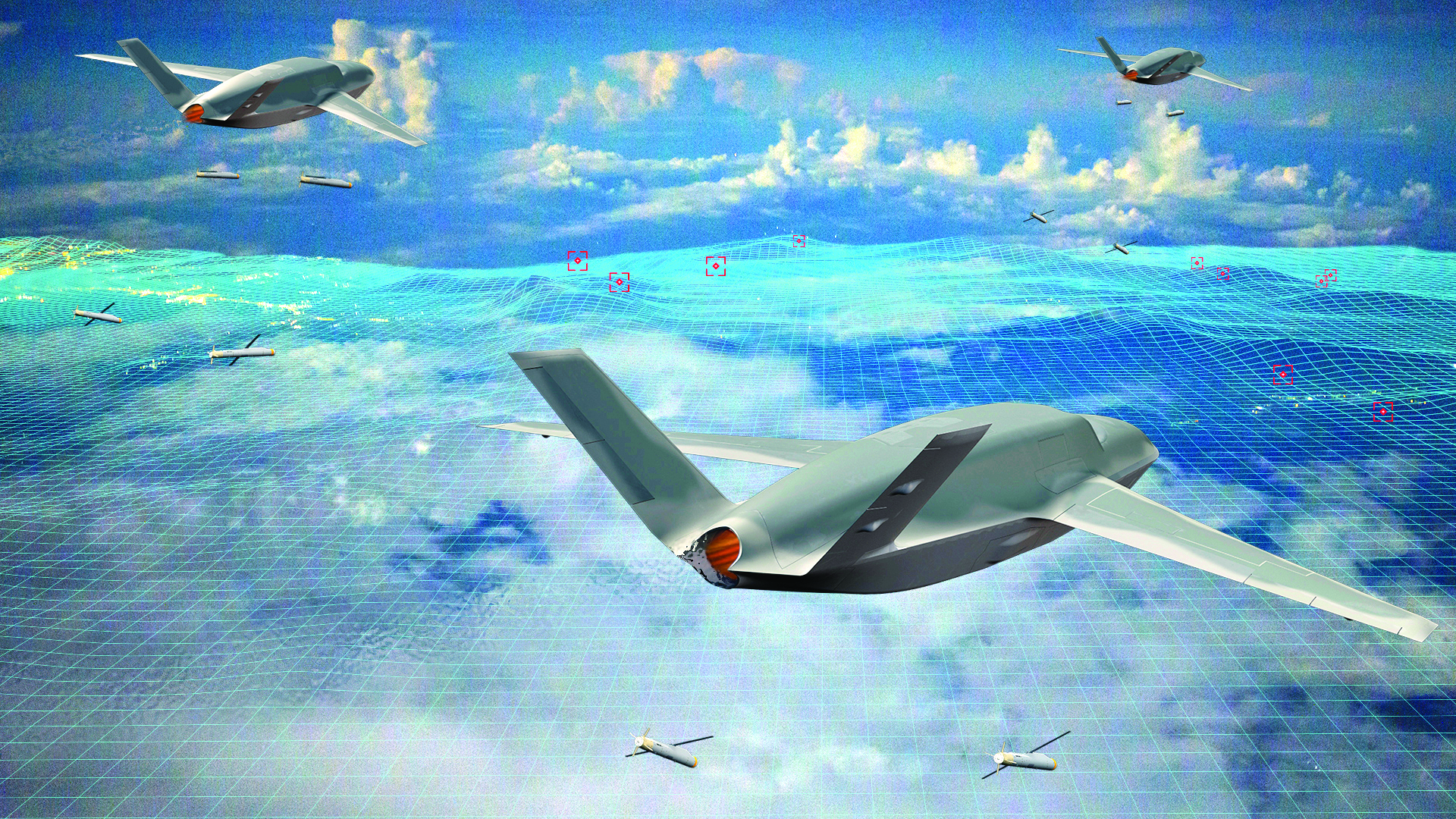
Great question! Our IRAD investment allowed us to develop the Gambit Series — a family of modular uncrewed jet aircraft sharing a common core and 70 per cent common components, such as the landing gear, avionics, and chassis. These aircraft were designed from the wheels up to be modular and as simple as possible to build and augment.
We’ve designed six mission-dedicated aircraft variants so far, covering long-endurance ISR, air-to-air combat, advanced training, stealth reconnaissance, carrier-based operations, and air-to-ground missions. This modular approach drives significant cost savings, interoperability, and faster development.
What’s next for GA-ASI as it continues to innovate in 2026?
We’re focused on staying ahead of the curve. For MQ-9B, we’re in flight tests of our AEW&C mission package. We’ll continue advancing FQ-42A as quickly as possible and keep pushing operational autonomy through live flight tests with platforms like our MQ-20 Avenger. The ultimate goal is to provide nations with the right tools for the right missions, and I’m confident our team will deliver.
» Interviewed by: aljundi