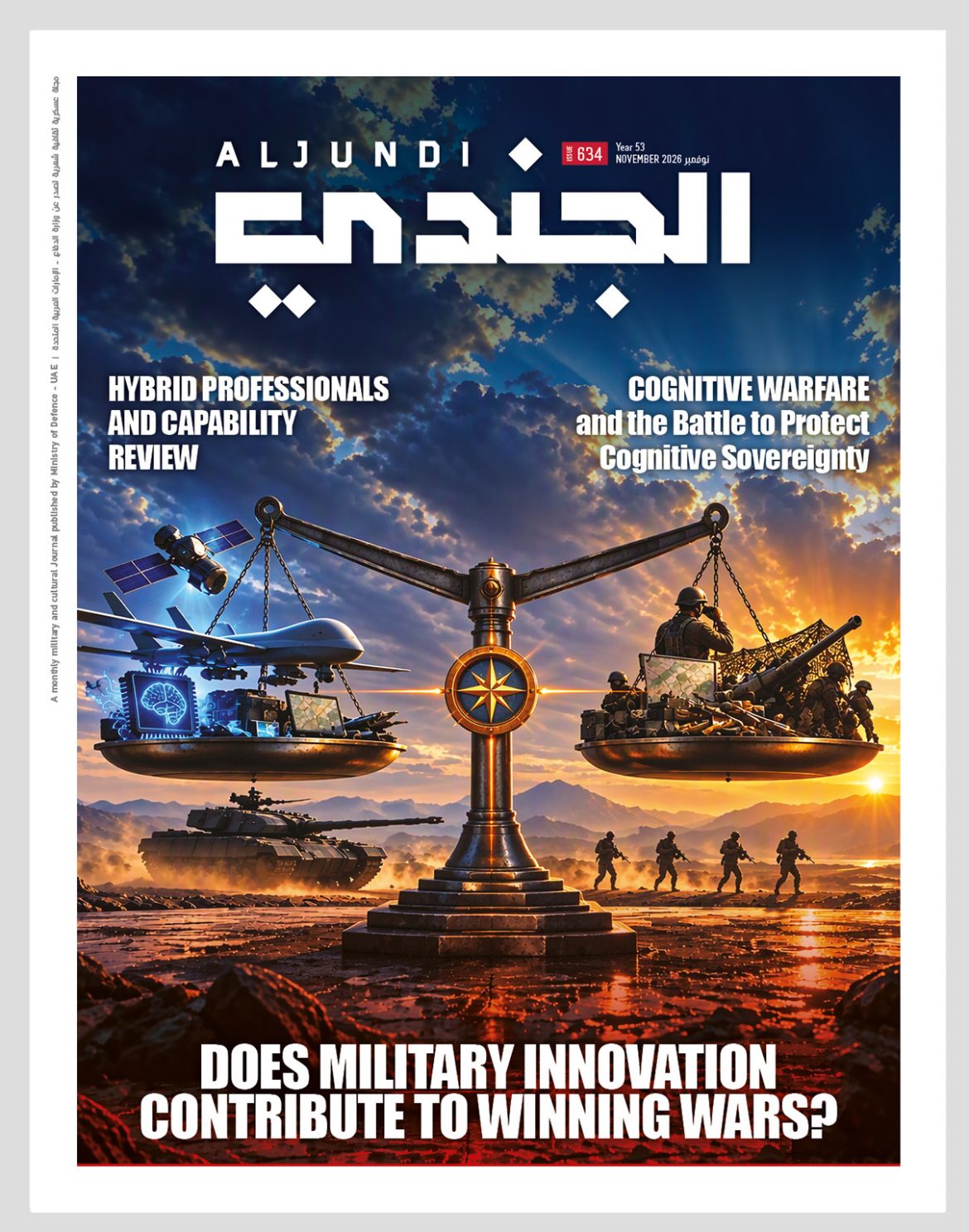
Modern warfare is increasingly measured by its ability to influence how individuals, communities, and institutions perceive reality, interpret events, determine whom to trust, assess risks, and make decisions. From this perspective, cognitive warfare represents a qualitative shift from targeting information itself to targeting the conditions through which meaning and judgements about reality are formed.

Disinformation is therefore not an end in itself, but rather a tool within a broader system designed to disrupt perception, undermine shared frames of reference, erode trust in institutions, influence patterns of assessment and decision-making, or induce an adversary to adopt an interpretation of reality that serves the strategic objectives of the attacking actor. Cognitive warfare should therefore not be reduced to propaganda, fake news, or traditional psychological operations, although it overlaps with and draws upon these tools. Its distinctive feature lies in combining cognitive and behavioural sciences, large-scale data analysis, digital platforms, algorithms, and artificial intelligence to exert more sustained and precise influence over attention, preferences, trust, risk assessment, and decision-making patterns. As a result, human beings are no longer merely recipients of messages; rather, the mechanisms through which they perceive and process information and form judgements have themselves become part of the operational battlespace.
The Changing Nature of the Battlespace
Recent strategic literature indicates that the battlespace has become increasingly interconnected and continuous. Instead of a strict separation between peace, crisis, and war, competition, pressure, and attack increasingly overlap within a single environment in which cognitive operations can be conducted continuously, both below the threshold of armed conflict and during periods of peace and crisis. Cognitive warfare is therefore, by nature, a sustained form of conflict that transcends traditional phases and boundaries, particularly within an international environment characterised by fluidity, fragile alliances, growing uncertainty, and increasingly blurred lines between rivalry and cooperation. Within this environment, the objective is not necessarily to persuade individuals and societies to accept a particular narrative. A more effective objective may be to sow doubt about competing narratives, increase the difficulty of distinguishing between what is genuine and what is fabricated, exhaust attention, amplify existing divisions, or undermine confidence in the possibility of reaching a shared understanding of the truth. The success of a cognitive attack, therefore, is not measured solely by its ability to impose an alternative narrative. It can also be measured by its ability to diminish the capacity of societies and institutions to develop an organised understanding of reality, preserve shared frames of reference, and make independent decisions in an environment characterised by increasing ambiguity and competition over the production of meaning. The use of the concept, however, requires a degree of caution. Cognitive warfare remains a concept in development, and its boundaries have yet to be fully established across military, political, and psychological literature. Accordingly, this study adopts an operational definition of cognitive warfare as the deliberate and systematic use of informational, technological, psychological, and behavioural tools to influence the processes through which beliefs, attention, trust, assessment, and decision-making are shaped within a targeted society, institution, or adversary, in pursuit of a specific strategic objective.
This shift from information warfare to cognitive warfare requires a corresponding transformation in security doctrine: from protecting networks, data, and information to safeguarding the human and institutional capacity to understand, assess, and make decisions. Against this backdrop, the study proposes the concept of cognitive sovereignty, defined as the ability of society, the state, and its institutions to preserve the independence of judgement in an environment highly susceptible to manipulation, without isolating themselves from knowledge or suppressing pluralism. Cognitive sovereignty is therefore not sovereignty over ideas, but over the conditions that enable judgement to remain reasonably independent. Nor is it about preventing influence itself, but rather about protecting against systematic manipulation that undermines the ability to verify, reassess, and choose. In this context, the study seeks to examine the ongoing transformation of the cognitive battlespace, analyse its tools and mechanisms, explore its implications for the concept of national security, and identify the key elements of a strategic framework capable of protecting and preserving cognitive sovereignty.
From Information Warfare to Cognitive Warfare: The Changing Battlespace
A comparison between information warfare and cognitive warfare reveals that this transformation involves more than a change in methods; it represents a redefinition of the very object of conflict. In information warfare, information is the centre of gravity: acquiring, concealing, distorting, stealing, or disrupting it and its channels of transmission. In cognitive warfare, however, information becomes an entry point to a deeper target: the way information is assigned meaning within the human mind and institutions. The focus therefore shifts from the accuracy of a message alone to the structure of its reception. Who trusts whom? What attracts attention? How are priorities formed? How does uncertainty turn into fear or anger? And when does the accumulation of doubt become an inability to make judgements rather than a condition for critical thinking? This shift explains the expansion of the operational battlespace from targeting a platform or communication channel to targeting the human cognitive processes themselves. For example, a 2026 report on cognitive warfare presented by Giordano James to the North Atlantic Treaty Organization (NATO), describes it as a form of conflict that goes beyond the transmission of hostile messages to target perception, interpretation, decision-making, and behaviour. Similarly, the strategic conception of cognitive warfare places increasing emphasis on achieving cognitive superiority by targeting the mechanisms of reasoning and judgement, exploiting psychological and social vulnerabilities, and transforming them into operational points of access that can influence how reality is understood, how individuals respond to it, and how decisions concerning it are made. The new, however, does not replace the old. Propaganda, psychological operations, military deception, and political influence all have clear historical precedents. What is new is their integration within a digital environment capable of collecting data, measuring responses, modifying messages, and redistributing them in real time and on a large scale.
Cognitive warfare thus increasingly resembles an adaptive system that learns from its audience as much as it targets it. It does not merely deliver a message; it monitors its impact, continually redesigns its timing, format, and target audience, and exploits the algorithmic architecture of platforms that reward emotional engagement, virality, and prolonged attention.
From this perspective, continuity becomes a defining characteristic. A cognitive operation does not require a declaration of war, a visible technological breach, or even information that is entirely false. The report presented by Giordano James provides a clear example, noting Russia’s use of competing narratives and false-flag operations before the 2022 Russian-Ukrainian war to destabilise the environment and influence decision-making. The report also cites the COVID-19 pandemic to demonstrate how “weaponised” information on social media can threaten decision-making, underscoring the fact that the cognitive domain operates across war, peace, and crises.
The Operational Structure of Cognitive Warfare and Artificial Intelligence: Targeting Perception, Trust, and Decision-Making
Cognitive warfare operates through the chain linking information, meaning, and decision-making. Its structure can be understood through three interconnected domains: the individual, which affects attention, emotion, biases, and memory; the social, which concerns identity, belonging, polarisation, and trust; and the institutional, which affects legitimacy, assessment processes, and decision-making. This framework aligns with the model presented in the NATO Chief Scientist’s report, which distinguishes between targeting attitudes, decisions, and behaviour at the individual level; undermining trust and fuelling polarisation at the group level; and affecting values, the rule of law, and the social contract at the societal level. This illustrates how influence can extend from the individual to the wider social structure. The following model illustrates the main dimensions of cognitive warfare in a simplified and interconnected manner. It starts from the premise that an adversary does not merely seek to transmit propaganda or disinformation, but to influence perception, behaviour, and decision-making across three overlapping levels. At the individual level, this involves influencing attitudes, perception, and decision-making. At the group level, it involves undermining trust, deepening polarisation, and weakening cohesion between groups. At the societal level, it involves influencing public values, the social contract, trust in institutions, and democratic norms.
The model also shows that these effects are amplified by a range of enabling factors, including digital technology, platforms and networks, interconnectedness among individuals, artificial intelligence, and deepfakes. At the same time, it highlights three key responses to cognitive warfare: degrading the adversary’s capabilities, strengthening resilience and capacity to withstand pressure, and enhancing human and technological cognition. Protecting perception, trust, and decision-making capacity thus becomes an essential component of contemporary national security.
At the individual level, cognitive operations exploit limited attention, the human need for consistency, confirmation bias, and heightened sensitivity to content that evokes fear or anger. These are not exceptional human shortcomings, but normal characteristics of the mind’s cognitive economy. An adversary can nevertheless engineer the environment in which these characteristics are activated through repetition, selective presentation, timing, information saturation, and the creation of an impression of widespread acceptance. Psychological research shows that false information can continue to influence individuals even after it has been corrected, while identity, belonging, and emotion affect both susceptibility to belief and resistance to correction. Preventive measures and greater awareness of manipulation techniques are therefore more important than assuming that subsequent correction will automatically erase the effect.
At the social level, trust becomes a strategic asset. Societies do not process facts independently of their sources; they also determine who is considered credible and whose claims deserve to be believed. If an operation succeeds in convincing large sections of society that all institutions are lying, every image can be fabricated, and every expert is acting on behalf of a hidden interest, there is no need to impose a single narrative. It is enough to weaken the shared space that enables rational debate and compromise.
Cognitive nihilism may therefore be more useful to an adversary than overt propaganda, because a society that trusts nothing becomes slower to coordinate and more vulnerable to division.
At the institutional level, the battle shifts to the decision-making cycle itself. The objective may be to create a false assessment of an adversary’s intentions, exaggerate a secondary threat, overwhelm leaders with conflicting indicators, give undue credibility to a compromised source, or create time pressure that encourages decision-makers to bypass verification procedures.
The NATO Chief Scientist’s report points to adversaries exploiting vulnerabilities in the Observe-Orient-Decide-Act (OODA) loop, making perception an entry point for influencing leadership. The result may be delayed decision-making, poorly prioritised objectives, or the misallocation of resources. Protecting decision-making therefore begins with the collection and classification of data, the assessment of sources, and the formulation of hypotheses.
Artificial intelligence has ushered cognitive warfare into a new phase by transforming the economics of influence. It has reduced the cost of producing text, audio, images, and video, increased the speed of translation and personalisation, and enabled multiple versions of a message to be generated for different groups.
The risk lies not only in the fact that synthetic content has become more convincing, but also in the increasing potential to automate the entire process: production, testing, measurement, modification, and retargeting. Campaigns can therefore move from the model of a single mass message to one of precision engineering, in which each segment receives a tailored narrative based on its sensitivities, concerns, and language.
The risks increase further when generative capabilities are combined with behavioural data. Over the years, digital platforms have accumulated extensive digital traces that can be used to build approximate models of users’ interests, relationships, and patterns of interaction. When these indicators are used to target messages, influence becomes less visible within the public sphere. There may be no single campaign that everyone can see and debate; instead, multiple versions of reality may be distributed among different groups.
This, in turn, erodes a fundamental condition for public debate: the existence of a minimum body of shared facts and messages that can be publicly challenged and scrutinised.
Artificial intelligence is also changing the evidentiary landscape. Deepfakes do not merely make false material appear more authentic; they also make genuine material easier to dismiss as fabricated. This phenomenon has been described in the literature as the ‘liar’s dividend’, whereby the mere existence of deepfake technology provides grounds for claiming that authentic recordings are fabricated. In such an environment, images, audio recordings, and documents gradually lose their function as evidence. The challenge is therefore not limited to detecting fabricated material, but also to reconstructing reliable chains of provenance that establish the origin, history, and modification of content. Artificial intelligence, however, is not solely an offensive tool. The same capabilities can be used to detect coordinated networks, analyse anomalous behaviour, identify patterns of amplification, compare media content, and support operations centres. Content provenance standards, such as the specifications developed by the Coalition for Content Provenance and Authenticity (C2PA) can link content to provenance and modification data that can be cryptographically verified, without claiming that verified provenance necessarily makes the content itself accurate. This is a crucial distinction: technology can help establish provenance and integrity, but it cannot by itself resolve questions of meaning, truth, or intent.
Artificial intelligence governance should therefore be integrated into a broader strategy for cognitive sovereignty. The Generative Artificial Intelligence Profile of the National Institute of Standards and Technology’s Artificial Intelligence Risk Management Framework emphasises that risks should be managed throughout the system lifecycle, from governance and context identification to measurement and mitigation.
In the sovereign context, this means that AI models should not become forms of unreviewable cognitive authority. Data sources, underlying assumptions, and confidence limits must remain subject to scrutiny. Reliance on an opaque system for strategic assessment can create cognitive dependency even in the absence of an adversary directly manipulating it.

Cognitive Sovereignty: From Protecting Information to Safeguarding Independent Judgement
If cognitive warfare targets the conditions under which cognitive judgement is formed, the logical response is to protect those conditions. Cognitive sovereignty can therefore be defined as the ability of individuals, institutions, and societies to form assessments and make choices with a reasonable degree of independence, based on a cognitive environment that enables verification, review, and pluralism, while retaining the capacity to detect organised manipulation and absorb its effects.
This definition does not assume the existence of a unified national mind, nor does it call for isolating society from external influence. Human beings are inevitably shaped within networks of influence. The objective is to prevent influence from becoming covert engineering that undermines the ability to recognise or resist it.
Cognitive sovereignty differs in this respect from cybersecurity and information security. Cybersecurity protects systems, networks, and data against intrusion and disruption, while information security focuses on the integrity and reliability of information flows. Cognitive sovereignty, by contrast, asks what happens after information is received: How is it transformed into knowledge? Who gives it legitimacy? What assumptions shape its interpretation? And is the resulting decision open to review? It is therefore sovereignty over the process of knowledge itself, rather than over the information stock alone. Cognitive sovereignty rests on three interconnected levels. The first is the individual level, concerning a person’s ability to manage attention, recognise emotional manipulation and inducement techniques, delay responses, and compare sources before forming a judgement. The second is the institutional level, which relates to the quality of assessment processes, diversity of expertise, the distinction between analysis and political preference, and the use of so-called red teams to challenge prevailing assumptions and identify potential weaknesses and biases. The third is the societal level, which depends on the existence of a shared cognitive environment capable of accommodating plurality and disagreement without fragmenting into isolated cognitive enclaves or descending into a state of complete distrust in all sources. None of these levels can compensate for the absence of the others. An informed individual remains vulnerable within a weak institution, while a sound institution remains fragile within a society that has lost trust in sources of knowledge and in the possibility of establishing shared frames of reference.
Towards a National Strategy for Protecting Cognitive Sovereignty
Turning the concept into public policy requires a multi-layered strategy based on a single principle: the ability to understand must precede the ability to respond. A response that begins only after an influence campaign has developed into a crisis of trust is inherently too late. States therefore require continous monitoring and early-warning capabilities that combine cybersecurity, data analysis, behavioural sciences, open-source intelligence, and strategic communications. NATO’s Science and Technology Organization (STO) research programme provides examples of this approach, including activities dedicated to “Cognitive Warfare Indicators and Warnings in the Cyber Domain” and to exploiting social media for information-environment operations. These initiatives reflect the transition of cognitive early warning from a theoretical concept into an area of capability development.
The second layer is the protection of the decision-making environment. This requires protocols for verifying sensitive material, alternative source pathways, and regular exercises simulating deepfakes, fabricated leaks, and information saturation. It also requires institutions that permit structured dissent, use so-called red teams to test prevailing narratives, and distinguish between what is known, what is assumed, and what is assessed.
NATO’s research programme includes the Cognitive Training and Assessment of Ground Forces’ Collective Performance (COGARMY) project, reflecting the shift from theoretical awareness of decision-making protection towards institutional training for cognitive performance under pressure.
The third layer is societal and educational. The objective should not be limited to general advice such as “verify before sharing”, but should involve practical training in recognising patterns of manipulation, including emotional provocation, false authority, binary polarisation, selective use of statistics, repetition, decontextualisation, and the manufacture of false consensus.
Research on disinformation indicates that prior cognitive inoculation can increase resistance to certain forms of deception, as individuals learn to recognise the technique before encountering the message. Such training should extend to schools, universities, employees, media professionals, and decision-makers, while taking into account differences between audiences and platforms.
The fourth layer is technological and regulatory. Sensitive institutions require digital signatures for official materials, provenance chains, clear standards governing the use of generated content, and partnerships with platforms, universities, and verification laboratories. Artificial intelligence systems used in sovereign domains should also be subject to independent assessment, documentation of their sources and limitations, stress testing, and the ability of human operators to override their outputs.
This approach aligns with NATO activities focused on technological enablers and force multipliers for cognitive warfare, ranging from monitoring and assessment to AI-assisted capabilities and automation systems, thereby linking technical defence with operational performance.
The fifth layer is legal and ethical. Countering cognitive manipulation requires a clear legal and regulatory framework capable of defining acts that constitute organised and deliberate manipulation, establishing appropriate parameters for intervention, and determining the responsibilities of institutions, platforms, and technology actors.
Finally, the strategy requires a research and international dimension. Campaigns, platforms, and data flows transcend national borders, and no single state can possess all the tools required for attribution and detection. The report itself provides an example of the value of such cooperation: since 2022, NATO’s Science and Technology Organization has launched 20 research activities related to cognitive warfare, involving more than 200 experts from 26 allied and partner countries.
However, cooperation should not become a form of cognitive dependency. It should instead be accompanied by the development of an independent national capacity for analysis and assessment.
This approach also raises the question of measurement, one of the most sensitive aspects of the concept. Cognitive warfare does not always leave a direct, tangible effect that can be attributed to a particular actor, while changes in attitudes alone do not establish that external manipulation has occurred.
Indicators should therefore not focus solely on the content of opinions or their degree of alignment with official policy. Greater value can be gained by also measuring characteristics of the operation itself, including the presence of inauthentic coordination, unusually rapid amplification, overlapping distribution networks, attempts to conceal the source, targeting of specific vulnerabilities, and changes in patterns of trust or decision-making following exposure.
At the institutional level, indicators can include verification time, the proportion of decisions subjected to independent review, the diversity of sources used, and the ability of teams to identify planted information during exercises.
Conclusion
Cognitive warfare reveals a profound transformation in the logic of power and in the nature of the domain in which power is exercised. The decisive battlespace is no longer confined to land, sea, and air, nor solely to networks and databases. It has extended into the process through which information is transformed into meaning, meaning into assessment, and assessment into decision-making. It is therefore not enough for a state to protect its digital infrastructure if its institutions remain vulnerable to manipulation. Nor is it sufficient to correct false information if society has lost confidence in the possibility of reaching a shared understanding of the truth. Likewise, detecting fabricated content is not enough if every piece of genuine evidence can subsequently be dismissed as false.
The core challenge is no longer confined to protecting information flows or the integrity of media. It is increasingly connected to safeguarding the ability to understand, assess, and make decisions in an environment where opportunities for influence and manipulation are expanding and distinguishing between genuine and fabricated content is becoming increasingly difficult. Cognitive sovereignty should therefore not be understood as an attempt to control minds, but as a means of protecting the conditions that enable independent judgement. It begins with individuals capable of resisting manipulation and inducement, but it cannot be complete without institutions capable of reviewing their own assumptions, a public sphere that does not succumb to cognitive nihilism, and a technological infrastructure that makes the provenance and modification of content verifiable.
This must be complemented by legal and institutional frameworks capable of safeguarding cognitive and informational sovereignty. In this sense, cognitive security becomes an extension of security in both its traditional and modern forms. Alongside protecting territory, institutions, infrastructure, and cyberspace, states must also protect the individual and institutional capacity to perceive, understand, assess, and exercise sound and independent judgement. Protecting this capacity should therefore not be regarded as a security function separate from other areas of national security. Rather, it is becoming an increasingly important component of them and a necessary condition for preserving the independence of individual and societal decision-making in an environment where opportunities for influence and manipulation are expanding and material, digital, and cognitive forms of power are increasingly intertwined. Accordingly, cognitive sovereignty should not be measured by a state’s ability to prevent all external influence, which is virtually impossible for most states. Instead, it should be assessed by its ability to recognise when it is being influenced, understand how that influence is being exerted, identify the tools being used and the levels at which they operate, and continue to produce its own assessments and make decisions independently.
To achieve this, cognitive sovereignty must evolve from a conceptual term into an organising principle that brings together education, media, scientific research, defence, and digital transformation within a broader conception of national security. Protecting cognitive sovereignty cannot be achieved through a single tool or institution. It requires an integrated system that combines individual resilience, stronger institutional assessment, preservation of a shared cognitive environment, and the development of the technological and legal tools required for detection, verification, and accountability.
In this sense, protecting the capacity for cognitive understanding and assessment, while preserving rational and informed decision-making, becomes part of the deeper foundations of strategic autonomy.
In conclusion, the changing nature of warfare requires a corresponding transformation in the concept of security itself. If contemporary power can target the way in which we perceive and interpret reality and build our decisions upon it, then sovereignty can no longer be protected solely through borders, infrastructure, and networks. It must also extend to protecting the conditions that make knowledge possible, judgement independent, decisions open to review, and disagreement manageable without degenerating into cognitive fragmentation. From this perspective, cognitive sovereignty is not merely a new dimension of security; it is becoming one of its most advanced requirements in the twenty-first century.
By: Professor Wael Saleh (Director at TRENDS Research & Advisory – France and Canada)