The UAE continues to strengthen its position as a regional and international hub for regenerative medicine and stem cell-based therapies, reinforcing its broader vision of building a sustainable healthcare system driven by innovation, clinical excellence, institutional integration and the adoption of advanced medical and research technologies.
At the forefront of these efforts is the Abu Dhabi Stem Cells Center, which has received international FACT accreditation as well as AABB accreditation for haematopoietic stem cell collection. The centre has emerged as a leading national model in regenerative medicine through an integrated ecosystem combining clinical care, scientific research and biomanufacturing in line with the highest global standards.
The centre’s expanding stem cell programmes now support the treatment of complex and difficult diseases through bone marrow transplantation, gene therapies and regenerative applications targeting joint and spinal disorders, in addition to cosmetic treatments, delivering increasingly promising therapeutic outcomes.
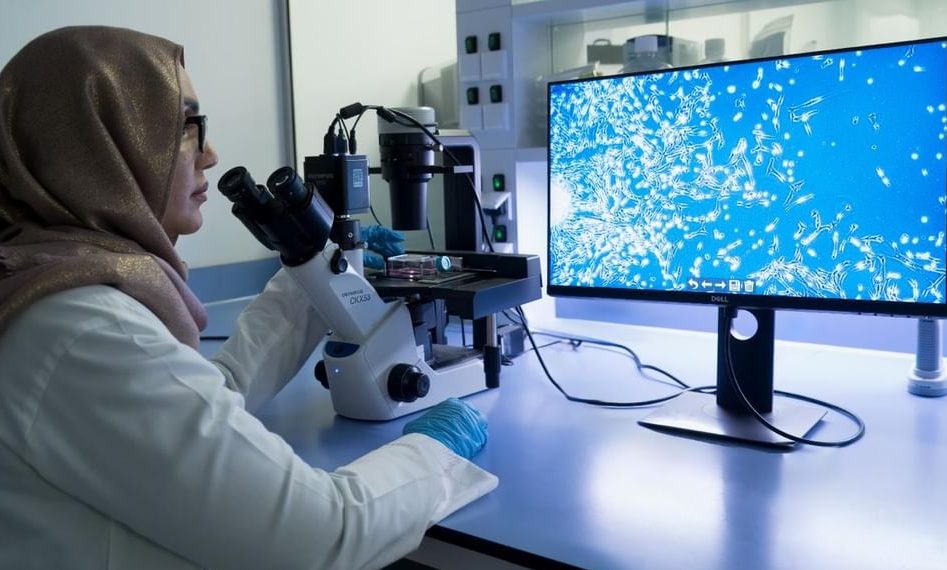
The centre also leads an advanced research platform focused on immune, genetic and cancer-related diseases while integrating artificial intelligence technologies into diagnostic processes. These initiatives are being developed in collaboration with Khalifa University, New York University Abu Dhabi and AstraZeneca.
Meanwhile, Yas Clinic Hospital, the clinical arm of the stem cells centre, continues to expand its role in regenerative medicine by broadening access to cellular and gene therapies and strengthening specialised healthcare services under the supervision of the Department of Health – Abu Dhabi.
In collaboration with the centre, the hospital’s medical team has achieved several major milestones, including the implementation of innovative single-cell immune therapies and umbilical cord-derived mesenchymal stem cell therapy (UC-MSC). The team also used genetically modified immune cell therapy, known as CAR-T, to treat a 38-year-old patient suffering from systemic lupus erythematosus (SLE) and triple-positive antiphospholipid syndrome (APS).
The hospital, in partnership with the centre and Vertex Pharmaceuticals, also carried out the UAE’s first gene therapy infusion for haemoglobin disorders using the CRISPR/Cas9-based treatment “CASGEVY”. The treatment is designed for patients with sickle cell disease accompanied by recurrent vaso-occlusive crises, as well as transfusion-dependent thalassaemia.
CRISPR/Cas9 technology works by performing highly precise gene editing targeting disease-causing genetic sequences using guided RNA molecules, while the Cas9 enzyme functions as a molecular “scissor” to cut DNA at specific sites, enabling the correction of genetic abnormalities at their source.
The Abu Dhabi Stem Cells Center also recorded a major scientific breakthrough through the development of an advanced technique capable of producing brain stem cells derived from a patient’s own cells, marking a significant advancement in regenerative medicine research.
In the field of bone marrow transplantation, medical teams achieved several notable successes, including a successful transplant from an unrelated donor for a 55-year-old Emirati patient, treatment for a Palestinian child from Gaza, and the emergency rescue of a Pakistani infant suffering from multiple severe viral infections that caused lung failure and immune system collapse. A rare full tissue match with the infant’s father enabled doctors to perform the transplant immediately without prior conditioning treatment.
Doctors also conducted an advanced bone marrow transplant for a one-year-old child diagnosed at the age of four to five months with infant B-cell acute lymphoblastic leukaemia (B-ALL) associated with a high-risk genetic mutation, highlighting the rapid progress being made in paediatric cancer treatment.
According to official figures, the Abu Dhabi Stem Cells Center, in cooperation with Yas Clinic Hospital – Khalifa City, performed 113 bone marrow transplants in 2025 alone, bringing the total number of procedures conducted since 2022 to 240. The programme also delivered 26 CAR-T treatments, achieving survival rates of up to 80 per cent and surpassing more than 75 per cent of key performance indicators, with some paediatric transplant indicators recording full success rates.
Regenerative medicine is an emerging medical field focused on repairing, replacing or regenerating damaged cells, tissues and organs to restore biological function. It relies on advanced technologies such as bioengineering, gene therapy and cell transplantation, with stem cells forming the foundation of many of its applications due to their ability to divide, renew themselves and transform into specialised cell types depending on their source and method of use.