

Despite the high level of complexity that has characterised the war in Ukraine from its outset, it has simultaneously reaffirmed a fundamental reality: field commanders—particularly at the land component level—continue to face a persistent set of challenges. This remains true even as modern militaries benefit from advanced technologies ranging from unmanned aerial systems and electronic warfare to precision strike capabilities. Yet, regardless of these advancements, the battlefield commander is still confronted with enduring operational dilemmas: manoeuvring under fire, securing supply lines, maintaining unit cohesion, and making decisions in environments defined by uncertainty and time pressure.
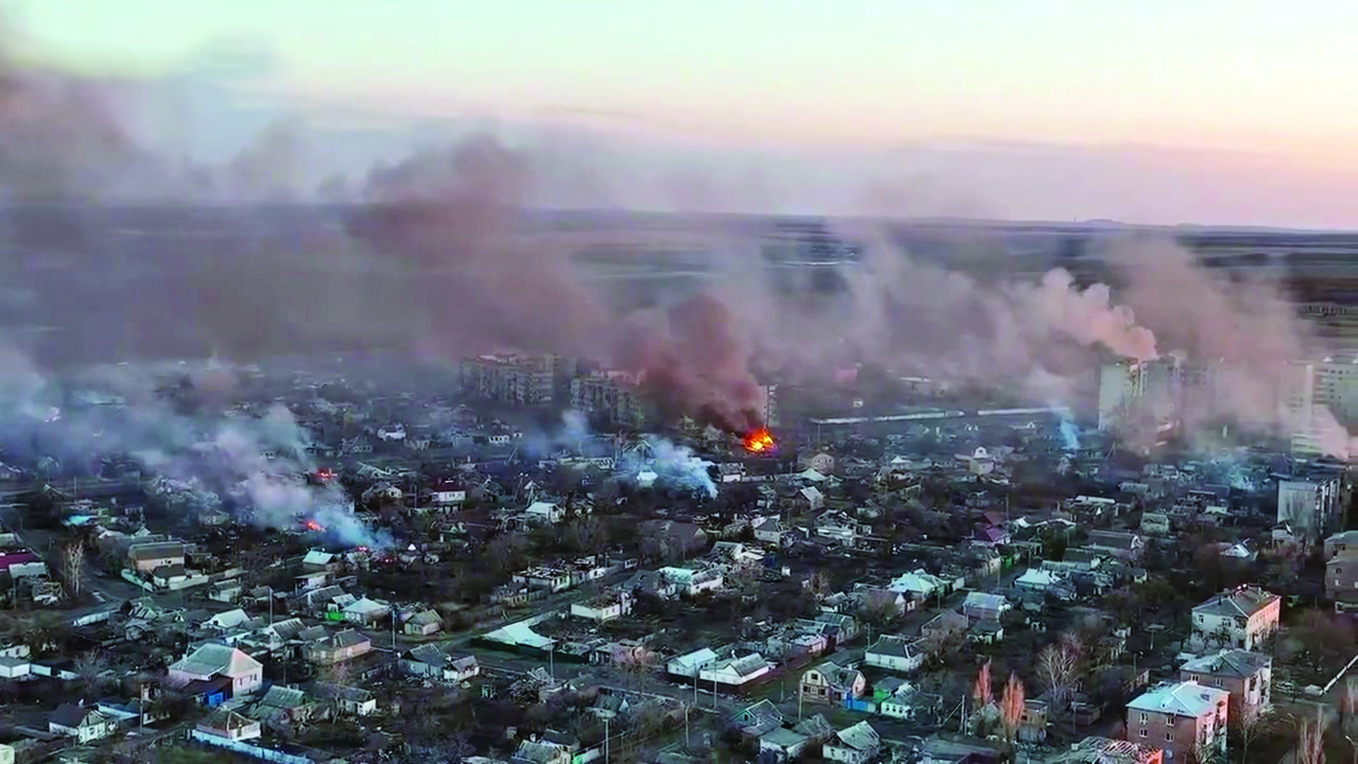
This continuity underscores a broader truth—wars may evolve in tools and techniques, but they remain governed by enduring battlefield constants. Nowhere is this more evident than in land warfare, which continues to represent the most complex domain due to direct friction, the multiplicity of variables, and the sensitivity of time and terrain. In essence, today’s commanders in Ukraine face challenges remarkably similar to those encountered in past conflicts, albeit through different means and technologies.
A Transparent Battlespace: The End of Traditional Manoeuvre Freedom
The battlefield in Ukraine has effectively become a semi-transparent environment, driven by the widespread use of drones, satellite imagery, and electronic reconnaissance systems. This has significantly reduced the traditional freedom of manoeuvre long relied upon by ground forces.
Commanders can no longer mass forces, reposition reserves, or execute surprise manoeuvres without a high risk of rapid detection and targeting. The proliferation of small drones capable of providing continuous surveillance has ensured that even limited concentrations of forces can quickly become targets for artillery or precision strikes.
This pattern has been particularly evident in battles such as Bakhmut and Zaporizhzhia, where both sides struggled to achieve rapid breakthroughs due to the constant exposure of troop movements. As a result, operations have shifted towards gradual, attritional advances rather than large-scale manoeuvres.
Early phases of the war also demonstrated the vulnerability of moving columns, which were frequently targeted after being detected through reconnaissance assets. This has redefined mobility itself—not merely as speed of movement, but as the ability to minimise one’s signature and remain concealed.
Consequently, the character of combat has shifted from manoeuvre warfare to a form of precision attrition, where any detected target—regardless of size—can be engaged. This reality has forced commanders to adapt by dispersing units, reducing concentrations, and relying on intermittent movement and continuous concealment.
Decision Pressure and the Exploitation of Opportunity
Decision-making pressure has emerged as one of the most critical challenges for field commanders, as the targeting cycle has accelerated to near real-time speeds. Once a target is detected—regardless of the means of detection—the window for engagement may be reduced to mere minutes.
This dynamic compels commanders to make rapid decisions in environments often characterised by incomplete information and an unclear operational picture. Delayed decisions risk exposing forces to detection and destruction, while hasty decisions based on insufficient data may result in misallocation of resources or unintended losses.
The central dilemma, therefore, lies in balancing speed and accuracy. This challenge is expected to intensify in future operations as reliance on unmanned systems, artificial intelligence, and advanced sensing technologies continues to grow.
Addressing this issue extends beyond technological acquisition. It requires preparing commanders to operate effectively under pressure through rigorous training, particularly in decision-making under stress. Mission command principles also become increasingly vital, empowering lower-level leaders to act swiftly within the commander’s intent, thereby preserving operational tempo.
Ultimately, the ability to make fast and accurate decisions will remain a defining factor of success in modern and future battlefields.
The Complexity of Multi-Domain Operations
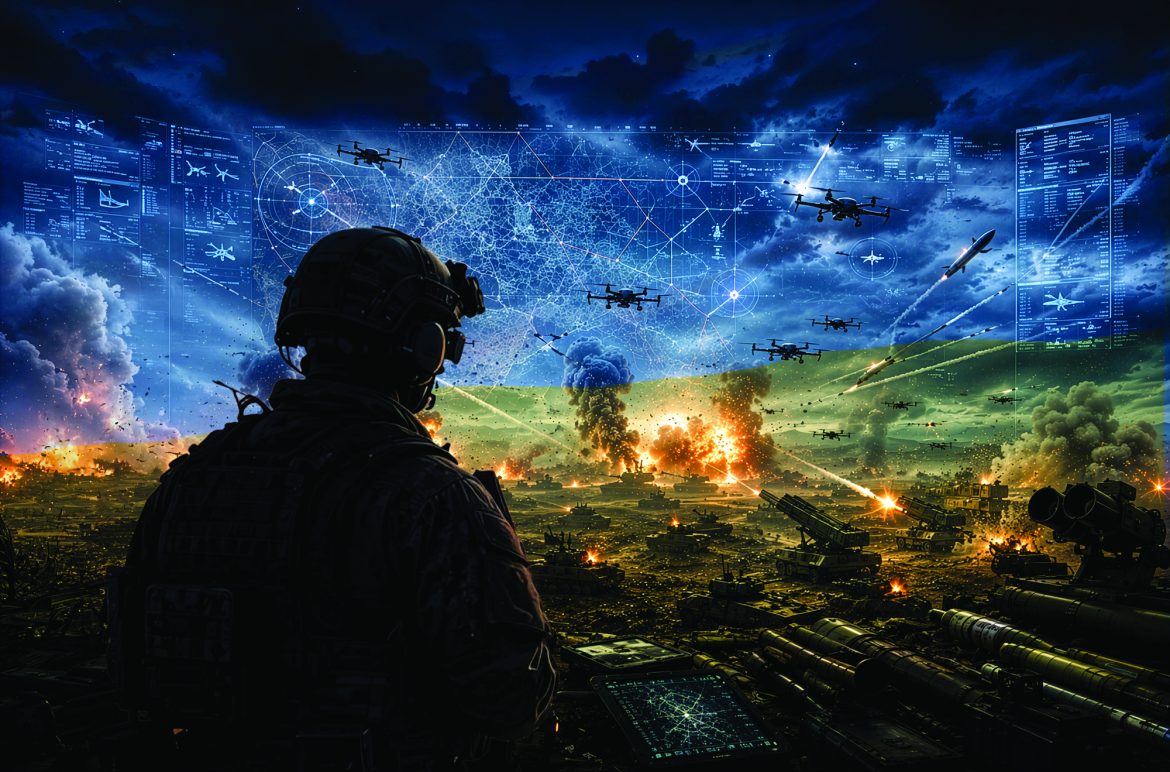
The war in Ukraine provides a clear example of multi-domain warfare in practice. Field commanders are no longer managing ground forces alone but are operating within an integrated system that includes drones, electronic warfare, cyber capabilities, and long-range fires.
In this environment, information and firepower are closely intertwined, and operational success depends on the commander’s ability to synchronise these domains to achieve decisive effects at the right time and place.
Operational experience has shown that a lack of integration—or weak coordination between these components—can result in missed opportunities or even operational paralysis. In many instances, targets identified by drones were not exploited due to delays in linking with fire units, while electronic interference sometimes disrupted communications, severing the connection between detection and execution.
Conversely, effective coordination across domains enables a multiplier effect, transforming information into precise strikes within a short timeframe.
The key challenge, therefore, is not managing each domain independently but integrating them into a cohesive and dynamic operational framework. This demands a high level of shared understanding, flexible command and control structures, and training focused on joint and cross-domain operations. As technological advancement accelerates, this challenge is expected to grow in both scale and complexity.
Logistics Under Fire
In modern warfare, logistics has evolved from a support function into a central battleground. The Ukraine conflict has demonstrated that supply systems are now directly targeted as part of precision attrition strategies.
From the early stages of the war, formations dependent on extended and exposed supply lines proved highly vulnerable. Logistics convoys faced significant difficulties in securing fuel and ammunition, while storage sites and transportation nodes were repeatedly targeted by precision artillery and drones.
Strikes against ammunition depots, fuel points, bridges, and transport networks have become a primary method of degrading an adversary’s combat capability. Such actions restrict manoeuvre and can ultimately halt operational momentum without direct engagement.
The relationship between force protection and sustainment has thus become inseparable. Forces that fail to conceal movements, distribute resources, and secure logistical depth become vulnerable to precision targeting, leading to the gradual erosion of combat effectiveness.
Notably, strikes on ammunition depots in depth during the summer of 2022—particularly in areas such as Nova Kakhovka and Melitopol—significantly reduced artillery effectiveness in some Russian formations. This forced the repositioning of stockpiles further from the front lines, directly impacting supply speed and operational tempo.
Similarly, early-war examples of long, exposed logistics convoys illustrated how insufficient protection and concealment could stall advances despite available combat power.
In contrast, some units demonstrated adaptability by adopting more flexible logistical models—reducing their signature, dispersing storage sites, utilising smaller and more mobile transport methods, and enhancing concealment and protection measures. These approaches improved resilience and ensured operational continuity despite sustained targeting.
Thus, logistics has become both a tool of attrition and a decisive factor in warfare. A commander’s effectiveness is increasingly measured by their ability to manage the “battle of sustainment” as proficiently as the kinetic fight itself.
Additional Operational Challenges
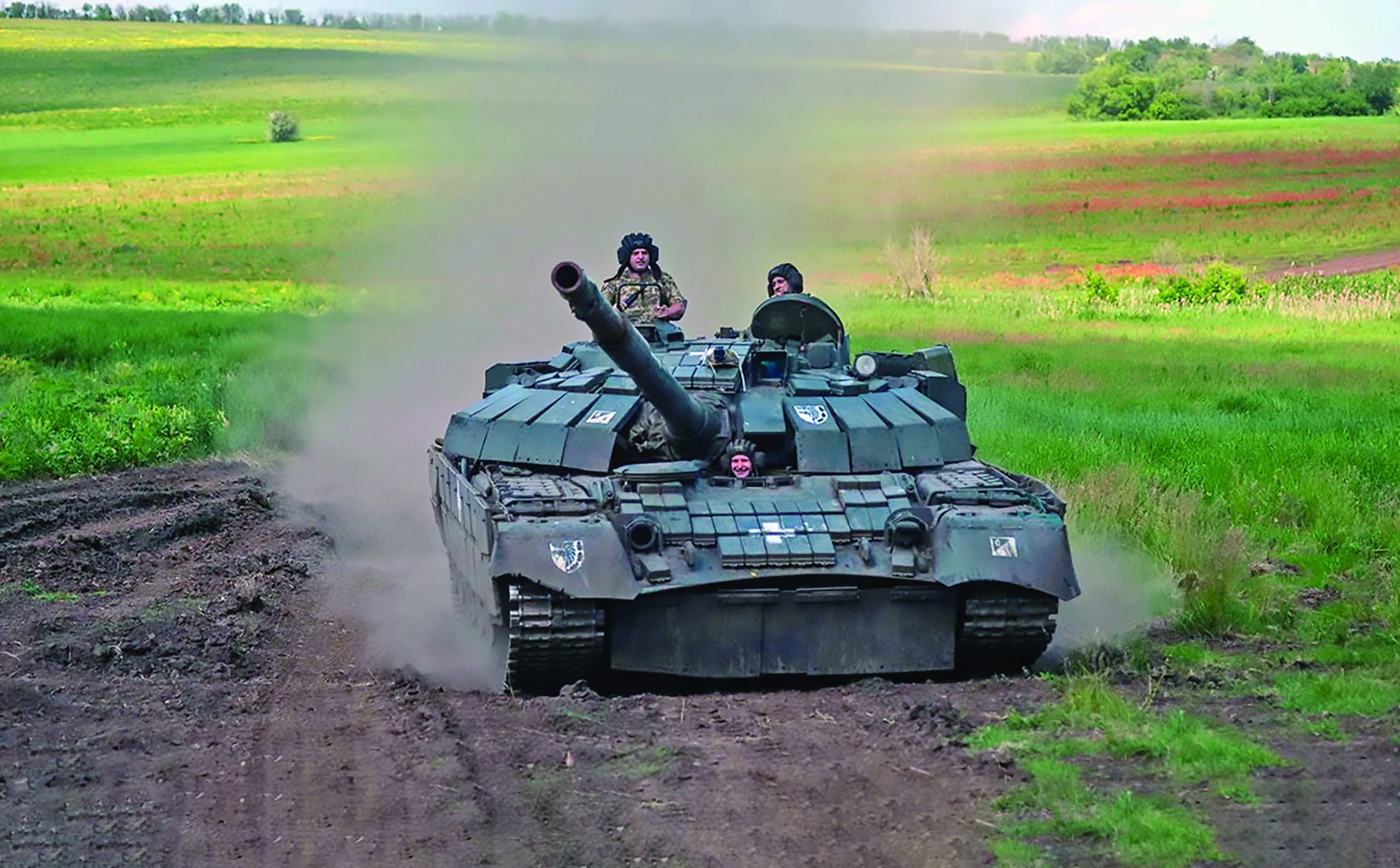
Beyond these core dynamics, the Ukraine war has revealed additional challenges that further complicate the operational environment. Prolonged conflict has led to significant human fatigue and attrition, eroding experience, reducing combat effectiveness, and placing increasing strain on morale. Managing personnel has become as critical as managing firepower and manoeuvre.
Moreover, disparities in adaptability have emerged between different levels of command. Smaller units have often demonstrated greater flexibility and responsiveness, while larger formations have sometimes struggled with slower decision-making due to bureaucratic constraints or organisational rigidity.
These factors collectively highlight that success in modern warfare is not determined solely by technological superiority but by the ability to adapt continuously, maintain cohesion, and manage both the physical and human dimensions of conflict.
Conclusion
The war in Ukraine illustrates that the true challenge for the field commander is no longer limited to confronting the enemy, but extends to managing a complex system of interrelated variables. Technology, time, information, decision-making, and logistics are now deeply intertwined.
Leadership effectiveness is no longer measured solely by the ability to execute plans, but by the capacity to adapt rapidly, operate under uncertainty, and integrate multiple domains into a unified operational approach.
The successful commander of today—and the future—is one who evolves from a mere executor of orders into a manager of multi-dimensional warfare. This transformation will define the standard of leadership in the conflicts of tomorrow.
By: Major General (Ret.) Khaled Ali Al-Sumaiti