

The strength of nations is never measured by the abundance of their natural resources, but by their ability to cultivate individuals capable of harnessing those resources effectively over time. The quality of institutional decision-making ultimately reflects the quality of the minds behind it, while sustainable development can never surpass the level of awareness and values upon which successive generations have been built. National capability, therefore, cannot stem from economic prosperity, technological advancement, or institutional efficiency alone, but from sustained investment in the people who will lead these institutions and shape the nation’s future.
This principle has distinguished the UAE’s development model since the establishment of the Union. Investment in people has never been treated merely as a development policy; rather, it has formed one of the fundamental philosophies upon which the state was built. The vision of the late Sheikh Zayed bin Sultan Al Nahyan laid the foundation for this approach by recognising people as the nation’s greatest asset. Under the UAE’s wise leadership, this vision has continued through sustained investment in the family, the empowerment of women, and the development of human capital as interconnected pillars of national strength. The declaration of the Year of the Family further reinforces this vision, recognising that the future begins in the environment where individuals are first shaped, long before they assume positions of leadership.
Building Future Generations
Building future generations is far more than a metaphor for education or parenting. It is a strategic process through which the intellectual, ethical, and cognitive foundations of society are formed, ultimately determining the national capability upon which a country’s standing in an increasingly knowledge-driven world depends. At its core, national capability is not defined by the resources or technologies a nation possesses, but by its success in developing individuals capable of safeguarding national identity, leading institutions, enhancing competitiveness, and adapting to future transformations. Within this framework, the strategic importance of Emirati women extends well beyond their role as beneficiaries of empowerment policies or partners in development. They represent the primary force in shaping future generations by nurturing the individuals upon whom the state’s long-term capability and sustainable progress ultimately depend. The true impact of this role cannot be measured solely by the number of leadership positions occupied by women or by their immediate achievements. Rather, it is reflected in the quality of the individuals they help develop and in the values and intellectual foundations they instil in future generations—qualities that later influence institutional performance, decision-making, and the overall strength of human capital. From this perspective, building future generations is not simply a social responsibility but a strategic national endeavour. Nations that invest in individuals from the earliest stages of life are, in effect, investing in their future before investing in their present. The values and capabilities cultivated during childhood do not remain confined to the family environment; they accompany individuals throughout their lives, shaping institutional performance, improving the quality of leadership, and strengthening the state’s ability to sustain long-term development. If building future generations lies at the heart of the strategic role of Emirati women, understanding this role first requires reconsidering the very concept of education. Education is not merely the transfer of knowledge or the transmission of values and behaviours. Rather, it is a continuous process that shapes the human mind, influencing how individuals think, evaluate situations, and make decisions. During the early years of life, children acquire far more than their first lessons; they develop their understanding of themselves, their relationships with others, and their ability to balance rights with responsibilities, individual interests with the public good, and freedom with accountability. Consequently, education does not simply prepare individuals for life—it determines how they will understand it and how they will respond to its challenges when entrusted with the responsibilities of leading a family, an institution, or a nation.
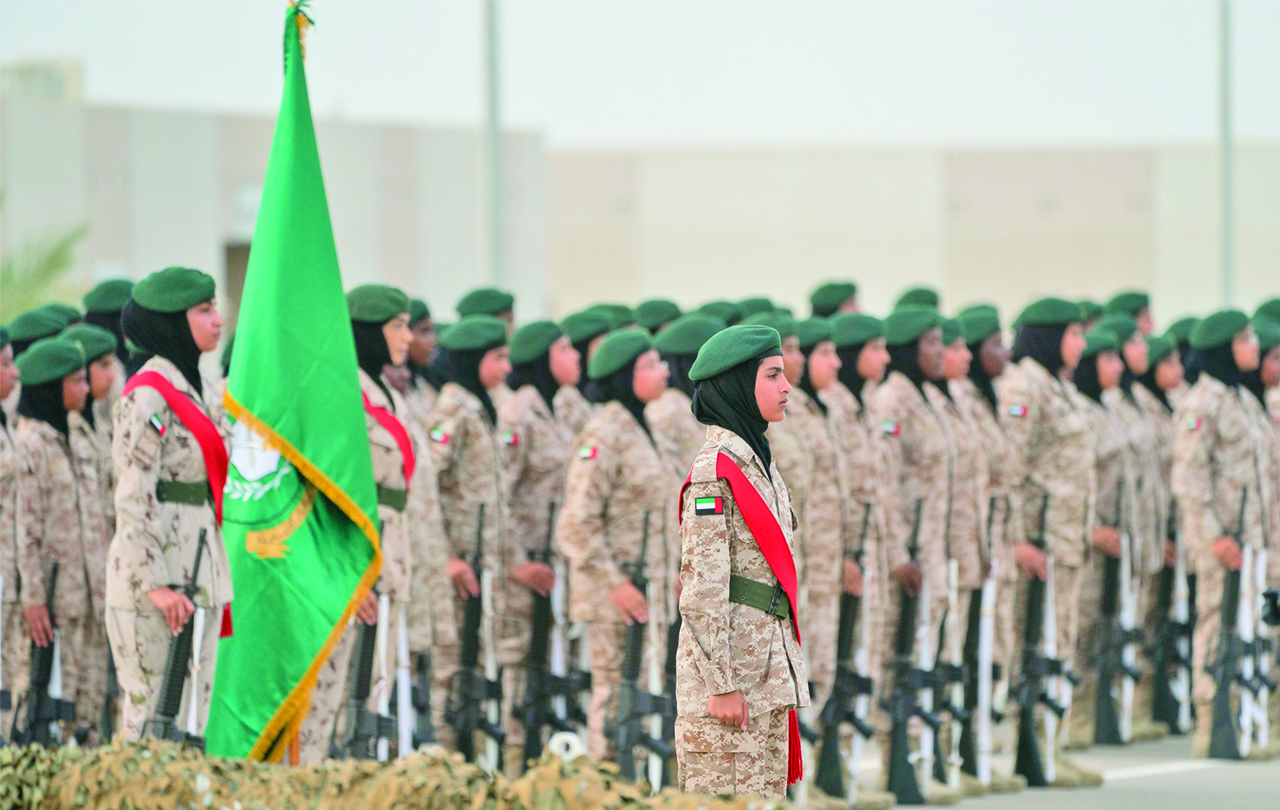 Behavioural Foundations and Human Development
Contemporary research in cognitive neuroscience and developmental psychology suggests that many of the cognitive patterns that shape human behaviour become firmly established during the early years of life through what is known as implicit learning—the unconscious process by which individuals absorb attitudes, behaviours, and ways of thinking from their everyday environment rather than through formal instruction. The ability to embrace differing perspectives, respond to uncertainty, assess risk, and act responsibly does not emerge suddenly upon assuming leadership positions. Instead, these qualities develop gradually within the environment where awareness and character are first formed. From this perspective, the educational role of Emirati women extends well beyond raising children. It encompasses a broader national mission centred on developing the human capital that will one day lead state institutions, contribute to national decision-making, and shape the country’s future. Every generation built upon strong foundations of knowledge, values, and national identity provides the state with a strategic reserve of strength whose impact grows over time. Accordingly, the strategic value of women’s empowerment can no longer be measured solely by expanding participation in the labour market or increasing representation in leadership positions, important though these achievements remain. Its greatest significance lies in its influence over the first and most critical stage of nation-building: the formation of individuals. Leaders are not created when they assume office, nor do professional capabilities begin at university or national values emerge within institutional corridors. Rather, they are cultivated in the environment where awareness is formed, values are embedded, and attitudes towards knowledge, work, and responsibility first take shape. Investment in women, therefore, extends beyond supporting one segment of society; it is an investment in the very system that produces human capital, improves the quality of decision-making, and strengthens the sustainability of national development.
The UAE Development Model
The distinctive strength of the UAE’s development model lies in its treatment of the family unit, women’s empowerment, and human capital development not as separate policy areas but as components of a single strategic framework dedicated to strengthening national capability. Together, these elements enhance institutional performance, improve economic competitiveness, and reinforce the nation’s capacity for innovation and adaptation. In this context, women’s empowerment is not an objective in itself, but a strategic means of building more capable individuals, stronger institutions, and a nation better prepared for the future. For this reason, institutional excellence does not begin within the walls of organisations. It is established years earlier in the environment where individuals are first shaped. Regardless of how sophisticated institutional systems or technologies become, they remain dependent on the quality of the people who lead them. Institutional decisions are, in essence, a natural extension of the intellectual foundations and value systems formed during childhood rather than isolated outcomes detached from personal development. When a commitment to learning, discipline, responsibility, respect for diversity, and dedication to the public interest is instilled from an early age, these values gradually evolve from individual behaviours into an institutional culture. Over time, they influence public policy, improve the quality of decision-making, and create organisations that are more innovative, resilient, and sustainable. In this way, Emirati women strengthen institutions at their very foundations by helping shape the individuals who will ultimately build, lead, and define them.
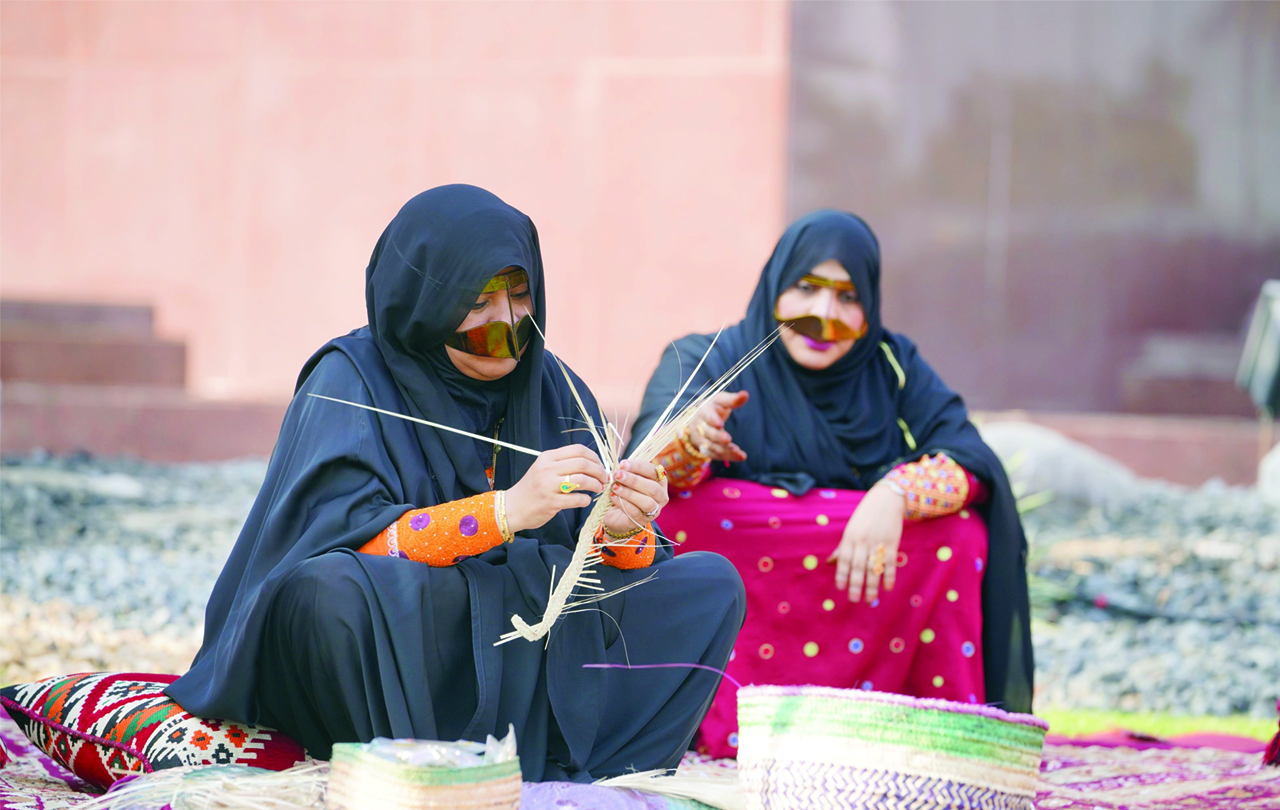 Family and National Competitiveness
This vision presents a development model that does not separate social progress from economic development, nor treat women’s empowerment and institution-building as independent paths. Instead, it recognises that strong families and national competitiveness are inseparable, forming interconnected elements within a comprehensive system that begins with human development and ultimately determines a nation’s capacity for innovation, competitiveness, and sustainable growth. This integrated approach is one of the defining reasons behind the UAE’s ability to build a development model that balances tradition with modernisation while investing simultaneously in people and the future. As artificial intelligence advances at an unprecedented pace, demographic shifts reshape societies, and knowledge economies redefine global competition, the sources of national influence are being fundamentally transformed. Competitive advantage will no longer depend solely on access to advanced technologies or material resources, but increasingly on the ability to develop individuals who possess critical thinking skills, cognitive adaptability, a commitment to lifelong learning, and the confidence to uphold their values and national identity in a rapidly changing world. Technology can be acquired, and knowledge can be transferred. Human beings capable of applying both effectively, responsibly, and in the national interest, however, cannot be created overnight. They are shaped through years of purposeful education and conscious upbringing. Consequently, investing in future generations is no longer simply a social priority but a strategic imperative dictated by the realities of an increasingly competitive global landscape.
Investing in Human Capital
The importance of investing in people is increasingly supported by international research. The World Economic Forum’s Future of Jobs Report 2025 identifies cognitive skills, analytical thinking, and lifelong learning as among the most sought-after capabilities in the future labour market. Similarly, the OECD Skills Strategy highlights human capital development as one of the principal drivers of long-term productivity and national competitiveness. Together, these findings underscore that investment in people is no longer simply a development priority but a strategic necessity for strengthening national capability in an era of rapid transformation. Yet the foundations of these capabilities are not established in universities or professional training programmes. They begin much earlier within the family, where character is shaped, values are formed, and an individual’s relationship with knowledge, work, and responsibility first takes root.
The Strategic Role of Emirati Women
Against this backdrop, the role of Emirati women extends well beyond meeting the demands of the present to becoming an essential partner in shaping the future. Their contribution is not limited to preparing a generation capable of mastering tomorrow’s technologies; it lies in nurturing individuals who can apply those technologies responsibly in the service of their nation while preserving its identity and values.
This is one of the defining strengths of the UAE’s development model. Rather than viewing investment in technology as separate from investment in people, the model recognises that genuine innovation emerges from the convergence of scientific excellence with strong values and technological progress with national responsibility. In this sense, Emirati women strengthen national capability not as an abstract ideal, but through a cumulative and enduring contribution that is renewed with every generation they help shape.
The significance of this approach will only grow in the decades ahead. Nations will no longer be judged solely by their possession of advanced technologies, but by their ability to produce generations capable of developing, managing, and applying those technologies for the public good. At this point, building future generations evolves from a family responsibility into a matter of national sovereignty, and from a social function into one of the defining pillars of national capability in the emerging global order. Celebrating Emirati Women’s Day, therefore, is more than recognising individual achievements. It is an opportunity to reaffirm the pivotal role of Emirati women in shaping the nation’s future. Countries that view women as partners in development undoubtedly make significant progress. Those who recognise them as the architects of future generations, the builders of human capital, and the shapers of the values that guide institutions and the state establish a national capability that is continuously renewed across generations.
The UAE’s experience demonstrates that investment in people forms the foundation upon which every path of development is built, and the one most capable of delivering lasting prosperity. The family is the foundation of this investment, while women remain the driving force at its heart. Accordingly, the true measure of women’s empowerment lies not only in individual accomplishments, but in their ability to raise generations equipped with knowledge, a strong sense of national identity, and a deep commitment to responsibility—qualities that enable them to lead the nation confidently through an increasingly dynamic and complex world.
Ultimately, nations do not secure their future through the resources they possess, but through the people they cultivate. Women who shape those individuals are not simply preparing a generation for the present; they are building a national capability that endures over time, strengthening the nation’s position and shaping its future generation after generation. ●
By: Dr Aseela Mohamed Al Shekaili