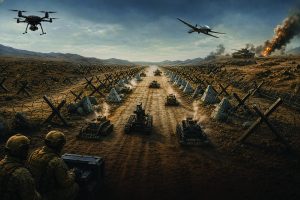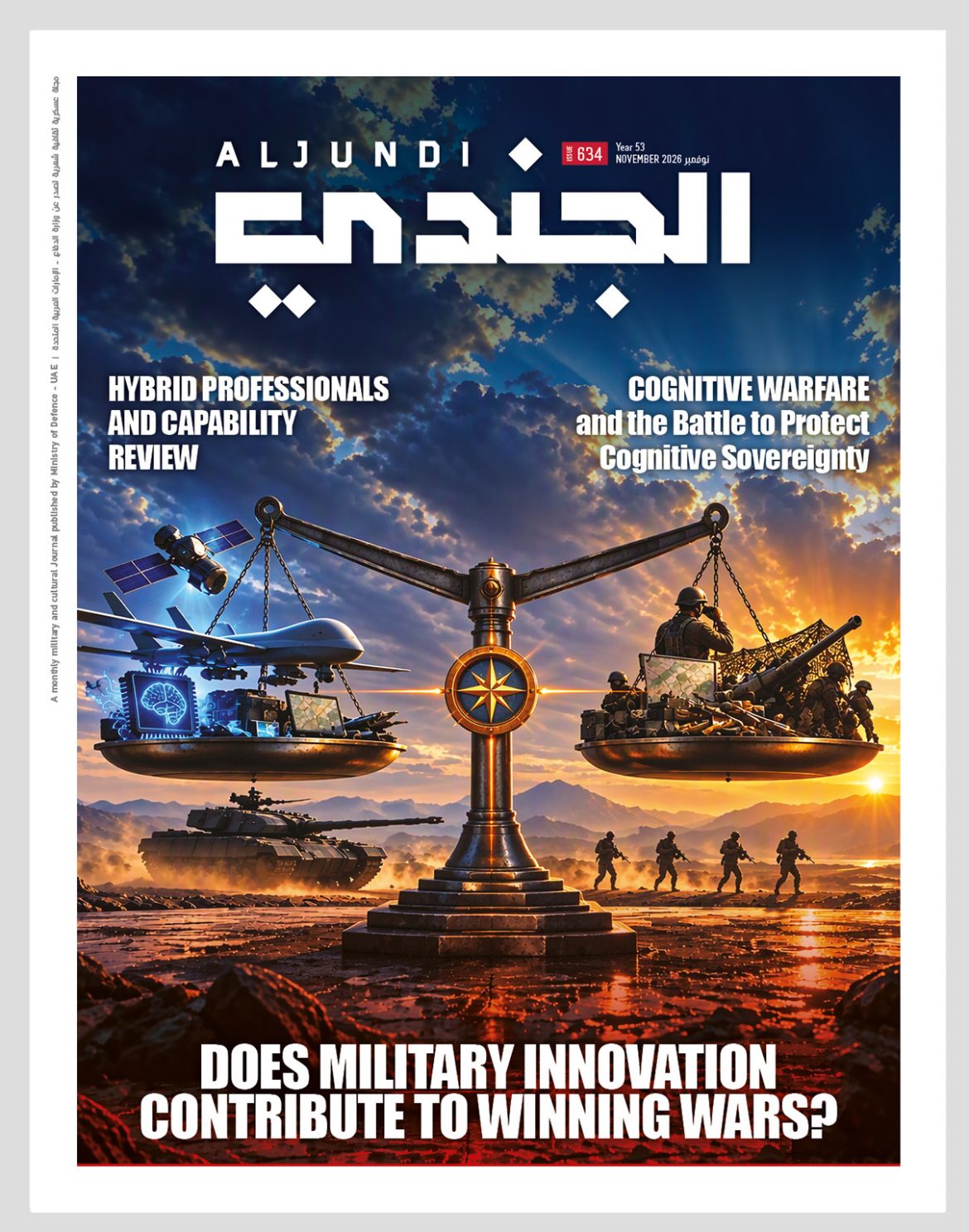


Military innovation plays an important role in achieving victory in war. Most theorists in the field of military studies believe that technology is a decisive factor in determining a military’s strength and its ability to achieve a decisive victory and, consequently, accomplish its political objectives against adversaries. This belief has been reinforced by the emergence of technologies such as unmanned aerial vehicles (UAVs) and the widespread use of surveillance and reconnaissance technologies.
However, an alternative view holds that the ability of technology to make a decisive difference is often overstated, potentially leading to military failure. Proponents of this view argue that technological developments have not yet been revolutionary in the full sense of the term, as they have not fundamentally transformed traditional methods of offensive and defensive warfare. Although these developments have made warfare more complex and forced military units to adapt to a new operational environment, military success cannot be achieved through technological superiority alone. Victory on the battlefield continues to depend on integrating technology with other factors, including operational planning, leadership, manoeuvre, and coordination among the different branches of the armed forces. This analysis examines this proposition and assesses its validity through the Russian-Ukrainian war and the Azerbaijani-Armenian war.
Technology Is Not the Only Factor
Biddle argues that technology is not the decisive factor in explaining victory in battle. Instead, he identifies another critical factor that should not be overlooked: the “modern system of force employment”. According to Biddle, for an army to accomplish its military missions, it must limit its exposure to enemy fire. The primary means of achieving this lies in how forces are employed. This approach consists of a highly integrated and interconnected structure that incorporates fortification and protection, concealment, dispersion, fire suppression, independent manoeuvre by small units, and combined-arms operations at the tactical level. At the operational level, it includes operational depth, reserves, and the selective concentration of forces. When these methods are applied collectively, they significantly reduce vulnerability even to the weapons and sensors of the twenty-first century. Where the system is implemented comprehensively, it can mitigate the effects of technological change and shield its users from the full destructive potential of their adversaries’ weapons.
Biddle argues that mastering this system of force employment is not universally attainable. The process is highly complex and entails difficult political and social trade-offs. While some states and armed forces have overcome these challenges and implemented the system comprehensively, others have failed to do so. Armies that have been unable to implement an effective system of force employment have found themselves highly exposed to the firepower provided by modern weapons, with the consequences becoming increasingly severe as the range and destructive capability of these weapons expand. The ultimate result has been a widening gap in actual military power between states capable of effectively employing their forces and those unable to do so. By contrast, there has been relatively limited change in the outcomes of confrontations between adversaries that are both capable of applying such a system.
Biddle therefore considers this factor more important in explaining victory in battle than factors such as the employment of advanced technology or force size. With regard to the latter, many military theorists believe that states with larger populations, greater economic capabilities, larger armies, or higher military expenditure will inevitably prevail in war over states that lack such advantages.
Consequently, some analysts have established rules suggesting that a successful attack requires the attacking force to enjoy a numerical advantage of approximately three to one over the defender. Other estimates stipulate a force ratio of 1.5 to 1 across the entire theatre of operations.
The Russian-Ukrainian War
The Russian-Ukrainian war has revived the debate over the role of technology and its impact on the conduct of warfare and the course of military operations. One of the first conclusions drawn from the widespread deployment of unmanned systems, artificial intelligence, and precision-guided munitions was that these technologies failed either to reshape the battlefield in favour of actors more capable of employing them or to bring about a rapid end to the war, as some military analysts had predicted. Instead, the Russian-Ukrainian war has produced a striking paradox: the extensive use of drones, satellite-enabled intelligence, surveillance and reconnaissance (ISR) capabilities, and precision strikes has contributed to the evolution of the conflict into a prolonged and costly war of attrition. At the same time, dense networks of drones, commercial satellite support, and precision strikes operating as part of an integrated system have coexisted with large-scale mobilisation, trench warfare, and extensive artillery use.
On the other hand, some of the high-tech weapons used by Ukraine during the war have been degraded by Russia’s advanced technological capabilities. For example, the United States used satellites to provide Ukraine with precise intelligence on target locations, navigation support to ensure strike accuracy, and precise timing, enabling Kyiv to conduct long-range strikes. Early in the war, this helped Ukrainian forces kill senior Russian commanders and target high-value assets, including Russian naval vessels in the Black Sea. One example of this type of attack involved missiles launched from the HIMARS system, which relied on an inertial navigation system supported by the Global Positioning System (GPS) to achieve final targeting accuracy. Although the system achieved notable success during its first year of deployment, Russian countermeasures subsequently reduced its effectiveness by disrupting GPS signals, causing missiles to deviate from their intended targets.
This represents one of the key lessons of the Russian-Ukrainian war: no technological advantage in warfare is permanent unless it is continuously developed and adapted. This can be illustrated by Ukraine’s fleet of Bayraktar TB2 drones, which were initially regarded as a decisive, game-changing capability but soon lost much of their effectiveness as Russian air-defence capabilities improved. This demonstrates the continuing challenge of counter-adaptation and the constant need to develop new measures to overcome an adversary’s countermeasures in combat environments.
The same principle applies to Russia. Russia developed the Geran drone and produced several variants, ranging from the first to the third generation, which were relatively slow. Over time, Ukraine developed air-defence systems capable of intercepting these drones at a relatively low cost. Russia subsequently developed a new generation, the Geran-5, equipped with jet engines.
This system represents a hybrid between a drone and a cruise missile, reaching speeds of 450–650 kilometres per hour, with an operating altitude ranging from 100 to 6,000 metres and a range of between 600 and 900 kilometres. These new models are reportedly faster than Ukrainian interceptor drones, creating a major challenge for Ukrainian air defences. This development came after a period of escalating Ukrainian attacks against Russian civilian infrastructure, including oil refineries and commercial facilities, prompting Moscow to launch retaliatory operations. These attacks came at a time when Ukraine was experiencing a decline in the availability of Western ammunition, particularly Patriot interceptor missiles and other systems. As a result, many Russian strikes using the newer drones were able to reach their targets with relative ease, particularly as Ukraine’s domestically developed solutions proved unable to intercept the new variants.
Ukraine, meanwhile, used the Starlink system for command and control on the ground, as well as to guide explosive-laden drones towards targets hundreds of kilometres away. However, by early 2026, both the Russian and Ukrainian militaries were using the same system for similar purposes. This changed after the company restricted Russian access by limiting the service to devices included on a list approved by the Ukrainian Ministry of Defence. The move immediately affected Russian combat performance, reducing the number of attacks launched by Russian forces. A Pentagon report also linked Russia’s loss of satellite communications with Ukraine’s recovery of hundreds of square kilometres of territory earlier in the year.
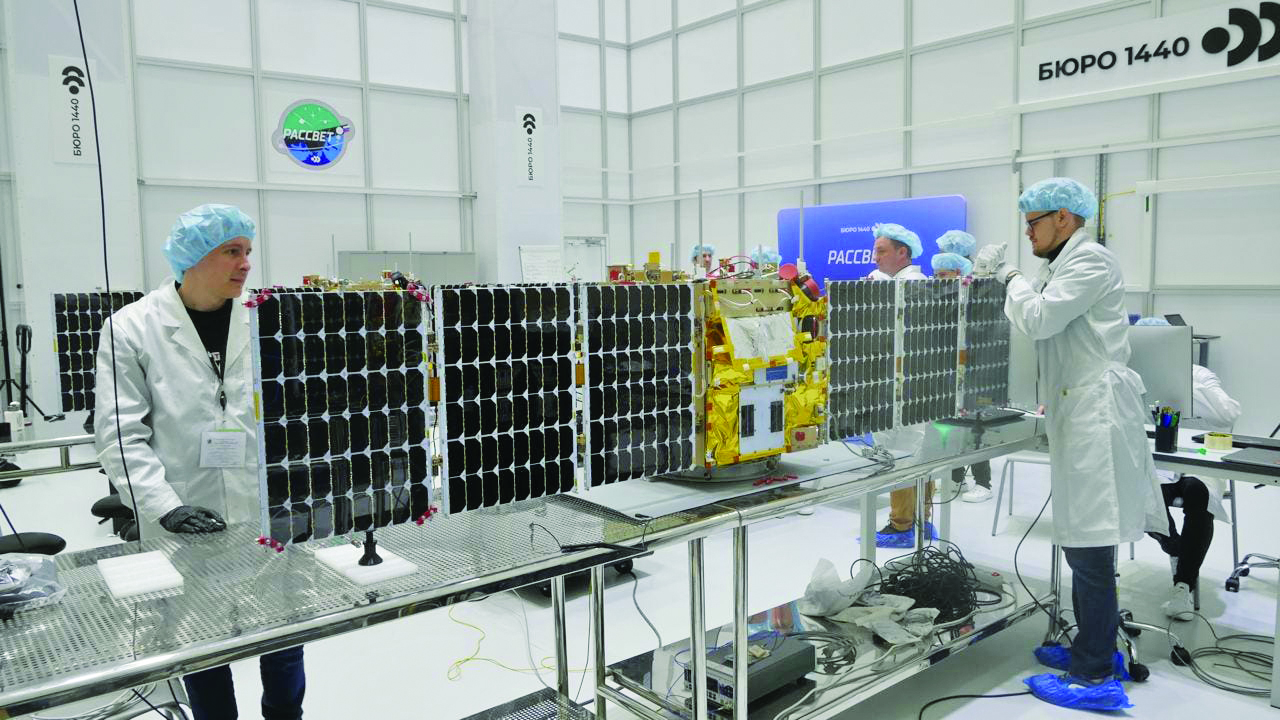
Russia nevertheless adapted by developing an alternative to Starlink in the form of the Rassvet system, developed by the Russian private space company Bureau 1440. Established in December 2020 as part of the X-Holding Group, the company designed Rassvet for low-Earth-orbit satellites to provide broadband data transmission anywhere on the Earth’s surface. At the end of March, the company successfully launched the first 16 Rassvet satellites into low-Earth orbit. Rassvet differs from its US counterpart, Starlink, in that its inter-satellite communication links rely on laser technology, providing broadband connectivity, higher speeds, and improved data-transfer quality compared with Starlink, although Starlink is also expected to adopt similar technology in the near future.
Russia has also used the Volna-Kupol-Garant electronic warfare system to disrupt Starlink satellite terminals, according to a senior official in the electronic warfare and cyber directorate of the Ukrainian Armed Forces. Moscow announced on 28 August 2026 that it had begun mass production of the system. These developments demonstrate that technological competition is not, by itself, a decisive factor in conflicts.
The ability to adapt
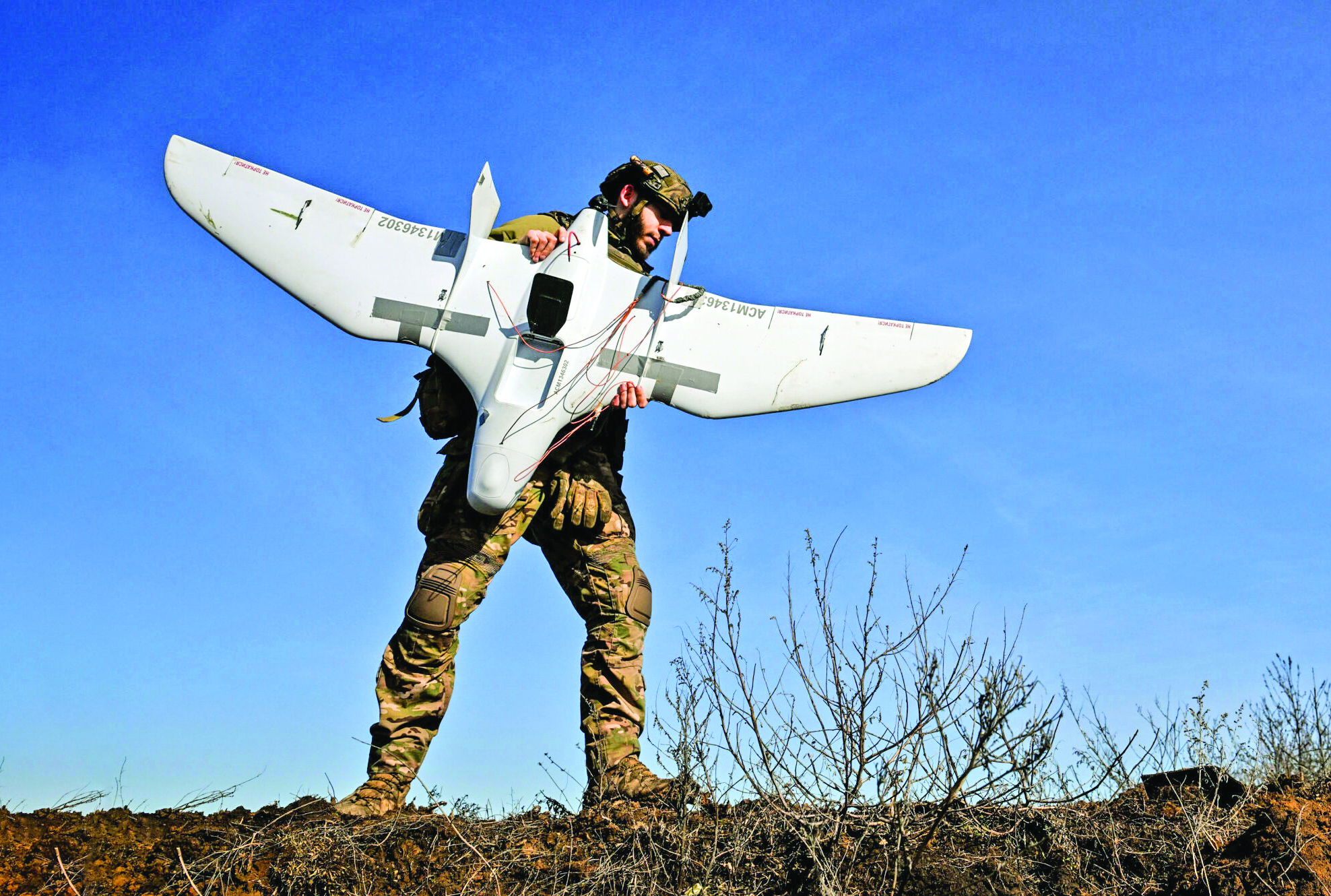
One aspect that many policymakers and strategists may have underestimated is the extent to which Moscow has learned from its failures and adapted its strategy and approach to warfare, both in Ukraine and beyond. Since 2022, as a result of its war with Ukraine, Russia has launched a systematic effort to study its combat experience, draw lessons from it, and disseminate those lessons across the various branches of its armed forces. By early 2023, Moscow had quietly established a complex institutional learning system involving the defence industrial base, universities, and military personnel throughout the chain of command. Today, the military establishment is working to institutionalise its knowledge and experience, realign defence companies and research and development institutions with wartime requirements, and connect technology start-ups with the resources and capabilities provided by the state.
Another factor in the Russian case is Moscow’s ability to produce weapons on a large scale compared with Ukraine and even the United States. Russia produces relatively inexpensive new weapons by modifying existing weapons designs, testing them in combat, and then moving rapidly towards mass production. By contrast, the United States and its Western allies face difficulties in expanding the production of critical weapons, such as Patriot interceptor missiles. Western countries also face challenges in accelerating the transition from technological innovation to weapons that can be produced at scale.
Overall, Russia’s ability to continue making gains in Ukraine is not attributable solely to its capacity for technological innovation. It also stems from its ability to produce innovative weapons rapidly and in large quantities, as well as from its approach to force employment.
The Azerbaijan-Armenia War
When one side in a conflict develops its military capabilities while the other falls behind, this can reinforce the technological advantage of the more capable party and provide it with a greater strategic advantage, particularly when the weaker side fails to improve its system of force employment. The war between Armenia and Azerbaijan provides a clear example. During the 44-day Second Nagorno-Karabakh War in the autumn of 2020, Azerbaijan achieved significant gains, reclaiming most of the territory it had lost during the First Nagorno-Karabakh War (1988–1994). This was largely facilitated by Azerbaijan’s use of drones and loitering munitions, which enabled it to achieve tactical and operational superiority and gain a clear battlefield advantage over Armenia.
Azerbaijan integrated Turkish Bayraktar TB2 drones and Israeli Harop, Orbiter, and Hermes systems into reconnaissance, artillery fire direction, battle-damage assessment, and direct-strike missions. This enabled Azerbaijan to destroy various Armenian air-defence systems, including the S-300 and Tor systems, while also threatening vital supply routes. Nevertheless, operational gains continued to depend on close coordination between precision fires and the ability of military units to manoeuvre. This demonstrates that drones played more of an enabling and supporting role than an independent decisive role in achieving victory.
As Azerbaijani forces advanced into the mountainous and densely forested terrain of Nagorno-Karabakh, the effectiveness of drones declined, particularly as Armenian forces increasingly exploited more concealed and better-protected defensive positions. This slowed the Azerbaijani advance. Azerbaijan therefore adapted its tactics by deploying elite special forces units supported by loitering munitions and precision fires. Special operations forces served as forward observers, identifying targets for drones and artillery while simultaneously exploiting the disruption caused by drone strikes among enemy forces.
By contrast, Armenian fighter aircraft were largely absent from operations because of poor readiness and a shortage of suitable missiles. Armenia’s electronic warfare capabilities also suffered from significant shortcomings. Combat footage further indicates that Armenian armoured formations frequently neglected basic operational measures, such as dispersing units over a wider area and concealing firing positions. Drone footage repeatedly showed tanks concentrated in exposed areas without camouflage, making them easy targets.
Conclusion
The cases discussed above demonstrate that technology alone was not a decisive factor in determining military victory, provided that both sides were able to employ technology effectively or, at a minimum, adapt to it and mitigate its effects. In the Russian-Ukrainian war, both sides have employed advanced technologies, including drones. However, Russia has benefited from its ability to produce military equipment on a large scale, develop its weapons, and manufacture them in large quantities, exceeding the capacity of Western countries to do so. This was demonstrated by its intensive attacks on Kyiv since September 2026, which came in response to Ukrainian attacks on some Russian oil refineries.
By contrast, the Azerbaijan-Armenia case demonstrates shortcomings in Armenia’s efforts to develop and modernise its forces through the use of drones. Nevertheless, this was not the sole decisive factor in Armenia’s defeat. Other factors were equally important, particularly the way its forces were employed. It was evident that Armenian air-defence systems were not adequately concealed, among other shortcomings discussed above.
Overall, these cases indicate that technological innovation can provide significant military advantages, but its impact ultimately depends on how effectively technology is integrated into broader systems of force employment, how rapidly adversaries adapt, and the ability to translate innovation into capabilities that can be produced and sustained at scale.
By: Shady Abdelwahab (Associate Professor, National Defence College)