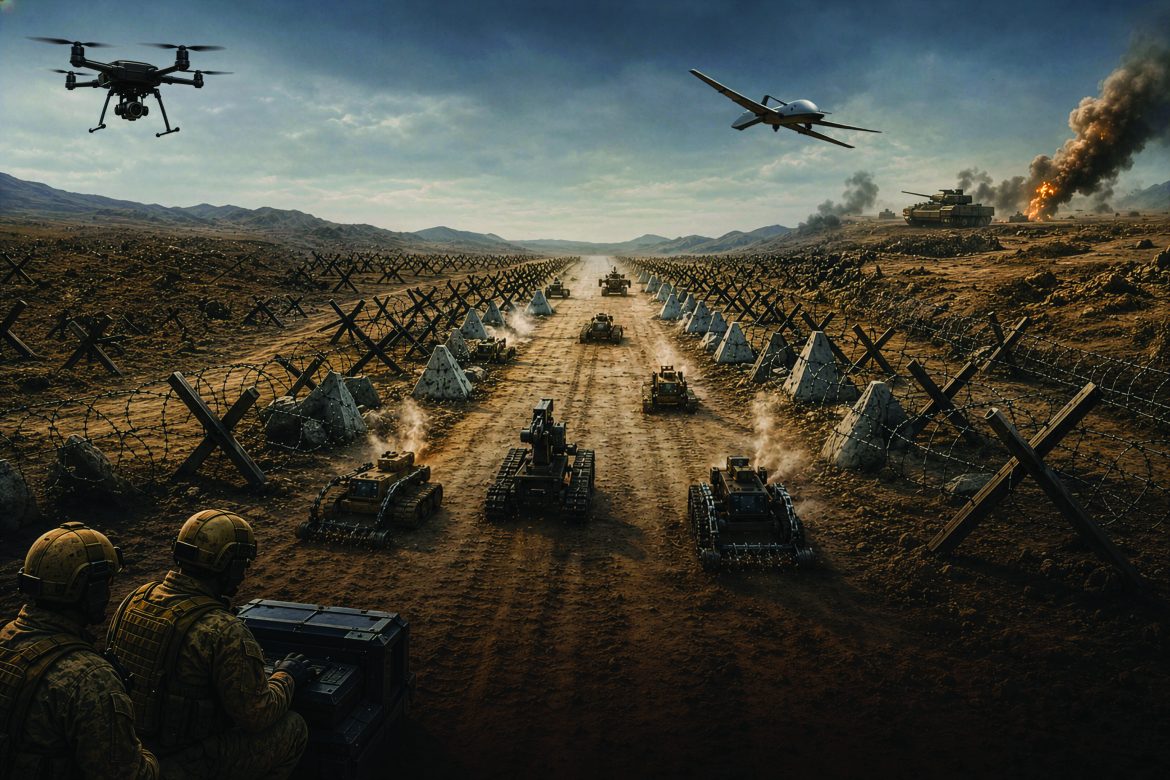


In modern warfare, forces face a widening gap in their ability to conduct breaching operations and create safe passage through obstacles under complex and highly contested battlefield conditions. These environments are characterised by dense physical barriers, persistent aerial surveillance, and continuous exposure to precision-guided munitions and unmanned aerial systems.
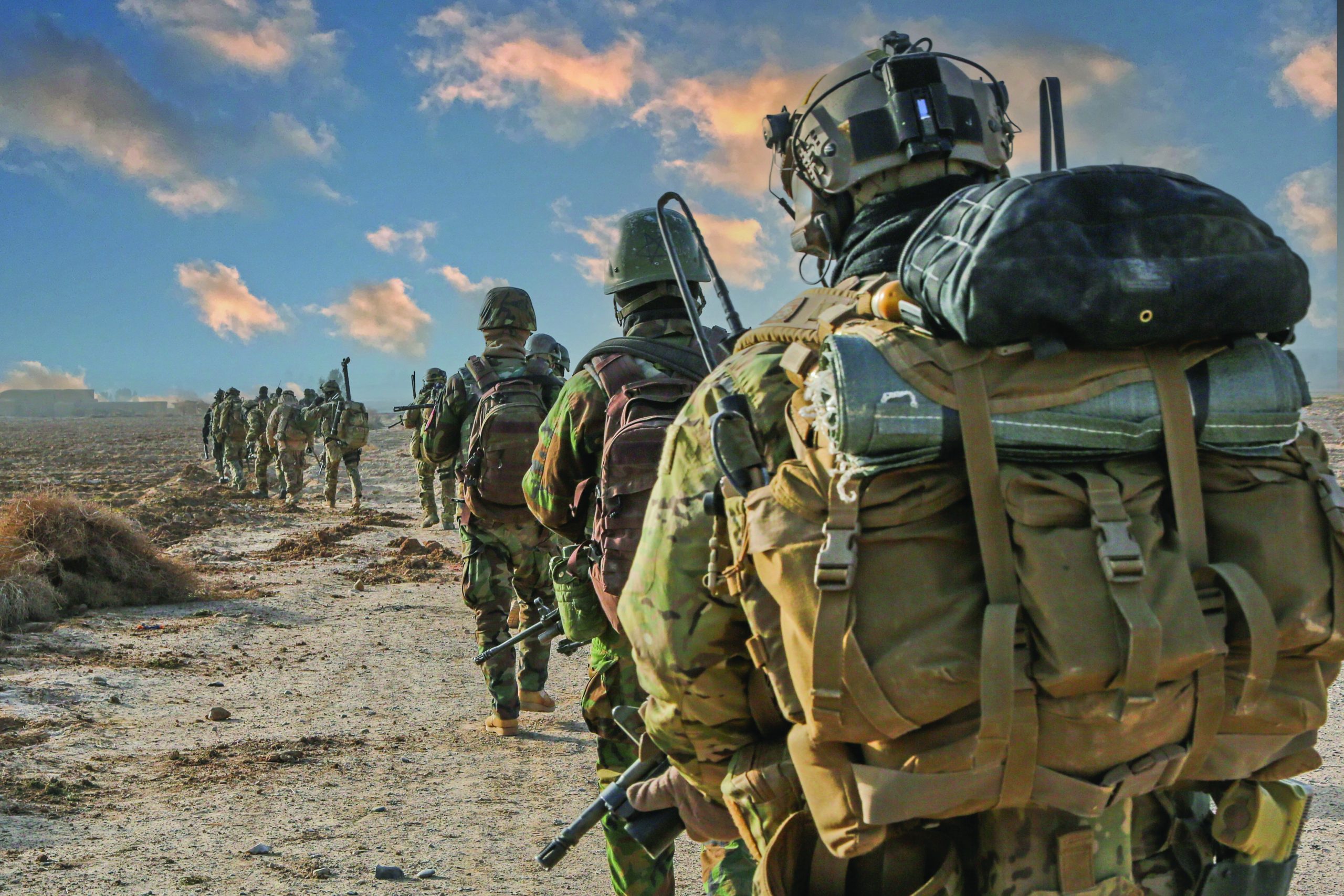
This evolving reality reflects a recurring pattern in contemporary conflict dynamics, in which adversaries deliberately seek to restrict friendly freedom of movement in order to disrupt manoeuvre plans and deny operational objectives. This is achieved through the systematic construction of integrated obstacle systems designed to canalise, delay, and exhaust attacking forces. Within this context, military engineers assume a decisive role in sustaining force mobility by overcoming obstacles and enabling the continuous flow of manoeuvre elements. Their effectiveness directly determines whether operational momentum can be maintained or whether it collapses under the weight of delays imposed by the defensive system.
The Operational Imperative of Mobility
Lessons derived from recent and ongoing conflicts—including operations in Afghanistan, Iraq, and Yemen, as well as the war in Ukraine—underscore the centrality of this equation. Obstacles have re-emerged as a primary tool for disrupting offensive operations, while the success of manoeuvre has become increasingly dependent on the speed and efficiency of breaching activities. Time and operational momentum are decisive variables in translating tactical superiority into tangible battlefield gains. Any delay in opening breaches allows the adversary to reposition forces, reinforce defensive lines, and increase the lethality of engagement zones.
As a result, traditional approaches to obstacle reduction are no longer sufficient. There is a growing requirement to integrate modern technologies, particularly artificial intelligence, in order to optimise the employment of human and material resources. This transition is essential to transform breach operations from slow, exposed, and resource-intensive tasks into rapid, adaptive, and scalable capabilities embedded within a broader combat system.
Defining the Capability Gap
The mobility gap in modern assault operations becomes evident when forces rely primarily on conventional and heavy engineering assets. These typically include mine-clearing vehicles, engineer tanks, specialised breaching systems, demolition charges of various types, and—ultimately—dismounted engineer teams as the last resort.
While these capabilities retain operational value, they were largely designed for engagements against conventional and symmetric adversaries operating in less contested environments. In contrast, today’s battlefield is shaped by hybrid and multi-layered threats that integrate traditional military capabilities with unmanned systems, precision fires, electronic warfare, and other non-conventional tools within a unified operational framework.
In such environments, artificial obstacles are no longer static defensive measures. Instead, they form part of an active targeting ecosystem that simultaneously detects, identifies, and engages approaching forces.
Operational evidence from recent conflicts suggests that this threat model is likely to define the dominant character of future warfare. Any large engineering platform approaching an obstacle—such as a minefield or fortified defensive line—becomes a high-value target almost immediately. Its position is rapidly detected and subjected to coordinated multi-domain fires, turning the breaching axis itself into a critical point of operational vulnerability.
Lessons from Recent Wars
The ongoing war in Ukraine provides a clear illustration of this persistent capability gap. Repeatedly, layered defensive lines—combining fortified positions, extensive minefields, and anti-armour obstacle systems—have demonstrated that superiority in manoeuvre platforms does not automatically translate into operational success.
The Ukrainian offensive in the summer of 2023 along the Zaporizhzhia axis, particularly in the vicinity of Robotyne, highlights this dynamic. Ukrainian forces encountered deeply echeloned Russian defensive belts reinforced with extensive minefields and engineered obstacles of unprecedented density. Despite deploying advanced armoured systems and modern combat vehicles, the pace of mine clearance and breach execution proved insufficient to maintain operational momentum. Sustained exposure to precision fires and unmanned aerial surveillance further compounded these challenges, significantly slowing the advance and contributing to losses during the initial phases of the operation. This ultimately forced a tactical adjustment towards incremental infantry-led advances supported by limited and carefully coordinated breaching efforts.
Beyond the battlefield dimension, this phenomenon is also linked to the structural design of opposing forces. Analytical assessments indicate that the pre-war structure of the Russian military was not optimised for large-scale offensive manoeuvre against a peer adversary. Instead, it relied on lighter tactical formations with limited logistical and engineering depth.
In response to these constraints, operational doctrine evolved towards compensating through the extensive use of obstacles—particularly mine warfare—as a central pillar of a layered defensive system designed to delay, disrupt, and attrit attacking forces rather than to manoeuvre actively. Within this framework, obstacles have shifted from being passive defensive tools to becoming active instruments of operational control, shaping the tempo of battle and dictating the rhythm of engagement. Consequently, the problem becomes multi-dimensional: delays in obstacle detection, limited capacity to execute simultaneous breaches across multiple axes, and heightened risks to personnel and equipment when approaching contested lines of contact.
Thus, analysis points out that the gap is not confined to the tactical and field level alone, but extends into a structural deficiency within the force capability model itself—specifically in the ability to sustain friendly force mobility. Most conventional armed forces continue to rely on the concept of “heavy breaching platforms” as the primary means of opening passages through obstacle systems.
However, the modern battlefield—as clearly demonstrated in the 2020 Nagorno-Karabakh War—is characterised by the widespread proliferation of sensors and a high degree of low-cost, precision targeting capability. This development renders large breaching platforms increasingly vulnerable to early detection and engagement, often before they are able to achieve their intended operational effect.
This shift therefore necessitates a fundamental reconsideration of how engineer capabilities are designed and structured. They must no longer remain dependent on a limited number of heavy systems, but instead evolve into a distributed, flexible, and scalable architecture capable of operating effectively within highly contested and high-threat environments.
Towards a Multi-Capability Smart Model
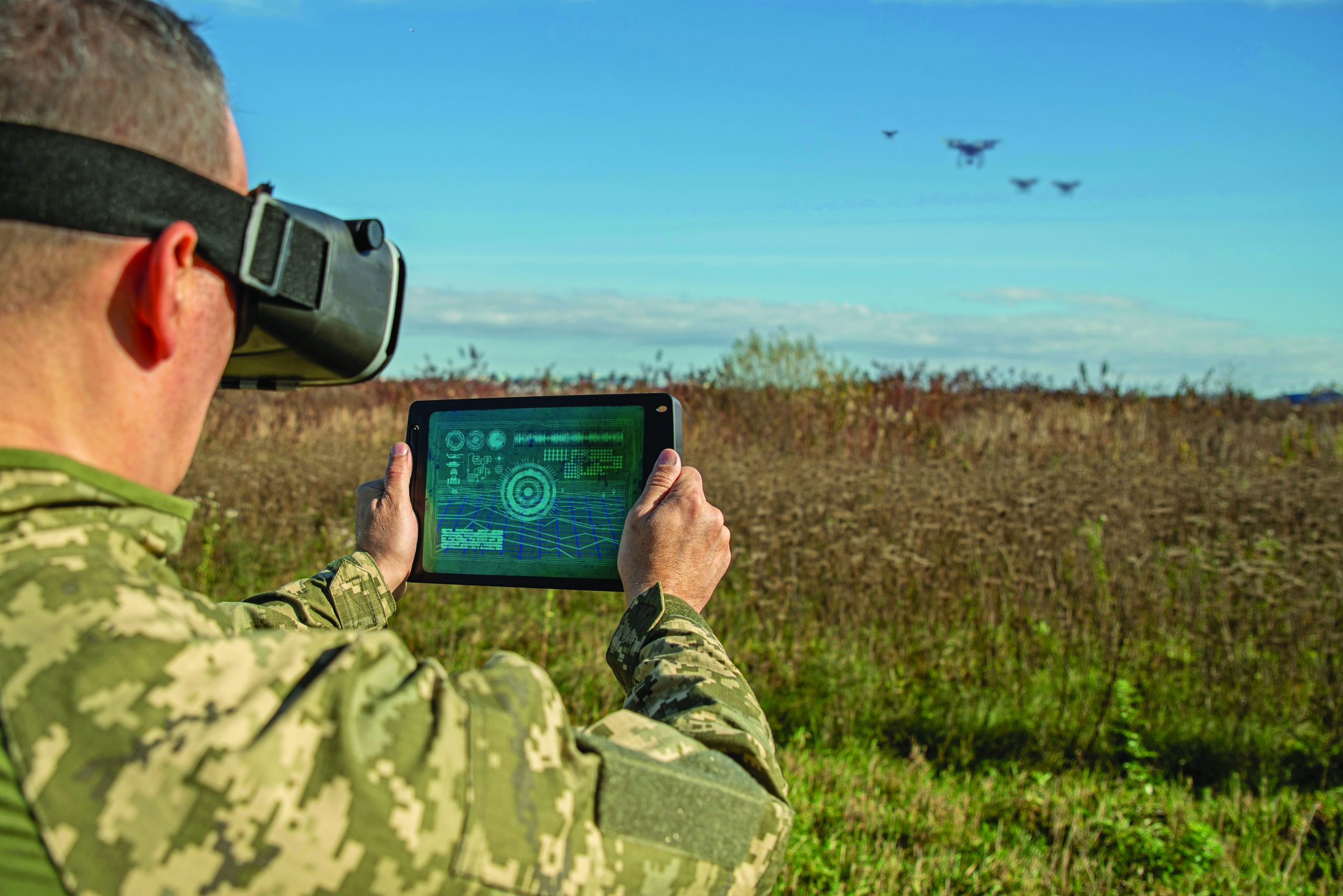
In this context, a recent study published in Parameters, the journal of the U.S. Army War College, offers a conceptual framework for addressing the widening mobility gap in modern operations. The proposal is grounded in the integration of artificial intelligence with unmanned aerial systems and ground robotics to establish what may be described as a “smart breaching system.” This system is envisioned as a multi-domain, networked capability designed to detect and analyse obstacles, and Conduct remote breaching operations within an integrated operational architecture. Human operators remain within the loop, retaining oversight and decision-making authority, while the system executes distributed sensing and action functions across the battlespace.
From Heavy Platforms to Distributed Systems
This approach represents a fundamental conceptual shift away from the traditional platform-centric breaching model towards a multi-capability, intelligent architecture. Rather than relying on a limited number of heavy and vulnerable engineering systems to create singular breach points, a network of smaller aerial and ground-based systems could be employed to identify mines and obstacles with higher precision. These distributed assets would be able to map obstacle belts in detail, propose multiple viable breach corridors, and execute clearance operations either simultaneously or in carefully sequenced patterns once authorisation is granted. This significantly enhances operational tempo while reducing exposure to concentrated enemy fires. In addition, such systems introduce the possibility of deception and operational ambiguity. Through the creation of decoy lanes, alternate breach points, and coordinated manoeuvres across multiple axes, adversary defensive systems can be disrupted and forced into inefficient targeting responses.
Strategic Implications for Capability Development
From a force development perspective, this transition opens several strategic pathways. First, it requires a redefinition of engineer capability structures, shifting from reliance on heavy, centralised breaching platforms towards a hybrid mix of manned and unmanned systems operating in a cohesive networked environment.
Second, it enables scalability through the deployment of large numbers of low-cost, attritable systems. This directly addresses the growing importance of mass in contemporary warfare, where distributed capacity often outweighs the sophistication of individual platforms. Third, it accelerates the operational decision cycle by integrating artificial intelligence into reconnaissance data processing and obstacle analysis. This reduces the time lag between detection, assessment, and execution, which is often decisive in maintaining momentum during offensive operations.
Fourth, it significantly reduces human exposure to the most lethal phases of breach operations by distancing personnel from forward obstacle zones, thereby improving survivability and force protection.

Constraints and Implementation Challenges
Despite its advantages, the adoption of such a model introduces a set of complex challenges that must be carefully addressed.
A key limitation lies in the quality and reliability of training data for intelligent systems. The accuracy, completeness, and realism of simulated datasets directly influence system performance in real operational environments, where uncertainty and ambiguity are inherent characteristics.
Equally important is ensuring system reliability under contested and unpredictable battlefield conditions, where electronic warfare, deception, and environmental factors may degrade performance or compromise decision-making processes.
Ethical and doctrinal considerations also arise, particularly in relation to the degree of autonomy granted to AI-enabled systems and the appropriate boundaries of machine decision-making in lethal environments.
Furthermore, successful implementation requires significant doctrinal and organisational adaptation. This includes revising concepts of employment, restructuring training-related programmes, and developing new logistical frameworks capable of sustaining distributed, technology-intensive formations.
Conclusion
The transition towards a multi-capability smart breaching model is not merely a technological option, but an operational necessity driven by the evolving character of modern warfare. Restoring balance between offensive manoeuvre and increasingly sophisticated defensive systems requires a fundamental rethinking of how mobility is generated and sustained on the battlefield.
Investments in AI-enabled breaching capabilities, unmanned systems, and continuous reconnaissance architectures may ultimately prove decisive in enabling manoeuvre in large-scale conflicts. However, success will depend not on technology alone, but on the extent to which militaries are able to transform their doctrines, organisational structures, and training systems to fully integrate these emerging capabilities. Ultimately, the battle for mobility has become a battle for time, tempo, and operational control. Forces capable of redefining breaching as a distributed, intelligent, and adaptive function will retain freedom of manoeuvre in future conflicts. Conversely, reliance on legacy heavy-platform approaches risks turning obstacles from tactical challenges into strategic advantages for the adversary.
By: Major General (Ret.) Khaled Ali Al-Sumaiti